

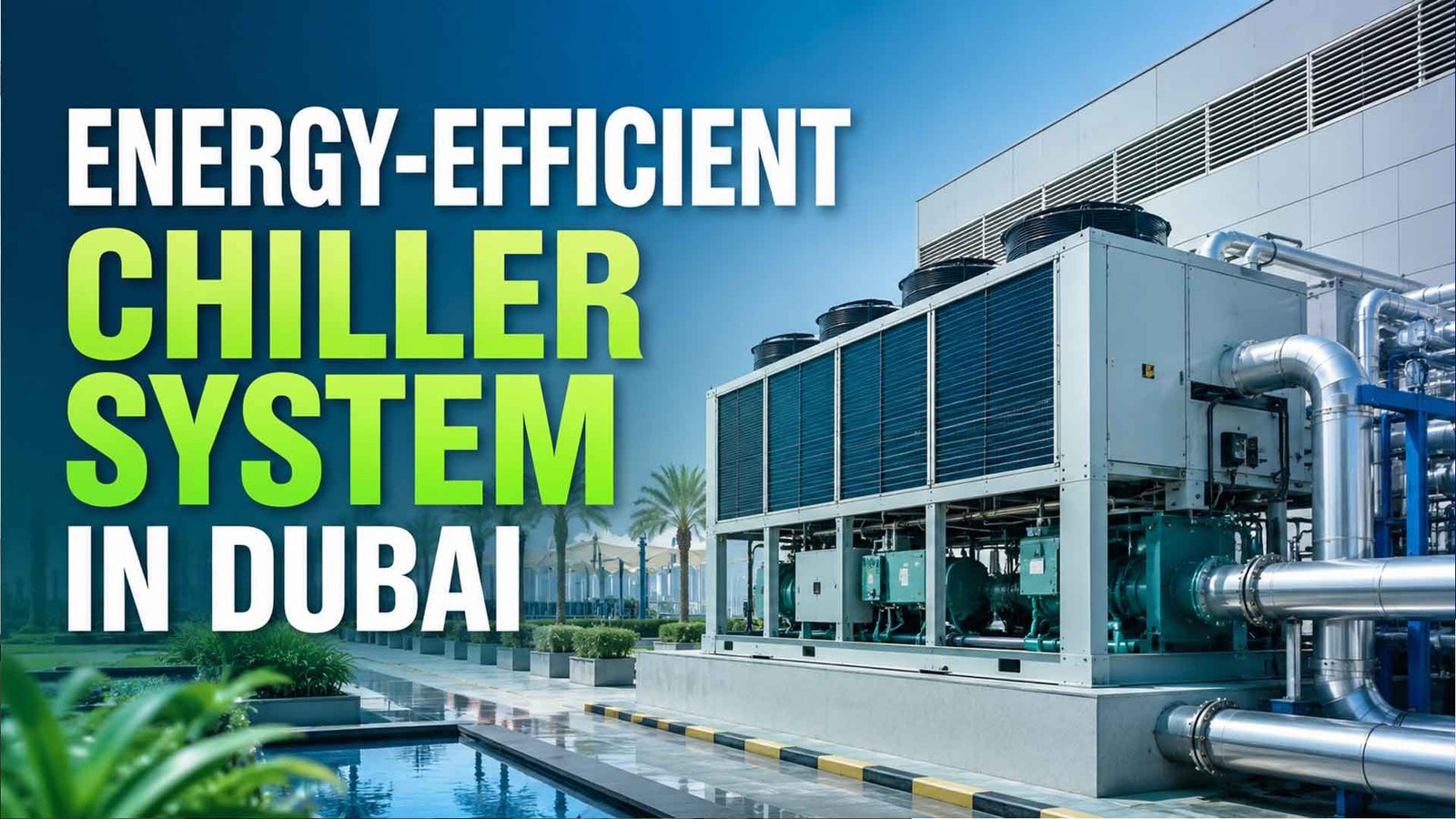
A sudden chiller failure can become a serious operational problem for businesses in the UAE. When a central cooling system stops working, indoor temperatures can rise quickly, production processes may be affected, and temperature-sensitive equipment or products can be put at risk.
For many facilities, waiting for a permanent chiller repair or replacement is not practical. Emergency chiller rental services in the UAE provide a temporary way to restore cooling while the permanent system is repaired, replaced or brought back online.
Cooling is particularly important in the UAE. Dubai’s Regulatory and Supervisory Bureau states that cooling represents almost half of the emirate’s total electricity demand and describes reliable and energy-efficient cooling as essential for residents, businesses and visitors.
What Are Emergency Chiller Rental Services?
Emergency chiller rental is the temporary supply of cooling equipment when a permanent cooling system is unavailable or cannot provide sufficient capacity.
A rental solution may involve more than the chiller itself. Depending on the application, the temporary installation can include:
Air-cooled or water-cooled chillers
Chilled-water pumps
Air-handling units
Flexible hoses and temporary pipework
Buffer tanks
Electrical equipment
Temporary air-conditioning equipment
Monitoring and control systems
UAE rental providers offer different configurations for emergency breakdowns, planned shutdowns, process cooling and temporary increases in cooling demand. For example, Atlas Copco’s UAE rental operation lists modular air-cooled chillers from 50 kW to 720 kW per unit and provides site assessment, installation and remote monitoring as part of its cooling rental service.
Why Emergency Chiller Rental Matters in the UAE
The UAE’s hot climate makes prolonged loss of cooling particularly challenging. A failed chiller can affect employee comfort in a commercial building, but the consequences can be much more serious in an industrial or technical environment.
A temporary cooling system can help businesses maintain operations while their permanent equipment is being repaired.
The objective is not necessarily to replace the failed chiller permanently. Instead, the rental system acts as a bridge between the cooling failure and the return of the permanent installation.
Industrial rental providers specifically identify emergency breakdowns, planned maintenance, seasonal demand and delays in permanent equipment installation as common reasons for temporary cooling.
Common Reasons Businesses Rent Emergency Chillers
1. Sudden Chiller Breakdown
Mechanical and electrical components can fail unexpectedly. Compressor problems, control faults, pump issues or other equipment failures can take a cooling plant offline.
If replacement parts or specialist repairs are required, the permanent system may remain unavailable for an extended period.
An emergency rental chiller can provide temporary cooling during this repair window.
2. Planned Chiller Maintenance
Emergency rental is not only for unexpected failures.
Businesses may deliberately rent temporary chillers when taking their permanent cooling plant offline for major maintenance. This allows engineers to work on the existing equipment without completely removing cooling from the facility.
Rental providers in the UAE specifically list planned shutdowns as an application for temporary chillers.
3. Chiller Replacement
Replacing a large commercial or industrial chiller can involve procurement, delivery, installation and commissioning.
Temporary cooling can bridge the period between removing the old system and commissioning the new one.
This can be especially useful when a facility cannot afford to operate without cooling during the replacement project.
4. Unexpected Increase in Cooling Load
A business may occasionally need additional cooling capacity because of increased production, temporary occupancy, seasonal demand or expansion.
Instead of purchasing permanent equipment for a short-term requirement, additional chiller capacity can be rented.
Which Businesses Can Use Emergency Chiller Rental?
Emergency cooling is relevant across many UAE industries.
Industrial and Manufacturing Facilities
Manufacturing processes can require controlled temperatures for equipment, materials or production processes.
A cooling failure can therefore affect production rather than simply creating an uncomfortable working environment.
Temporary industrial cooling providers specifically offer rental chillers for process cooling and manufacturing applications.
Commercial Buildings
Offices, retail properties and commercial buildings depend heavily on air conditioning in the UAE.
A central chiller failure can affect employees, customers and tenants. A temporary chilled-water system can help restore cooling while permanent repairs are underway.
Hotels and Hospitality
Hotels need reliable cooling in guest rooms, restaurants, meeting spaces and common areas.
A prolonged cooling outage can affect guest comfort and the overall operation of the property. Emergency rental equipment can provide temporary support while the main HVAC system is repaired.
Warehouses and Storage Facilities
Some storage environments require controlled temperatures to protect products and materials.
The appropriate emergency cooling system depends on the products involved, required temperature and facility design. A professional assessment is therefore important before selecting equipment.
Data Centres and Technical Facilities
Cooling interruptions can be particularly important in data centres and other technical environments because equipment continues generating heat even when the primary cooling plant is unavailable.
UAE temporary HVAC providers list data centres among the applications for rental cooling equipment.
For critical facilities, businesses should consider redundancy and temporary cooling arrangements before an emergency occurs.
How Emergency Chiller Rental Works
A professional emergency cooling project generally involves several stages.
Step 1: Assess the Site
The rental provider first needs to understand the facility and the cooling requirement.
Important information can include:
Existing chiller capacity
Required cooling load
Chilled-water supply temperature
Return-water temperature
Required water flow
Available electrical supply
Connection points
Available installation space
Access for delivery equipment
Expected rental duration
Some UAE providers state that their equipment selection considers cooling load, temperature, water flow, power, access and connection routes.
Step 2: Select the Chiller
The correct capacity should be based on the actual requirement.
A common mistake is assuming that the replacement rental chiller must simply have the same nameplate capacity as the failed machine. Actual operating conditions and the required load should be evaluated first.
Depending on the project, the solution could involve one large unit or several smaller modular chillers.
Step 3: Arrange Supporting Equipment
The temporary system may require additional equipment.
For example, Atlas Copco lists accessories such as water connections, hoses, buffer tanks and generators alongside its rental chiller solutions.
This is important because a chiller cannot provide useful cooling unless the rest of the temporary system is properly designed and connected.
Step 4: Deliver and Install
Once the equipment is selected, it needs to be transported to the site and positioned safely.
Site access should be considered before delivery. Equipment dimensions, lifting requirements, plant-room access and available outdoor space can all affect installation.
Step 5: Connect and Commission
The temporary system is then connected to the building or process cooling circuit.
Commissioning should verify that water flow, temperatures, pressures and equipment operation are appropriate for the application.
Step 6: Monitor the System
Emergency cooling should not simply be installed and forgotten.
Some rental providers offer remote monitoring and operational support during the rental period. Atlas Copco, for example, describes 24/7 remote monitoring for its temporary cooling installations.
Monitoring can help identify performance problems before they become larger operational issues.
Air-Cooled vs Water-Cooled Rental Chillers
One of the decisions involved in emergency chiller rental is whether an air-cooled or water-cooled unit is appropriate.
Air-Cooled Chillers
Air-cooled chillers reject heat directly to the surrounding air.
They can be useful for temporary applications because they do not require a cooling tower as part of the heat-rejection system. Rental suppliers in the UAE offer air-cooled equipment specifically for temporary and emergency applications.
For example, Al Shola lists 50–400 TR air-cooled chillers for temporary, process, commercial and emergency cooling requirements in Dubai and notes that its equipment is selected according to factors including ambient conditions and site requirements.
Water-Cooled Chillers
Water-cooled chillers reject heat through a water-based heat-rejection system, generally involving cooling towers or another suitable arrangement.
They may be appropriate where the site already has the required infrastructure, but temporary installation can be more involved.
The right option depends on the facility, available infrastructure, required capacity and installation conditions.
What Should Businesses Consider Before Renting?
Choosing the first available chiller is not necessarily the best emergency response.
Businesses should evaluate several factors.
Cooling Capacity
The rental unit should match the actual cooling requirement.
Undersizing can leave the facility without sufficient cooling, while unnecessary oversizing may increase costs and electrical requirements.
High-Ambient Operation
Equipment used in the UAE needs to operate effectively under local ambient conditions.
Some UAE rental providers specifically offer high-ambient equipment designed for GCC operating conditions.
Temperature Requirements
The required chilled-water temperature matters.
A building comfort-cooling application may have different requirements from an industrial process requiring lower temperatures.
Some rental fleets offer equipment capable of operating across a broad temperature range. Atlas Copco, for example, lists air-cooled rental chillers capable of cooling temperatures from -12°C to 21°C.
Electrical Requirements
Before equipment is delivered, the available power supply should be checked.
If the facility does not have sufficient electrical capacity, a temporary generator may need to be incorporated into the project.
Installation Space
The rental provider needs enough space to safely position the equipment and complete the required connections.
Access for trucks, lifting equipment and maintenance personnel should also be considered.
Response Time
For a genuine emergency, response time is a major consideration.
Businesses should ask prospective suppliers:
How quickly can equipment be mobilized?
Is 24/7 emergency support available?
Do they cover the required emirate?
Can they install the equipment?
Do they provide pumps and accessories?
Is technical support available during operation?
Several UAE rental companies advertise rapid or 24/7 emergency response services, but actual response times depend on equipment availability, site conditions and location.
Emergency Chiller Rental Is More Than Equipment Delivery
One important distinction between basic equipment hire and a professional emergency cooling solution is the level of engineering support.
A business may receive a chiller quickly, but if the equipment is incorrectly sized or cannot be connected properly to the existing system, the rental will not solve the underlying cooling problem.
A complete temporary cooling project may include:
Assessment → Equipment selection → Logistics → Installation → Connection → Commissioning → Monitoring → Decommissioning
Atlas Copco, for example, describes its rental service as including site assessment, installation and remote monitoring, while its air-cooled chiller service includes logistics, commissioning, energy management and decommissioning.
This type of end-to-end approach can be particularly valuable during an emergency when the customer’s own engineering team is already dealing with the permanent equipment failure.
Emergency Rental vs Permanent Chiller Replacement
These two options serve different purposes.
A permanent replacement is a long-term investment intended to provide cooling for years.
An emergency rental chiller is a temporary solution designed to maintain cooling while a business deals with a breakdown, maintenance project, replacement or temporary increase in demand.
In many situations, the two can work together.
For example:
- The existing chiller fails.
- A temporary rental chiller is installed.
- The business continues operating.
- Engineers repair or replace the permanent equipment.
- The permanent system is commissioned.
- The rental equipment is removed.
This approach can give businesses time to complete permanent work correctly instead of making rushed decisions simply because the facility has lost cooling.
Preparing for a Chiller Emergency
Businesses that depend heavily on cooling should not wait until a failure occurs to investigate rental options.
A basic emergency cooling plan can record:
Existing chiller capacities
Chilled-water temperatures
Flow rates
Electrical specifications
Pipe connection sizes
Available installation areas
Access routes
Critical areas requiring priority cooling
HVAC maintenance contacts
Emergency rental contacts
Keeping this information available can reduce delays when an actual breakdown occurs.
It may also be worthwhile to discuss temporary connection arrangements with a rental provider in advance, particularly for facilities where cooling is critical to production or equipment protection.
Regulatory Considerations in Dubai
Businesses should also understand the difference between temporary equipment rental and regulated district cooling services.
Dubai’s Executive Council Resolution No. 6 of 2021 regulates the provision of district cooling services and requires relevant providers to be licensed and hold the applicable permit.
The Regulatory and Supervisory Bureau also confirms that district cooling providers are subject to a specific regulatory framework in Dubai.
For an emergency rental project, businesses should therefore ensure that the proposed temporary installation and connections meet the applicable requirements for their building and cooling arrangement. The rental provider should clarify any approvals or technical requirements that apply to the specific project.
How Much Does Emergency Chiller Rental Cost in the UAE?
There is no reliable single price for emergency chiller rental.
The cost can depend on:
Required cooling capacity
Type of chiller
Rental duration
Number of units
Installation requirements
Pumps and accessories
Pipework or hoses
Transportation
Electrical requirements
Emergency mobilization
Monitoring and technical support
A short-term emergency project with straightforward connections may have very different costs from a large industrial installation requiring several chillers, pumps, AHUs and temporary pipework.
Businesses should therefore request an itemized quotation based on their actual site requirements rather than relying on a generic price per ton.
Final Thoughts
Emergency chiller rental services in the UAE provide businesses with a practical way to maintain cooling when a permanent chiller fails, undergoes major maintenance, is being replaced or cannot meet temporary demand.
The most effective solution is not simply the fastest available machine. It is a properly sized and engineered temporary cooling system that takes account of the site’s cooling load, temperatures, water flow, power supply, access and connection requirements.
UAE rental providers currently offer a range of temporary cooling equipment, from modular air-cooled chillers to complete systems incorporating pumps, AHUs, hoses, buffer tanks and monitoring.
For businesses where cooling is essential to operations, having an emergency rental plan in place before a breakdown occurs can make the difference between a manageable temporary disruption and a prolonged interruption to business activities.