

Hotels and resorts in the UAE depend heavily on reliable cooling. Guest rooms, restaurants, kitchens, conference halls, lobbies, spas, swimming-pool facilities, staff areas, and back-of-house spaces can all contribute to a property’s cooling demand. In Dubai, hospitality is also an important part of the district-cooling market: DEWA reported that hospitality accounted for 14% of the buildings served by district cooling in 2021.
For hotels and resorts, a cooling failure is more than a technical inconvenience. If indoor temperatures rise during peak summer conditions, guest comfort can suffer, while restaurants, event spaces, and other temperature-sensitive operations may also be affected. Rental chillers provide a temporary way to add cooling capacity or maintain operations while a permanent cooling system is being repaired, upgraded, or expanded.
What Are Rental Chillers?
A rental chiller is a temporary cooling system supplied for a defined period rather than permanently installed as part of the property’s cooling plant.
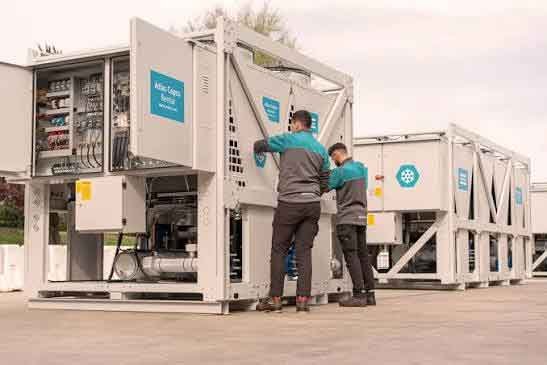
Depending on the project, a rental package can include chillers, pumps, air handling units, hoses or temporary pipework, heat exchangers, electrical equipment, and other accessories required to connect the temporary system to the hotel’s existing infrastructure.
UAE rental providers offer modular air-cooled chillers in a range of capacities. Atlas Copco’s UAE rental fleet, for example, lists air-cooled chillers from 50 kW to 720 kW per unit and states that multiple units can operate in parallel for multi-megawatt requirements.
This makes rental cooling suitable for both smaller temporary requirements and larger hospitality properties that need substantial additional capacity.
Why Hotels and Resorts Need Temporary Cooling
Hospitality properties have a particularly strong reason to protect their cooling systems: cooling directly affects the guest experience.
A hotel may require rental chillers for several reasons.
Emergency Chiller Failure
A major chiller failure during a busy period can create an immediate cooling shortage. Waiting for a permanent replacement or major repair may not be practical.
A temporary chiller can act as a bridge while engineers repair the failed equipment. Rental providers specifically offer emergency cooling solutions for chiller and HVAC breakdowns.
Planned Maintenance
Hotels cannot always avoid maintenance simply because the property is occupied.
During planned maintenance, one or more chillers may need to be taken offline. Temporary cooling can help maintain service to critical areas while permanent equipment is unavailable.
This approach allows engineering teams to schedule maintenance without necessarily removing all cooling capacity from the property.
Peak Summer Demand
The UAE’s summer climate can place significant demands on cooling systems. Hotels may also experience changes in occupancy, event schedules, restaurant activity, or other loads.
Rather than investing in permanent equipment that may only be needed during particular periods, a property can rent additional capacity for peak demand.
Rental providers identify seasonal or peak-demand cooling as a common application for temporary cooling systems.
Renovation and Expansion
Hotels frequently renovate guest rooms, restaurants, event facilities, or other areas. New spaces can change the property’s overall cooling requirement.
A rental chiller can provide temporary capacity while permanent HVAC infrastructure is being modified or expanded.
Waiting for Permanent Equipment
Large HVAC projects can involve equipment procurement, delivery, installation, and commissioning. If the existing cooling system cannot adequately support the property during this period, temporary chillers can bridge the gap until the permanent plant is operational.
Hotel Areas That Can Benefit From Rental Cooling
A temporary chiller does not necessarily have to cool an entire hotel. Depending on the hydraulic and HVAC configuration, it may be used to support specific areas or systems.
Potential applications include:
Guest-room areas
Hotel lobbies
Restaurants and cafés
Conference and meeting facilities
Ballrooms
Commercial kitchens
Spas
Back-of-house areas
Staff facilities
Retail areas within hotels
Temporary accommodation facilities
Renovated or newly added sections
The actual application depends on the property’s chilled-water system and the connection points available.
Protecting Guest Comfort
Guest comfort is one of the strongest reasons for maintaining reliable cooling in hospitality properties.
Hotels cannot simply treat cooling as an industrial process because guests interact directly with the indoor environment. A poorly controlled indoor temperature can affect guest satisfaction, particularly during hot weather.
DEWA’s hotel-management guidance highlights the importance of efficient air-conditioning management in hotels, including controlling AC operation in unoccupied rooms and reducing heat entering guest rooms.
Rental chillers can complement these efficiency measures by providing sufficient cooling capacity when the property’s permanent system is temporarily unavailable or overloaded.
Rental Chillers During Hotel Renovations
Renovation projects can create unusual HVAC requirements.
For example, a hotel may renovate one floor while the remaining rooms continue operating. Construction activities can also affect existing mechanical systems or require sections of the chilled-water network to be isolated.
A temporary cooling system can help separate the cooling requirements of the operational property from the area under renovation.
The rental period can be matched to the project schedule, reducing the need to purchase permanent equipment for a temporary requirement.
Supporting Events and Banquet Facilities
Dubai and other UAE destinations have a large hospitality and events market. Hotels regularly host conferences, weddings, exhibitions, corporate functions, and other gatherings.
Large event spaces can create substantial temporary cooling loads because occupancy can change quickly.
If a hotel’s existing cooling plant is operating close to its capacity, an additional rental chiller can provide supplementary cooling during high-demand periods.
The required capacity should be calculated from the actual cooling load rather than estimated solely from the floor area.
Choosing the Right Rental Chiller
Selecting a rental chiller requires more than choosing the largest available machine.
Hotel operators should consider:
Cooling Capacity
Determine the required cooling load and the amount of temporary capacity needed. Oversizing can increase costs and may not provide the most efficient operation.
Chilled-Water Temperatures
The required supply and return temperatures should be established before selecting equipment.
Water Flow
The temporary chiller must be compatible with the required chilled-water flow and the hotel’s existing system.
Electrical Supply
Confirm the available electrical capacity and the power requirements of the proposed equipment and supporting systems.
Installation Space
Outdoor chillers need suitable space for installation, airflow, access, and maintenance.
Access
The rental company should assess delivery routes, loading areas, crane requirements, and the route between the equipment location and the connection point.
Supporting Equipment
Depending on the installation, the project may require pumps, heat exchangers, AHUs, hoses, temporary pipework, or other equipment.
Air-Cooled or Water-Cooled Chiller?
The choice between air-cooled and water-cooled rental equipment depends on the hotel’s existing infrastructure.
Air-cooled chillers reject heat directly into the outdoor air and can be useful when a temporary cooling system needs to be deployed without relying on an existing cooling-tower arrangement.
Water-cooled chillers can be appropriate where suitable condenser-water infrastructure is available.
Neither option is automatically better for every hotel. The correct selection depends on cooling requirements, available utilities, site conditions, equipment availability, and the hotel’s existing HVAC design.
Energy Efficiency Is Still Important
Temporary does not mean that energy efficiency should be ignored.
Cooling represents a major part of energy use in Dubai. DEWA’s current guidance recommends measures such as maintaining appropriate thermostat settings, keeping AC filters clean, and using shading to reduce cooling requirements.
Dubai’s wider cooling infrastructure also demonstrates the importance of efficiency. DEWA has reported that district cooling can use substantially less electricity per refrigeration ton than conventional air-conditioning methods.
For a hotel using rental chillers, efficiency should therefore be considered alongside capacity. Correct sizing, suitable operating temperatures, regular maintenance, and proper control can help avoid unnecessary energy consumption.
How the Rental Process Typically Works
A professional temporary-cooling project generally starts with an assessment rather than immediate equipment delivery.
Step 1: Assess the Cooling Requirement
The rental provider reviews the hotel’s current cooling load, required temperatures, operating schedule, and reason for the temporary system.
Step 2: Inspect the Site
Engineers identify suitable equipment locations, connection points, electrical requirements, access routes, and installation constraints.
Step 3: Select the Equipment
The appropriate chiller capacity and supporting equipment are selected based on the property’s requirements.
Step 4: Installation and Commissioning
The temporary equipment is connected to the relevant cooling system and tested before operation.
Step 5: Monitoring and Support
During the rental period, the system should be monitored and maintained so that problems can be identified quickly.
Step 6: Removal
Once the hotel’s permanent cooling system is restored or the temporary requirement ends, the equipment can be disconnected and removed.
Atlas Copco’s UAE rental service, for example, describes a process that includes site assessment, installation, commissioning, system integration, and remote monitoring.
What Should Hotels Ask a Rental Provider?
Before signing a rental agreement, hotel operators should clarify:
What cooling capacity is being supplied?
Is installation included?
Are pumps and connection equipment included?
What are the chilled-water supply and return temperatures?
What electrical supply is required?
Is 24/7 technical support available?
What maintenance is included?
How quickly can replacement equipment be provided if a fault occurs?
What is included in the rental price?
What are the delivery and removal arrangements?
What is the minimum rental period?
Can additional chillers be added if demand increases?
Clear answers to these questions help prevent unexpected costs and installation delays.
Rental Chillers vs. Buying a Permanent Chiller
Rental is not intended to replace permanent cooling in every situation.
A permanent chiller can make sense when a hotel has a stable, long-term cooling requirement and the project justifies the capital investment.
Rental becomes particularly attractive when the requirement is temporary, uncertain, seasonal, or related to an emergency.
It can help hotels avoid committing capital to equipment that may only be needed for a limited period while also providing a practical solution during maintenance or replacement projects.
Conclusion
Rental chillers can provide hotels and resorts in the UAE with a flexible way to protect cooling capacity during breakdowns, maintenance, renovations, seasonal peaks, and expansion projects.
For hospitality businesses, the value goes beyond simply producing chilled water. Reliable temporary cooling can help maintain guest comfort, support restaurants and event spaces, and give engineering teams time to repair or upgrade permanent HVAC equipment without unnecessarily disrupting hotel operations.
The right solution should be selected according to the property’s actual cooling load, chilled-water temperatures, flow requirements, available power, installation space, and existing HVAC configuration. With proper site assessment and professional installation, rental chillers can serve as a practical short-term cooling strategy for UAE hotels and resorts.