

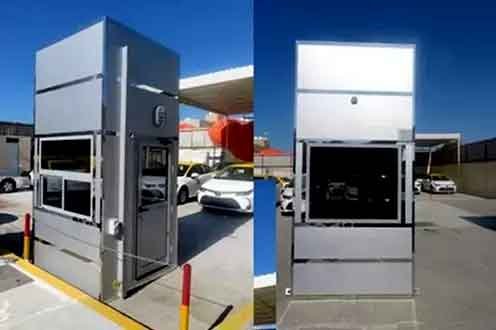
A portacabin can be a practical solution when you need additional office space, accommodation, storage, classrooms, security facilities, or a temporary workplace without going through the time and expense of conventional construction. However, choosing the right unit involves more than comparing prices and dimensions.
The right portacabin should match your intended use, available site space, number of occupants, local safety requirements, climate conditions, and expected duration of use. In the UAE, these considerations become particularly important because portable buildings may be subject to fire, electrical, structural, and site-specific requirements.
For example, Abu Dhabi’s current guidance for portable buildings requires them to be fit for purpose and compliant with applicable fire and electrical safety regulations. It also addresses safe access, concrete bases, fire detection, firefighting equipment, spacing, and electrical installations.
Here is a practical guide to selecting a portacabin that fits your project.
1. Start With the Purpose of the Portacabin
Before contacting a supplier, determine exactly how the unit will be used.
Different applications require different designs. A basic security cabin may only need a small enclosed room, while a construction-site office could require several rooms, air conditioning, electrical outlets, windows, and a meeting area.
Common portacabin applications include:
Site offices
Security cabins
Staff accommodation
Labour accommodation
Sales offices
Classrooms and training rooms
Meeting rooms
Storage facilities
Welfare facilities
Temporary commercial spaces
Your intended use affects almost every other decision, including dimensions, insulation, electrical requirements, plumbing, ventilation, furniture, and internal layout.
2. Choose the Right Size and Layout
Size is one of the first specifications to consider, but the biggest unit is not necessarily the best choice.
Consider:
Number of people using the cabin
Number of rooms required
Furniture and equipment
Space available on the site
Doors and emergency exits
Walkways around the unit
Future expansion requirements
For example, a small security cabin may require only a single room, whereas an office facility might need separate offices, a reception area, a meeting room and a pantry.
Some projects can also use multiple modular units connected together. This can provide greater flexibility than purchasing one oversized structure.
Dubai Municipality specifications for certain prefabricated portacabin-type buildings demonstrate why requirements should be established before ordering. Its published project specification includes considerations such as room dimensions, toilets, electrical and mechanical services, air conditioning, foundations, doors and windows, and firefighting provisions.
3. Pay Attention to Construction Quality
A portacabin may look similar from the outside while having significant differences in its structural components and materials.
Ask the supplier about:
Main structural frame
Steel grade and thickness
Wall panels
Roof construction
Floor structure
Flooring material
Doors and windows
Corrosion protection
Waterproofing
Insulation
Internal finishes
Do not judge quality simply by the external appearance.
For permanent or long-term applications, the structural design and material specifications deserve particular attention. For example, a Dubai Municipality prefabricated-building specification states a minimum structural design life of 15 years for the complete unit in the specified application.
4. Check Insulation for the UAE Climate
The UAE’s hot climate makes thermal performance an important consideration when selecting a portacabin.
A poorly insulated cabin can become uncomfortable and may place additional demand on the air-conditioning system. Good insulation in the walls and roof can help reduce heat transfer and improve indoor comfort.
Ask the supplier about:
Wall insulation thickness
Roof insulation
Floor insulation
Insulated doors and windows
Type of insulation material
Air leakage and sealing
Roof design and weather protection
The air-conditioning system should also be appropriate for the cabin’s size, occupancy and heat load rather than simply selecting the smallest available unit.
5. Don’t Compromise on Fire Safety
Fire safety should be treated as a core selection criterion rather than an optional upgrade.
Requirements can vary depending on the emirate, site, occupancy, location and intended duration of use. Dubai’s regulations, for example, contain specific provisions concerning temporary buildings, including requirements related to safe access and egress and separation from adjacent structures.
For certain facilities within the Dubai Ports, Customs and Free Zone Corporation framework, temporary portacabin approval documentation includes the location plan, drainage drawings, fire-protection arrangements and detailed construction specifications; the stated requirement also calls for construction material with a minimum 30-minute fire rating.
Therefore, ask the supplier for documentation showing the fire performance of the proposed construction instead of accepting a general statement that the cabin is “fireproof.”
6. Consider Electrical and HVAC Requirements
A portacabin intended to function as an office or accommodation facility will normally require more than basic lighting.
Depending on its purpose, you may need:
Lighting
Power sockets
Distribution board
Air conditioning
Emergency lighting
Fire alarm equipment
Data/network connections
Water heaters
Kitchen equipment
Plumbing connections
Electrical work should be properly designed and installed. Abu Dhabi’s portable-building guidance states that electrical installations should be completed by a competent electrician and specifies periodic testing of distribution boards, cables, sockets and fixed electrical installations.
Discuss the electrical load with the supplier before installation, particularly if computers, air conditioners, kitchen equipment or other high-load appliances will be used.
7. Think About Doors, Windows and Ventilation
A comfortable portacabin needs appropriate natural and mechanical ventilation.
Check:
Number and size of windows
Window glazing
Security of windows
Door quality
Emergency exits where applicable
Ventilation system
Air-conditioning arrangement
Accessibility
The positioning of entrances is also important. Portable-building guidance in Abu Dhabi requires safe access and egress and appropriate steps with handrails at entrances and emergency exits.
8. Consider Plumbing and Sanitary Facilities
If the portacabin will be used for accommodation, offices with staff facilities, welfare areas or construction sites, plumbing requirements should be considered from the beginning.
You may need:
Toilets
Wash basins
Showers
Pantry
Water supply
Drainage
Water heater
Wastewater connections
Trying to add these systems after installation can be more complicated and expensive than specifying them when ordering the cabin.
9. Check the Foundation and Site Conditions
A portable building still needs a suitable place to sit.
The supplier should explain the requirements for:
Concrete base
Ground preparation
Drainage
Leveling
Access for delivery vehicles
Crane access where required
Utility connections
Clearance around the building
Abu Dhabi’s portable-building guidance specifically calls for a level concrete base and measures to prevent combustible waste from accumulating underneath the unit.
The site should therefore be assessed before delivery rather than assuming that any open piece of land will be suitable.
10. Consider Transportation and Installation
One advantage of a portacabin is that it can be transported and installed relatively quickly. But transportation still requires planning.
Ask:
How will the unit be transported?
Is a crane required?
Does the supplier provide delivery?
Is installation included?
Who prepares the foundation?
Who connects electricity and plumbing?
Are lifting points certified?
Is dismantling or relocation included?
For portable buildings, lifting should not be treated as a simple logistics issue. Abu Dhabi’s guidance requires lifting requirements to be followed and states that lifting points must be certified following inspection and testing by an approved third-party engineer.
11. Decide Between New and Used Portacabins
Budget is often a major factor.
A new portacabin generally gives you greater control over:
Layout
Materials
Finishes
Insulation
Electrical systems
Plumbing
Doors and windows
Custom requirements
A used portacabin can be economical, particularly for short-term applications, but its condition should be inspected carefully.
When buying used, examine:
Structural frame
Roof
Floor
Wall panels
Rust or corrosion
Water leakage
Electrical system
Doors and windows
Air-conditioning system
Plumbing
Previous modifications
A low purchase price does not necessarily mean a lower overall cost if substantial repairs are required after delivery.
12. Compare Suppliers, Not Just Prices
When requesting quotations, give each supplier the same specification. Otherwise, two quotations may appear different simply because they include different materials or services.
Your comparison should include:
| Factor | What to Check |
|---|---|
| Size | External and internal dimensions |
| Structure | Frame and material specifications |
| Insulation | Wall, roof and floor insulation |
| Fire safety | Fire-rated materials and documentation |
| Electrical | Distribution board, sockets and lighting |
| HVAC | AC capacity and installation |
| Plumbing | Toilets, drainage and water connections |
| Finishing | Flooring, walls and ceiling |
| Delivery | Transportation charges |
| Installation | Installation and positioning |
| Foundation | Included or excluded |
| Warranty | Coverage and duration |
| After-sales | Maintenance and support |
This approach makes it much easier to identify the genuine cost of the portacabin.
13. Verify Local Approvals Before Installation
One of the most commonly overlooked considerations is whether the proposed portacabin can legally be installed and used at the intended location.
Requirements can differ according to the emirate, development, free zone, site owner and purpose of the building. Dubai Municipality maintains building-permit procedures and requirements for building and construction-related approvals.
Certain free-zone authorities can also have their own approval procedures. For example, PCFC’s published information specifies documentation for temporary portacabin/container use, including purpose and duration, site plans, fire-protection arrangements and construction specifications.
Before purchasing, confirm:
- Whether approval is required.
- Which authority handles the approval.
- Whether the supplier prepares the required drawings.
- Whether fire-safety documentation is required.
- Whether there are restrictions on duration or location.
- Whether the proposed specifications meet the applicable requirements.
14. Think About Future Requirements
Your business may grow during the period the portacabin is in use.
Instead of asking only, “What do I need today?”, consider what you may need six months or a year from now.
For example, a company initially requiring two offices might later need:
Additional workstations
Meeting space
StorageStaff facilities
- Additional cabins
A modular arrangement can make future expansion easier.
15. Ask for a Complete Written Specification
Before making the final purchase, request a written specification rather than relying solely on verbal promises.
The document should clearly state:
Dimensions
Layout
Structural materials
Wall and roof construction
Insulation
Flooring
Doors and windows
Electrical installation
HVAC
Plumbing
Fire-safety provisions
Delivery
Installation
WarrantyPayment terms
Completion timeline
This gives you something concrete to compare when evaluating different suppliers.
Common Mistakes to Avoid
When choosing a portacabin, avoid these common mistakes:
Choosing only on price: The cheapest cabin may use lower-grade materials or exclude important services.
Ignoring insulation: In the UAE, inadequate thermal insulation can negatively affect indoor comfort and AC performance.
Not checking fire requirements: Fire safety requirements should be established before the cabin is manufactured or delivered.
Buying without inspecting a used unit: Visible appearance does not reveal hidden structural, electrical or water-damage problems.
Forgetting site preparation: Foundation, drainage, access and crane requirements can affect the total project cost.
Comparing incomplete quotations: Make sure every supplier is pricing the same specification.
Ignoring approvals: Confirm requirements with the relevant authority or site operator before installation.
Final Thoughts
Choosing the right portacabin is ultimately about finding the right balance between purpose, quality, safety, comfort, compliance and cost. Start by defining how the cabin will be used, then determine the required size, layout, construction quality, insulation, fire protection, electrical systems and site requirements.
Most importantly, don’t compare portacabins based solely on their advertised price. A properly specified unit with suitable materials, safety provisions, installation and after-sales support can offer much better value over its useful life.
If you are buying a portacabin in the UAE, obtaining detailed specifications and quotations from several suppliers is one of the best ways to make an informed decision.