

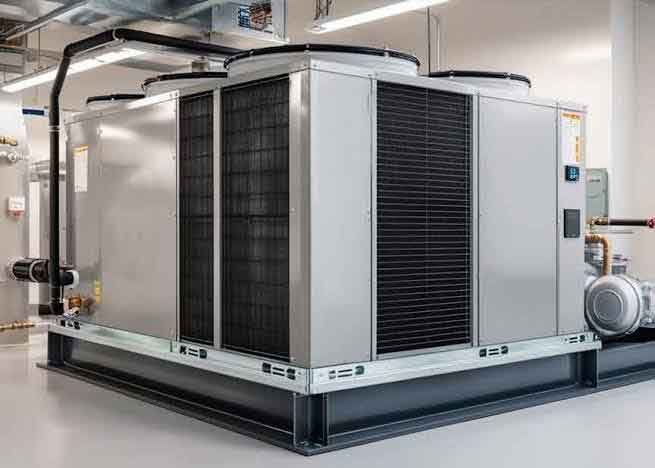
Cooling is a critical requirement for many businesses and industrial facilities across the UAE. Commercial buildings, hotels, hospitals, shopping centres, manufacturing facilities, warehouses, data centres, construction projects, and process industries can all depend on chilled water systems to maintain suitable operating temperatures.
The challenge is that rental chillers demand is not always permanent or predictable. A building may need additional capacity during the hottest months, an existing chiller may require major maintenance, or an unexpected equipment failure may leave a facility without enough cooling. New construction and industrial projects may also need temporary cooling before their permanent HVAC infrastructure is ready.
This is where industrial and commercial chiller rental in the UAE becomes useful.
Chiller rental allows a business to use temporary cooling equipment for a defined period without purchasing a permanent chiller. Depending on the project, a rental system can provide additional cooling capacity, replace a failed unit, support planned maintenance, or provide temporary process cooling.
The basic concept is straightforward: a suitable rental chiller is selected according to the required cooling load, delivered to the site, connected to the appropriate chilled-water or process-water system, commissioned, operated for the agreed rental period, and removed when the temporary requirement ends.
However, selecting and deploying a rental chiller is more involved than simply choosing a machine with a particular tonnage. The cooling load, application, operating conditions, available power, water requirements, connection points, site access, rental duration, and equipment type all influence the final solution.
What Is Industrial and Commercial Chiller Rental in the UAE?
Industrial and commercial chiller rental in the UAE is the temporary hiring of chiller equipment to provide cooling for a building, facility, project, event, or industrial process.
A chiller is a refrigeration machine that removes heat from water or another circulating fluid. The cooled fluid can then be circulated through air-handling units, fan-coil units, heat exchangers, or industrial process equipment to remove unwanted heat.
According to Trane’s technical explanation, chillers commonly use a refrigeration cycle in which refrigerant absorbs heat in the evaporator, is compressed, rejects heat through the condenser, and then passes through an expansion device before repeating the cycle.
With a rental arrangement, the customer does not need to purchase the chiller as a permanent asset. Instead, the equipment is supplied for an agreed period.
The rental period can vary according to the project. A business might need cooling for a few days during an emergency, several weeks during maintenance, several months during a construction project, or a longer period for an industrial application.
UAE rental providers commonly advertise both short-term and longer-term arrangements, with applications ranging from emergency replacement and seasonal capacity to industrial and process cooling.
How Does Chiller Rental Work in the UAE?
The process normally starts by identifying the cooling requirement.
A business or facility manager provides information about the application, location, existing HVAC system, required operating temperature, available infrastructure, and expected rental period. If the required capacity is not already known, an HVAC engineering team can assess the site and calculate or verify the cooling requirement.
After this assessment, the rental provider recommends an appropriate chiller configuration.
The selected equipment is then transported to the site. Depending on the installation, the chiller may be connected to existing chilled-water pipework, a temporary distribution loop, air-handling equipment, heat exchangers, or industrial process equipment.
For a water-cooled configuration, additional equipment such as pumps, condenser-water piping, and cooling-tower infrastructure may be required. Air-cooled chillers generally reject heat directly to the surrounding air and therefore do not require a cooling tower.
Once the equipment is connected, engineers check the system, commission the chiller, and verify that it is operating correctly before the customer relies on it.
The equipment remains on-site for the agreed rental period. Technical support and maintenance arrangements depend on the rental agreement. At the end of the project, the provider disconnects and removes the temporary equipment.
In simple terms, the process can be understood as:
Why Do UAE Businesses Rent Chillers?
There are several situations in which renting a chiller can be more practical than purchasing one.
One of the most common is an unexpected chiller breakdown. If a permanent cooling system fails during a period of high demand, waiting for repairs or replacement equipment can create operational problems. A temporary rental chiller can provide cooling capacity while the permanent equipment is repaired.
Planned maintenance is another common reason. A facility may need to shut down one or more chillers for inspection, overhaul, replacement of components, or other maintenance work. Temporary equipment can help maintain cooling during this period.
Businesses may also require additional capacity during periods of unusually high demand. Instead of permanently increasing the size of the cooling plant, a facility can use temporary rental equipment when the additional capacity is only required for a limited period.
Construction and fit-out projects can have similar requirements. Temporary cooling may be needed while permanent HVAC systems are being installed or commissioned.
Industrial facilities can also use rental chillers for process cooling. Process chillers are designed to remove heat from manufacturing processes or equipment where maintaining a particular temperature is important to the operation.
Industrial Chiller Rental vs Commercial Chiller Rental
Although both services use chiller technology, the application can be significantly different.
Commercial chiller rental is generally associated with buildings and facilities where the main objective is maintaining indoor environmental conditions. Offices, hotels, retail facilities, hospitals, malls, educational buildings, and similar properties can use chilled-water systems for comfort cooling.
Industrial chiller rental, on the other hand, can involve much more process-specific requirements. Manufacturing plants, production facilities, food-processing operations, industrial plants, and other facilities may require cooling for machinery, production processes, heat exchangers, or other equipment.
Industrial cooling requirements can also be more sensitive to temperature, flow, operating hours, and process conditions.
This is why choosing a rental chiller based only on the size of a building can be inappropriate for an industrial application. The actual process heat load and required operating conditions need to be considered.
Trane similarly describes process chillers as systems that remove heat from a manufacturing process or equipment and notes that water or water-glycol mixtures can be circulated through heat exchangers to transfer heat away from the process.
How Does a Chiller Actually Produce Cooling?
Understanding the refrigeration cycle helps explain why the correct rental equipment matters.
A typical vapor-compression chiller contains four major stages: evaporation, compression, condensation, and expansion.
Evaporation
The refrigeration cycle starts in the evaporator. Heat from the circulating water or process fluid is transferred to the refrigerant.
As the refrigerant absorbs heat, it changes state and becomes a vapour.
At the same time, the water leaving the evaporator becomes colder and can be circulated back to the building or process.
Compression
The refrigerant vapour enters the compressor.
The compressor increases the pressure of the refrigerant, which also raises its temperature.
Condensation
The hot refrigerant then reaches the condenser, where the absorbed heat is rejected.
In an air-cooled chiller, fans move ambient air across condenser coils to remove heat from the refrigerant.
In a water-cooled chiller, condenser water removes the heat from the refrigerant. That condenser water can then transfer the heat to a cooling tower or another heat-rejection system.
Expansion
After condensation, the refrigerant passes through an expansion device.
The pressure and temperature of the refrigerant are reduced, preparing it to return to the evaporator and absorb heat again.
The cycle then repeats continuously.
Air-Cooled Chiller Rental in the UAE
Air-cooled chillers are frequently considered for temporary cooling because the equipment rejects heat directly to ambient air.
They do not require the cooling tower and condenser-water system associated with a typical water-cooled installation. This can simplify deployment, particularly where a temporary project does not have suitable cooling-tower infrastructure.
Trane notes that air-cooled chillers can be packaged systems and can be suitable for temporary or emergency cooling applications.
Air-cooled equipment can therefore be useful for applications where speed of deployment, simplified installation, or limited water availability is important.
However, ambient conditions matter. High outdoor temperatures can affect air-cooled chiller performance because the condenser must reject heat directly into the surrounding air. Trane identifies hot weather as one consideration that can reduce air-cooled chiller performance.
This is particularly relevant when selecting rental equipment for the UAE. The chiller should be evaluated against the actual expected site conditions rather than selecting capacity based only on a nominal tonnage figure.
Water-Cooled Chiller Rental in the UAE
Water-cooled chillers use water to remove heat from the refrigerant in the condenser.
They are commonly associated with large commercial facilities and industrial applications where cooling demand is substantial and continuous. Trane identifies large buildings, hospitals, data centres, campuses, and industrial/process cooling among typical applications for water-cooled chillers.
A water-cooled rental system can be highly effective where the required infrastructure is available.
However, temporary water-cooled systems can require more supporting equipment than air-cooled systems. Depending on the configuration, this may include condenser-water pumps, piping, cooling towers, controls, and water-treatment arrangements.
The U.S. Department of Energy describes water-cooled chilled-water plants as systems in which condenser water circulates between the chiller and cooling tower to reject heat.
Consequently, a water-cooled rental solution should be evaluated as a complete system rather than looking at the chiller alone.
Air-Cooled vs Water-Cooled Chiller Rental
There is no universal answer to whether an air-cooled or water-cooled rental chiller is better.
The appropriate option depends on the application and site.
Air-cooled equipment can be attractive when quick installation, mobility, reduced supporting infrastructure, and limited water availability are important.
Water-cooled equipment can be more appropriate for large and continuous cooling loads where the required water-side infrastructure is available and efficiency is a major consideration.
Trane explains that water-cooled systems can achieve an efficiency advantage because water can provide more effective heat transfer than air, while air-cooled systems generally simplify installation by avoiding the cooling tower and associated condenser-water system.
For a rental project, the decision should therefore consider more than energy efficiency alone. Delivery, site access, installation time, water availability, temporary piping, cooling-tower requirements, operating conditions, and rental duration all matter.
What Does Chiller Tonnage Mean?
One of the most important parts of commercial and industrial chiller rental in the UAE is determining the required cooling capacity.
Chiller capacity is commonly expressed in tons of refrigeration (TR).
The term does not refer to the physical weight of the machine. It represents a unit of cooling capacity.
A larger TR rating generally means that the chiller can remove more heat. However, selecting the largest available chiller is not necessarily the correct approach.
An oversized chiller may increase rental and operating costs without providing a useful benefit, while an undersized chiller may fail to maintain the required conditions.
Rental providers therefore need to consider factors such as building size, occupancy, equipment heat, process loads, water temperatures, operating hours, outdoor conditions, and the characteristics of the existing cooling system.
Commercial rental providers in the UAE publish a broad range of chiller capacities, but actual selection should be based on the specific application rather than a generic capacity table.
What Factors Determine the Required Chiller Size?
The cooling load is influenced by several factors.
For a commercial building, the assessment can include the size and use of the building, occupancy, lighting, equipment, solar heat gain, ventilation requirements, and existing HVAC configuration.
For an industrial facility, the calculation can be more complex because machinery and manufacturing processes may generate significant heat.
The temperature of the fluid entering and leaving the chiller is also important. Flow requirements and the type of heat exchanger or process equipment connected to the system can influence the required capacity.
Outdoor conditions also matter, particularly for air-cooled equipment.
For these reasons, a reliable industrial chiller rental UAE provider should confirm the operating conditions before recommending equipment.
What Industries Use Chiller Rental in the UAE?
The applications for temporary cooling are broad.
Manufacturing facilities may require industrial chillers to support production processes or maintain equipment temperatures.
Hotels and hospitality facilities may require additional cooling during periods of high occupancy or when permanent equipment is unavailable.
Shopping centres and retail properties can use temporary chillers during HVAC maintenance or system upgrades.
Hospitals and healthcare facilities may require reliable temporary cooling because maintaining appropriate indoor conditions can be important for both occupants and equipment.
Data centres and other critical facilities can have particularly demanding cooling requirements because IT equipment continuously generates heat. Chilled-water systems can supply cooling to air-handling equipment used in these environments.
Other potential applications include construction projects, warehouses, events, food and beverage processing, oil and gas facilities, ports, and infrastructure projects. UAE rental providers advertise temporary and industrial cooling services across many of these sectors.
When Is Emergency Chiller Rental Useful?
A chiller failure can become a serious operational issue when a facility depends heavily on chilled-water cooling.
Emergency rental can provide temporary capacity while engineers repair the permanent equipment.
This can be particularly useful when replacement parts require additional time, a major compressor or heat exchanger repair is necessary, or the facility cannot afford to operate without cooling.
Emergency chiller rental is also useful when a sudden increase in cooling demand exceeds the capacity of the permanent system.
The important point is that emergency rental does not necessarily mean selecting a machine immediately without engineering assessment. Even urgent deployments require consideration of cooling load, available power, connections, access, and operating conditions.
Chiller Rental During Planned Maintenance
Temporary cooling is not limited to emergencies.
Planned maintenance can be one of the most practical reasons to rent a chiller.
A facility can schedule maintenance on its permanent equipment while temporary cooling maintains required operations.
This approach can reduce the pressure to complete major maintenance work within an extremely short shutdown window.
Temporary rental can also support chiller replacement projects. The rental equipment can provide cooling while the old system is removed and the new system is installed and commissioned.
Chiller Rental for Construction and New Projects
New buildings and industrial projects may reach a stage where cooling is required before the permanent HVAC system is fully operational.
A temporary chiller can bridge this gap.
The system can support construction, fit-out, testing, commissioning, or early occupancy requirements, depending on the project’s design and cooling needs.
Temporary cooling is also used on project sites where permanent infrastructure has not yet been completed.
Because the rental equipment is removed after the temporary requirement ends, the business does not have to purchase a permanent chiller solely to cover a short project phase.
What Is Included in a Chiller Rental?
The exact rental package varies between providers and projects.
A basic rental may include the chiller itself, while a turnkey solution can involve delivery, installation, temporary pipework, pumps, hoses, electrical connections, commissioning, monitoring, maintenance, and collection.
For a more complex industrial project, additional equipment may be necessary.
This is why businesses should not compare rental quotations based only on the daily or monthly chiller price.
A quotation should make clear what is included, including transportation, installation, accessories, technical support, and removal.
Some UAE rental providers specifically describe itemized quotations covering equipment, delivery, installation, and accessories.
What Affects Industrial and Commercial Chiller Rental Cost in the UAE?
There is no single rental price that applies to every project.
The cost depends on the equipment and service requirements.
Cooling capacity is one of the most important factors. Larger chillers and higher-capacity systems generally require more substantial equipment and logistics.
Rental duration also affects the overall price. A short emergency rental and a long-term industrial contract have different cost structures.
Delivery distance and site access can influence logistics costs. Difficult access may require additional handling or lifting arrangements.
Installation complexity is another factor. A straightforward connection can be very different from a temporary system requiring extensive piping, pumps, electrical work, or cooling-tower infrastructure.
Accessories can also affect the quotation. Depending on the application, the project may require pumps, hoses, temporary pipework, buffer tanks, cables, or other supporting equipment.
Technical support is another consideration. Some facilities may need periodic support, while critical industrial applications may require more extensive monitoring or on-site technical assistance.
Because of these variables, reputable providers generally prepare quotations based on the actual site requirement rather than promising one universal rental price.
Renting a Chiller vs Buying One
The decision between renting and buying depends largely on how long the cooling requirement will last and how predictable the future requirement is.
Buying can make sense when a facility has a permanent and stable cooling requirement and wants to own the equipment as a long-term asset.
Rental can be attractive when the requirement is temporary, seasonal, urgent, or uncertain.
For example, purchasing a large chiller solely to cover a three-month construction requirement may not be practical.
Similarly, a business replacing a permanent chiller may not want to purchase another permanent unit simply to cover the transition period.
Rental can also allow businesses to scale cooling capacity according to changing requirements rather than committing permanently to one system size.
How to Choose a Chiller Rental Company in the UAE
Choosing a rental provider should involve more than comparing headline prices.
Start by checking whether the company can provide the required chiller type and capacity.
Ask whether the equipment is suitable for the expected ambient conditions and application.
For industrial requirements, confirm that the provider understands process cooling rather than only comfort cooling.
It is also important to establish what happens during equipment failure. Ask about technical support, response procedures, replacement equipment, and maintenance responsibilities.
The installation process should also be discussed before signing the agreement.
Questions should include:
- What cooling capacity is being supplied?
- Is the equipment air-cooled or water-cooled?
- What accessories are included?
- Who handles delivery and installation?
- Is commissioning included?
- What electrical supply is required?
- Are temporary hoses or pipes included?
- Is technical support available during the rental?
- What happens if the rental chiller develops a fault?
- What are the collection and demobilisation arrangements?
A provider that can clearly answer these questions is easier to evaluate than one that only provides a low equipment rental rate.
Why UAE Climate Conditions Matter
The UAE’s hot climate makes equipment selection particularly important.
For air-cooled chillers, the condenser rejects heat directly into the surrounding air. As outdoor temperatures rise, the conditions under which the condenser operates become more demanding.
This is one reason rental equipment should be selected according to the actual site conditions and expected operating period.
A chiller that performs adequately under one set of ambient conditions may not deliver the same effective capacity under significantly hotter conditions.
Therefore, businesses should ask rental providers about the equipment’s operating envelope and expected performance at the site’s design conditions rather than relying solely on the nominal TR rating.
What Should Be Checked Before a Rental Chiller Is Installed?
Before delivery, the site should be assessed for practical and technical requirements.
The available installation area needs to be sufficient for the equipment and safe access.
Electrical requirements should be confirmed before the equipment arrives.
The connection route between the chiller and the existing HVAC or process system should be identified.
For water-cooled equipment, the availability and suitability of the condenser-water and cooling-tower infrastructure need to be considered.
For air-cooled systems, adequate airflow and suitable placement are important because the condenser depends on ambient air for heat rejection.
The cooling load and required supply and return temperatures should also be confirmed.
A detailed pre-installation assessment helps reduce delays when the equipment reaches the site.
What Happens After the Chiller Is Installed?
Installation is followed by commissioning.
Engineers check connections, operating parameters, controls, and system performance before placing the temporary equipment into normal service.
During operation, the rental provider may carry out scheduled inspections and maintenance according to the rental agreement.
For critical applications, businesses should have a clear support procedure in case the equipment experiences an alarm or fault.
At the end of the rental period, the provider normally coordinates shutdown, disconnection, removal, and transportation of the equipment.
This makes rental different from purchasing: the temporary cooling system is designed around the project period rather than becoming a permanent part of the facility.
What Are the Main Benefits of Industrial and Commercial Chiller Rental?
The primary advantage is flexibility.
A business can obtain cooling capacity without making the full capital investment associated with purchasing permanent equipment.
Another benefit is faster access to cooling capacity when rental equipment is available and suitable for the application.
Rental can also support business continuity during breakdowns and planned maintenance.
For projects with uncertain cooling requirements, rental provides the opportunity to increase or reduce temporary capacity as circumstances change.
There can also be an operational advantage because maintenance responsibilities for the rental equipment are generally handled according to the service agreement rather than becoming a permanent asset-management responsibility for the customer.
The exact benefits depend on the rental contract and the equipment supplied, so businesses should review the scope carefully before committing.
Frequently Asked Questions
What is industrial chiller rental in the UAE?
Industrial chiller rental is the temporary hiring of chiller equipment for manufacturing, process cooling, industrial facilities, construction projects, or other applications that require cooling for a defined period.
What is commercial chiller rental?
Commercial chiller rental provides temporary cooling equipment for facilities such as offices, hotels, malls, hospitals, retail properties, and other commercial buildings.
How does a rental chiller work?
A typical chiller uses a refrigeration cycle to remove heat from circulating water or another fluid. The chilled fluid is then used for building or process cooling. The refrigerant absorbs heat in the evaporator, is compressed, rejects heat through the condenser, and returns through the expansion device to repeat the cycle.
What is the difference between air-cooled and water-cooled rental chillers?
Air-cooled chillers reject heat directly to ambient air and generally do not require a cooling tower. Water-cooled chillers transfer heat to condenser water, which normally requires additional heat-rejection infrastructure such as a cooling tower.
Can I rent a chiller during a permanent chiller breakdown?
Yes. Temporary rental chillers are commonly used as replacement or backup cooling while permanent equipment is repaired or replaced. UAE rental providers specifically market emergency and temporary chiller solutions for breakdowns and planned maintenance.
How is the required chiller capacity determined?
Capacity depends on the actual cooling load. Factors can include building characteristics, occupancy, equipment heat, process loads, water temperatures, flow rates, operating conditions, and ambient conditions. A site assessment is preferable when the required capacity is uncertain.
Are rental chillers suitable for industrial processes?
They can be. Process chillers are specifically designed to remove heat from manufacturing processes or equipment. The required temperature, flow, heat load, fluid, and operating conditions must be evaluated before selecting the equipment.
Can I rent a chiller for a short period?
Yes. Rental providers in the UAE offer short-term arrangements for applications such as emergency cooling, maintenance, events, and temporary projects, as well as longer-term arrangements for industrial requirements.
How much does chiller rental cost in the UAE?
There is no universal rental price. Cost depends on cooling capacity, rental duration, equipment type, delivery, installation complexity, accessories, site conditions, and technical support requirements. A project-specific quotation is therefore more useful than a generic price.
Do rental chillers require installation?
Many commercial and industrial applications require proper connection and commissioning. The exact installation requirements depend on whether the system is air-cooled or water-cooled and how it will connect to the existing HVAC or process system.
Is chiller rental better than buying?
It depends on the requirement. Rental can be suitable for temporary, seasonal, emergency, maintenance, construction, or uncertain-duration cooling needs. Buying can be more appropriate when cooling is a permanent, predictable, long-term requirement.
Conclusion
Industrial & commercial chiller rental in the UAE provides businesses with a flexible way to obtain temporary or additional cooling without committing to a permanent equipment purchase.
The system works by supplying a suitable rental chiller, connecting it to the building or industrial process, commissioning the equipment, and operating it for the required period. Depending on the application, businesses can choose between air-cooled and water-cooled systems, with the final selection based on cooling load, site conditions, available infrastructure, operating requirements, and rental duration.
For commercial properties, rental chillers can help maintain cooling during maintenance, breakdowns, upgrades, seasonal demand, and temporary projects. For industrial facilities, they can support process cooling and help maintain operations when permanent cooling capacity is unavailable or insufficient.
The most important step is choosing the equipment based on the actual cooling requirement, rather than simply selecting the largest or cheapest available chiller. A proper assessment of load, temperatures, flow, power, access, installation requirements, and expected operating conditions helps ensure that the temporary system performs as required.
For UAE businesses, a well-planned chiller rental solution can therefore serve as more than emergency equipment. It can be a practical temporary cooling strategy for maintaining continuity while permanent HVAC infrastructure is repaired, upgraded, expanded, or installed.