

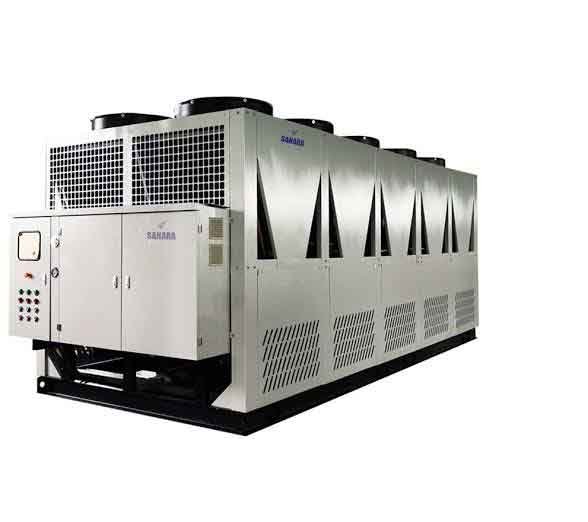
Commercial buildings in the UAE depend heavily on reliable cooling to maintain comfortable indoor conditions and keep business operations running smoothly. Offices, shopping centres, hotels, retail properties, mixed-use developments and other large facilities can face serious operational problems when their cooling capacity becomes insufficient or a chiller needs to be taken offline.
A temporary chiller rental provides a practical way to maintain cooling while a permanent system is being repaired, upgraded or expanded. Instead of investing in a new permanent chiller for a short-term requirement, building owners and facility managers can bring in rental equipment for the period it is actually needed.
Temporary cooling is already used in the UAE for emergency replacement, planned maintenance, seasonal demand and larger interim cooling projects. UAE rental providers offer configurations ranging from individual air-cooled chillers to larger temporary cooling plants connected to existing chilled-water infrastructure.
Why Commercial Buildings Need Temporary Chiller Rental
Cooling problems in a commercial building rarely happen at a convenient time. A major chiller may fail during a period of high occupancy, maintenance work may require part of the HVAC system to be shut down, or a building may temporarily require more cooling than its permanent equipment can provide.
A rental chiller can act as a bridge between the immediate cooling requirement and the permanent solution.
For example, a facility undergoing major HVAC maintenance may need temporary cooling until its existing chillers are returned to service. Similarly, a newly developed commercial property may require interim cooling while its permanent plant is being completed or commissioned.
Temporary cooling has also been used for large UAE developments where permanent district-cooling infrastructure was not yet ready. One documented UAE project used three modular 2,000 TR temporary chiller plants to provide interim chilled-water service while permanent district cooling infrastructure was being developed.
When Should You Rent a Temporary Chiller?
There are several situations where renting can make more commercial sense than purchasing additional permanent equipment.
Emergency Chiller Replacement
A sudden chiller failure can affect offices, retail areas, hotels and other occupied spaces within a short period. Depending on the building and weather conditions, losing cooling capacity can quickly become a business continuity issue.
Temporary rental equipment can provide replacement capacity while engineers repair the failed chiller or arrange a permanent replacement. Rental providers in the UAE specifically offer temporary cooling for unexpected equipment failures and emergency requirements.
Planned HVAC Maintenance
Major HVAC maintenance sometimes requires equipment to be isolated or shut down. Instead of allowing tenants, employees or customers to experience an extended loss of cooling, a temporary chiller can maintain the required chilled-water supply during the maintenance period.
This approach can also help facility teams complete major upgrades without putting the entire building’s cooling operation on hold.
ASHRAE’s commercial HVAC maintenance guidance emphasizes maintaining HVAC performance for thermal comfort and energy efficiency, making proper planning and maintenance an important part of commercial building operation.
Seasonal Cooling Demand
The UAE’s climate can create substantial cooling requirements, particularly during periods of high outdoor temperatures. A building that normally has sufficient cooling capacity may experience additional demand because of higher occupancy, changes in use or increased internal heat loads.
Rather than permanently increasing installed capacity for a requirement that may only last for a limited period, businesses can consider temporary rental capacity.
Rental providers commonly position temporary chillers as a way to handle peak or seasonal demand without making a permanent capital investment.
Building Expansion and Renovation
Commercial properties frequently undergo refurbishment, tenant changes and extensions. These projects can alter the building’s cooling requirements or temporarily interfere with existing HVAC infrastructure.
A temporary chiller can provide additional capacity while the permanent system is modified or expanded. This makes rental equipment particularly useful for projects where the final cooling requirement will change after construction is completed.
Choosing the Right Temporary Chiller
Selecting a rental chiller should not be based on tonnage alone. The correct equipment depends on the building’s actual cooling load, chilled-water requirements, available electrical supply, operating conditions and connection arrangement.
ASHRAE’s Standard 183 addresses peak cooling and heating load calculations for buildings, reinforcing the importance of properly determining building load rather than simply selecting equipment based on floor area.
A commercial facility should therefore review factors such as:
- Required cooling capacity
- Existing chilled-water flow and temperature
- Building occupancy and internal heat loads
- Available electrical power
- Outdoor installation space
- Connection points and pipework
- Rental duration
- Required air-handling equipment
- Access for delivery and removal
- Ambient operating conditions
A professional rental provider should assess these requirements before recommending a chiller configuration.
Air-Cooled or Water-Cooled Rental Chiller?
The choice between air-cooled and water-cooled equipment depends on the building and site conditions.
Air-cooled chillers can be attractive for temporary projects because they can be installed outdoors without the cooling tower arrangement associated with conventional water-cooled systems. This can simplify deployment where suitable outdoor space and electrical power are available.
Water-cooled systems can be appropriate for larger installations where the required infrastructure, water source and cooling-tower arrangement are available.
UAE rental companies offer both air-cooled and water-cooled equipment for different applications, while some providers specialize in modular air-cooled chillers designed for faster deployment.
The right choice should therefore be made according to the site’s technical requirements rather than assuming that one type is always better.
Temporary Chiller Installation and Integration
Renting the chiller is only one part of a temporary cooling project. The equipment must be correctly connected to the building’s HVAC system to deliver useful cooling.
Depending on the application, the rental package may include chillers, pumps, air-handling units, temporary pipework, hoses, electrical connections, controls and monitoring equipment.
For larger commercial cooling projects, temporary plants can be designed to integrate with existing chilled-water networks. A documented UAE temporary cooling project, for example, connected temporary equipment to an existing piping network to maintain continuous service during a transition period.
This is why a site assessment is important before equipment is delivered. The rental provider needs to understand where the chiller will be positioned, how it will connect to the building and what supporting equipment is required.
How Much Does Temporary Chiller Rental Cost in the UAE?
There is no reliable single rental price for every commercial building because the cost depends on the technical and logistical requirements of the project.
Important cost factors can include the required cooling capacity, rental duration, equipment type, transportation distance, installation complexity, temporary pipework, pumps, air-handling units, electrical requirements and additional support services.
For a short emergency rental, the commercial priority may be rapid deployment rather than achieving the lowest possible rental rate. For a longer project, businesses may have more opportunity to compare equipment efficiency, rental duration and operating costs.
A proper quotation should therefore be based on the actual building requirement rather than a generic price per ton.
Benefits of Renting Instead of Buying
For a temporary requirement, purchasing a permanent chiller can tie up significant capital in equipment that may not be required after the project ends.
Temporary rental offers greater flexibility because the equipment can be supplied for a defined period and removed when the permanent cooling system is operational again.
The main commercial advantages can include:
Lower upfront commitment: Businesses can avoid purchasing permanent cooling equipment for a short-term requirement.
Flexible rental periods: Temporary cooling can be arranged for emergency periods, maintenance shutdowns, seasonal demand or longer projects. UAE rental providers advertise short- and long-term rental arrangements.
Faster response: Rental providers maintain equipment fleets specifically for temporary requirements, allowing suitable systems to be mobilized when additional cooling is needed.
Scalable capacity: Multiple chillers can be configured together when a larger cooling requirement needs to be covered. Some UAE providers specifically offer modular systems that can be configured in series or parallel.
Reduced project disruption: Properly planned temporary cooling can allow maintenance, replacement or construction work to continue without completely removing cooling from occupied areas.
What Commercial Building Managers Should Check Before Renting
Before placing an order, facility managers should have clear information about the building and the cooling requirement.
The rental provider will typically need details such as the building location, required cooling capacity, existing chiller specifications, chilled-water temperatures and flow, available power, connection points and expected rental period.
It is also important to confirm what is included in the quotation. Some projects require more than the chiller itself. Pumps, hoses, AHUs, electrical equipment, controls, delivery, installation, commissioning and technical support may all affect the final setup.
For larger or critical facilities, monitoring can also be valuable. A UAE temporary cooling project documented by Rental Solutions & Services included BTU metering and SCADA communications to monitor plant performance.
A Practical Cooling Solution for UAE Commercial Properties
Temporary chiller rental is not simply an emergency service. It can be a planned commercial cooling strategy for buildings dealing with maintenance, renovation, seasonal demand, expansion or temporary capacity shortages.
The key is to treat the rental system as part of the building’s overall HVAC solution. Correct load assessment, equipment selection, connection planning and commissioning can make the difference between a temporary chiller that simply runs and one that effectively supports the building’s cooling requirements.
For UAE commercial buildings, the most suitable rental solution will depend on the building’s cooling load, existing HVAC infrastructure, site conditions and rental period. Businesses that assess these factors before renting can avoid unnecessary capacity, unexpected installation requirements and avoidable operating costs.
When permanent cooling is unavailable or additional capacity is needed for a defined period, a properly engineered temporary chiller can provide the flexibility needed to keep commercial operations comfortable and running.