

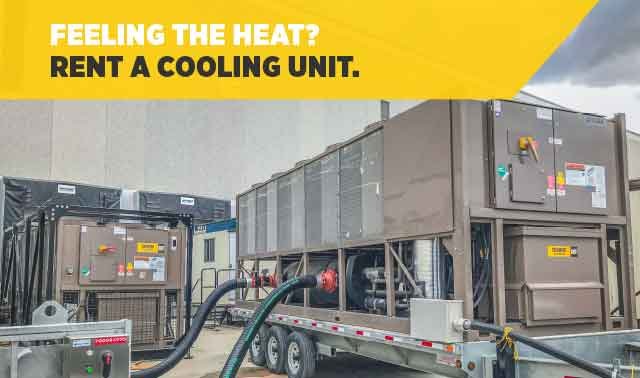
Choosing a temporary chiller rental company is not simply about finding a supplier with the lowest daily or monthly rental price. For construction, commercial, industrial and HVAC projects, the rental company needs to provide equipment that matches the required cooling load and can be installed safely under the actual site conditions.
A temporary chiller may be required during HVAC installation, construction and fit-out, planned maintenance, chiller replacement, emergency breakdowns or periods of additional cooling demand. In each situation, the equipment, installation method and support requirements can be different. Current UAE rental guidance from specialist providers also shows that temporary cooling projects can require supporting equipment such as pumps, hoses, pipework, air-handling units and electrical connections.
For this reason, choosing the right rental company should be treated as a technical and commercial decision rather than simply a price comparison.
Start With Your Project Requirements
Before contacting rental companies, establish what the temporary cooling system actually needs to achieve.
Important information can include the required cooling capacity, chilled-water temperatures, flow requirements, operating hours, available electrical supply, installation location, rental duration and the type of building or process being cooled.
For a construction project, for example, the requirement may change as different areas are completed. An industrial facility may need process cooling with specific temperature requirements, while a commercial building may require temporary comfort cooling during HVAC replacement.
Providing this information to suppliers allows them to recommend equipment based on the application rather than simply offering whatever chiller is currently available.
Check the Supplier’s Chiller Range
A good rental company should have access to equipment suitable for different project requirements.
Depending on the application, this may include air-cooled chillers, water-cooled chillers, portable cooling equipment and process chillers. The available capacity range is also important because the correct unit should be selected according to the project’s calculated cooling load.
Current UAE rental providers advertise different chiller types and capacities for temporary, industrial and commercial applications. HVAC Clinic, for example, describes temporary rental solutions for construction, maintenance, emergency replacement, seasonal demand and new project ramp-up.
Do not assume that a larger chiller is automatically a better choice. The equipment needs to match the actual cooling requirement and site conditions.
Ask How the Cooling Load Will Be Assessed
One of the most important questions to ask a rental company is how it determines the required chiller capacity.
A professional assessment should consider factors such as:
- Building or process cooling load
- Required supply and return water temperatures
- Water flow requirements
- Outdoor ambient conditions
- Existing HVAC infrastructure
- Operating schedule
- Available electrical capacity
- Heat load from equipment and occupants
- Future changes in cooling demand
A recent UAE rental-chiller guide from HVAC Clinic specifically highlights cooling load, ambient conditions, chilled-water requirements, power availability, installation space and rental duration as factors in selecting temporary cooling equipment.
If a supplier recommends a chiller without asking for basic project information, ask how the proposed capacity was determined.
Consider UAE Operating Conditions
The UAE’s climate should be considered when selecting temporary cooling equipment.
Outdoor ambient temperature can affect the operating performance of cooling equipment, particularly for air-cooled chillers. The supplier should therefore understand the expected site conditions and confirm that the proposed equipment is appropriate for them.
This is particularly important when a chiller will operate for extended periods during hot weather.
Instead of comparing equipment only by its nominal tonnage, ask the supplier what cooling output can be expected under the actual operating conditions of your project.
Look Beyond the Chiller Itself
A temporary cooling system may require considerably more than the chiller.
Depending on the project, supporting equipment can include:
- Chilled-water pumps
- Flexible hoses
- Temporary pipework
- Buffer tanks
- Air-handling units
- Heat exchangers
- Electrical cabling
- Control equipment
- Temporary power equipment
Atlas Copco’s UAE rental information illustrates this broader approach, describing temporary cooling solutions that can include chillers, air-handling equipment, hoses, cabling, installation, commissioning, logistics and technical support.
When comparing rental companies, check whether the quotation includes the accessories required to make the system operational.
A low chiller-only price can become much more expensive if pumps, hoses, installation or other essential components are added later.
Check Installation and Commissioning Services
Installation is another important difference between rental providers.
A temporary chiller may need to be positioned, connected to chilled-water lines, electrically connected, tested and commissioned before it can provide useful cooling.
Ask the supplier whether its service includes:
- Site assessment
- Equipment selection
- Delivery
- Positioning
- Pipe or hose installation
- Electrical connection
- System testing
- Commissioning
- Performance checks
- Decommissioning and collection
Atlas Copco’s rental process describes site visits, customized setup calculations, logistics and on-site installation as part of its temporary rental approach.
The exact scope varies between suppliers, so it should be clearly stated in the quotation.
Consider Site Access Before Ordering
The physical location of the temporary chiller can affect both equipment selection and project cost.
The supplier should understand where the unit will be installed and how it will reach that location.
Consider:
- Vehicle access
- Available installation space
- Equipment clearance
- Ventilation
- Chilled-water connection routes
- Electrical connection points
- Crane or lifting requirements
- Safe access for maintenance
This is especially important for construction sites, rooftops and projects where access changes during different construction stages.
A supplier that carries out a site assessment can identify logistical issues before delivery rather than discovering them after the equipment arrives.
Ask About Rental Duration and Contract Flexibility
Temporary cooling requirements can last longer or shorter than originally planned.
A construction project may be delayed. An HVAC replacement may take longer than expected. An emergency chiller rental may only be needed until permanent equipment is repaired.
For this reason, ask how the rental company handles extensions, early collection and changes in equipment requirements.
Current UAE rental information shows that temporary cooling can be arranged for short-term and long-term requirements, with rental periods ranging from short emergency requirements to extended industrial contracts.
A flexible agreement can be particularly useful when the project completion date is uncertain.
Compare Maintenance and Technical Support
Technical support is one of the most important factors when choosing a rental company.
A temporary chiller that stops working can affect construction schedules, building operations, production or occupant comfort. Before signing the agreement, establish who is responsible for maintenance and what happens if the equipment develops a fault.
Ask:
- Is routine maintenance included?
- Who responds to equipment faults?
- Is technical support available outside normal working hours?
- How quickly can a technician attend?
- Is replacement equipment available if a major failure occurs?
- Are remote monitoring services available?
Major rental providers such as Atlas Copco advertise installation, commissioning, technical specialists and 24/7 maintenance and service as part of their rental support.
The level of support differs between companies, so it should be compared before selecting a supplier.
Check Emergency Response Capability
For some projects, response time is more important than the rental rate.
If a temporary chiller is being used as emergency replacement cooling, every hour without sufficient cooling can have operational consequences.
Ask the supplier about its emergency response process, equipment availability, technician coverage and delivery arrangements.
A supplier with an established UAE rental operation may be better positioned to manage urgent requirements, but the actual response time should be confirmed rather than assumed.
Review the Complete Rental Quotation
Do not compare companies using the headline rental rate alone.
Ask for an itemized quotation that clearly separates the major costs.
Depending on the project, this could include:
Chiller rental: The cost of the actual cooling equipment.
Accessories: Pumps, hoses, pipework, buffer tanks, air handlers and other equipment.
Transportation: Delivery and collection charges.
Installation: Equipment positioning and system connections.
Commissioning: Testing and bringing the temporary system into operation.
Technician support: Scheduled or dedicated technical assistance.
Maintenance: Planned service and emergency support.
Power: Generator or electrical distribution requirements where applicable.
HVAC Clinic’s current UAE rental information similarly identifies cooling capacity, rental duration, delivery and logistics, technician requirements, accessories and site complexity as factors that can affect the final rental quotation.
An itemized quotation makes it much easier to compare suppliers on the same scope.
Do Not Choose Based Only on the Lowest Price
A low rental price can be attractive, but it may not represent the lowest overall project cost.
For example, one supplier may quote only for the chiller while another includes pumps, hoses, installation, commissioning and technical support.
The second quotation may initially look more expensive but could include everything needed to operate the system.
The better comparison is therefore based on total installed and supported cost, not simply the equipment rental rate.
Check Previous Project Experience
Ask whether the rental company has experience with projects similar to yours.
Relevant experience may include:
- Construction sites
- Commercial buildings
- Hotels
- Shopping centres
- Industrial facilities
- Warehouses
- Data centres
- HVAC replacement projects
- Process cooling
- Emergency cooling
Experience with similar applications can help the supplier understand common installation challenges and technical requirements.
It is also reasonable to request project references or case studies where appropriate.
Make Sure the Supplier Understands Your Existing HVAC System
If the temporary chiller will connect to an existing HVAC system, the rental company needs to understand the existing configuration.
Important information may include pipe sizes, connection points, water temperatures, flow rates, pumps, control systems and available electrical supply.
The temporary system should be compatible with the building’s existing equipment or be supplied with the necessary equipment to operate independently.
For buildings connected to district cooling, additional technical considerations may apply. HVAC Clinic’s current Dubai guidance notes that a standard rental chiller cannot simply be assumed to connect to every district-cooling building; the existing arrangement should be reviewed before planning the temporary installation.
Check Safety and Compliance Requirements
Temporary cooling equipment becomes part of an active project environment, so installation and operation need to account for site safety.
The supplier and project team should clarify requirements relating to electrical connections, lifting, equipment placement, access, temporary pipework and other site-specific safety measures.
For construction projects, the rental company should be prepared to coordinate with the main contractor, consultant and relevant site teams where necessary.
This coordination can reduce the risk of installation problems or delays.
Ask About Decommissioning and Collection
The rental project does not end when the chiller is switched off.
At the end of the rental period, equipment may need to be disconnected, drained where applicable, removed from the site and transported back to the supplier.
Confirm whether these services are included in the quotation.
It is also worth checking whether additional charges apply if the rental period is extended or the collection date changes.
A Practical Checklist for Choosing a Rental Chiller Company
Before making your final decision, compare suppliers against the following points:
Equipment: Does the company have the right chiller type and capacity?
Engineering: Will it assess your cooling load and site conditions?
Accessories: Are pumps, hoses, pipework and other required components available?
Installation: Is delivery, installation and commissioning included?
Support: Is technical and emergency support available?
Maintenance: Who is responsible for servicing the equipment?
Logistics: Can the supplier deliver and position the equipment at your site?
Flexibility: Can the rental period be extended if the project changes?
Pricing: Is the quotation itemized and transparent?
Experience: Has the supplier handled similar applications?
Decommissioning: Are removal and collection clearly covered?
This checklist can make supplier comparisons much more practical than looking at rental rates alone.
Questions to Ask Before Signing a Rental Agreement
Before placing an order, ask the rental company:
- What cooling capacity do you recommend and why?
- What operating conditions is the quoted capacity based on?
- Is the equipment suitable for UAE ambient conditions?
- What equipment is included in the rental package?
- Are transportation and installation included?
- Who handles commissioning?
- What maintenance is included?
- What happens if the chiller fails?
- How quickly can technical support reach the site?
- Can the rental period be extended?
- What are the charges for additional rental days?
- Who handles removal and collection?
- Are there any exclusions or additional site costs?
Getting clear answers to these questions can prevent unexpected costs and technical problems later.
Final Thoughts
Selecting a temporary chiller rental company should involve more than comparing prices.
The right supplier should understand your cooling requirement, assess the site, recommend suitable equipment, provide the necessary accessories, manage installation and commissioning, and offer appropriate technical support throughout the rental period.
For construction, HVAC replacement, industrial cooling and emergency applications, the complete temporary cooling solution matters just as much as the chiller itself.
Before signing a rental agreement, compare the equipment, engineering, installation, accessories, maintenance, emergency support, rental flexibility and total project cost. A detailed quotation based on your actual site requirements will give you a much clearer basis for choosing a temporary chiller rental company for your project.