

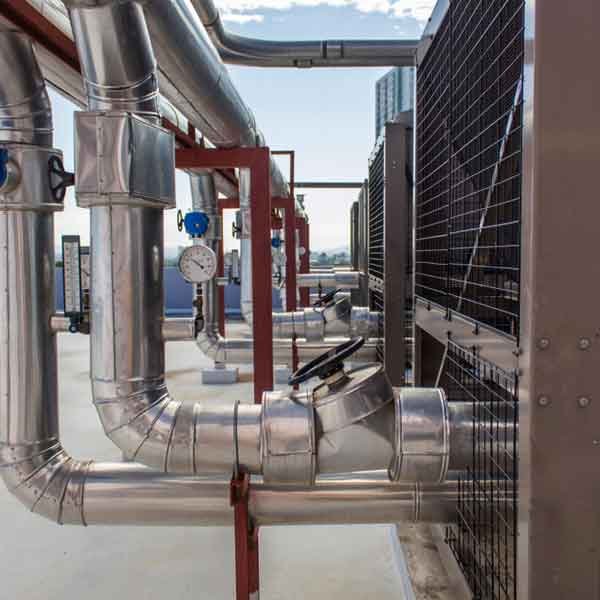
If you manage a commercial building anywhere in the UAE, you already know that cooling isn’t a comfort feature – it’s infrastructure. Cooling systems account for somewhere between 60 and 70 percent of total energy consumption in UAE buildings, which tells you everything about how central chillers are to keeping a mall, office tower, hospital, or hotel functioning through the summer. So when a chiller plant fails, a district cooling connection is delayed, or a new tenant fit-out pushes cooling demand past what the existing plant can handle, the response can’t wait for a six-month procurement cycle. That’s where rental chillers come in.
Why Rental Chillers Have Become a Standard Line Item, Not a Last Resort
A decade ago, renting a chiller was mostly an emergency move – something you did when a plant broke down and you needed a stopgap. That’s changed. Facility teams across Dubai, Abu Dhabi, Sharjah, and the northern emirates now build temporary cooling into their standard playbook for a few recurring situations:
Planned maintenance and retrofits. Taking a central plant offline for chiller overhaul, pipe replacement, or a switch to district cooling means the building still needs cooling in the meantime. A rental unit bridges that gap without shutting down operations.
Seasonal peak demand. UAE summers push installed capacity to its limits, and buildings that are marginal in shoulder seasons can fall short in July and August. Rather than over-sizing a permanent plant for a few peak months a year, many owners bring in supplemental rental capacity just for that window.
Emergency breakdowns. A compressor failure in a hospital, data center, or occupied office tower is not something you can leave unresolved for weeks. Rental providers in the UAE market this specifically – same-day or next-day delivery and installation is a common selling point, since a mid-summer breakdown in a fully tenanted building creates real liability.
Tenant fit-outs and phased occupancy. When a building is leasing up in phases, or a new tenant’s fit-out adds load the base-build system wasn’t sized for, a temporary chiller lets the space open on schedule while permanent capacity is planned properly.
Construction and pre-completion cooling. New commercial developments often need cooling before the permanent plant or district cooling connection is commissioned – during testing, commissioning, or early fit-out work.
What’s Actually Available in the UAE Market
Search the market and you’ll find a fairly established network of rental providers – regional players such as Al Shola Cooling, Geo Rental Solutions, Primechillers, and others operating fleets built specifically for the Gulf’s climate. A few things stand out about how the market is structured here:
Capacity range. Rental fleets typically span a wide range, with providers advertising units <cite index=”6-1″>from 20 to 350 tons</cite> to cover everything from a single-floor office retrofit to a large commercial or industrial site.
Air-cooled vs. water-cooled. Both configurations are common in the UAE. <cite index=”4-1″>Air-cooled chillers are among the most widely used types for commercial rental in the UAE, using air to cool the refrigerant, which makes them practical where water access is limited</cite>, and <cite index=”4-1″>effective at handling large cooling loads for factories, storage facilities, and outdoor events</cite>. <cite index=”4-1″>Water-cooled units, by contrast, tend to suit larger operations and longer-term deployments where space is constrained</cite>, since they generally deliver more efficient heat rejection but need a water source and cooling tower setup.
Built for the climate, not just the load. This is the detail that matters most for the UAE specifically. Standard chiller equipment isn’t necessarily rated for Gulf ambient temperatures, so serious rental providers here spec high-ambient units. <cite index=”9-1″>Some providers offer high-ambient screw chillers engineered to operate at temperatures up to 55°C, designed for process cooling and large-scale infrastructure</cite> — a meaningful distinction if you’re evaluating quotes, because a chiller rated for a 40°C climate will underperform or trip out during a genuine Dubai heatwave.
Flexible commitment terms. Rental contracts range from short, high-intensity deployments to extended terms. <cite index=”8-1″>Providers commonly offer chillers for a few hours or several days depending on the need, with flexibility built around the size and duration of the job</cite>. On the commercial building side, this stretches further – plenty of contracts run for months while a permanent plant is repaired, upgraded, or newly commissioned.
Installation and support bundled in. Because these units need proper hook-up to a building’s chilled water loop or electrical supply, most UAE rental providers include delivery, installation, and ongoing maintenance as part of the package rather than leaving the customer to sort out commissioning independently.
What to Actually Check Before You Sign a Rental Agreement
A few practical points worth pinning down with any provider, based on how the UAE market is structured:
- Ambient temperature rating. Confirm the unit is rated for genuine UAE summer conditions, not a generic spec sheet. Ask specifically what ambient temperature the compressor and control system are rated to handle continuously.
- Tonnage vs. actual load. Get an engineer’s estimate of your real cooling load rather than relying on a rough guess – undersizing a rental unit during a July heatwave defeats the purpose of renting one at all.
- Water vs. air-cooled trade-offs. If you’re short on space or don’t have a water source available on-site, air-cooled is usually the practical default; if you have the infrastructure and need higher efficiency over a longer rental period, water-cooled is worth the extra setup.
- Installation and connection responsibility. Clarify who handles tie-in to your existing chilled water loop or ductwork, and whether that’s included in the quoted rate or billed separately.
- Response time commitments. For emergency scenarios, ask what a provider’s actual delivery and installation timeline looks like — same-day response is achievable in the UAE market but isn’t universal across every provider or every emirate.
- Maintenance during the rental term. Confirm whether servicing and breakdown support during the rental period is included, especially for longer deployments running through peak summer months.
The Bottom Line
Rental chillers have moved from being a niche emergency service to a standard tool in how commercial buildings across the UAE manage cooling risk – whether that’s bridging a maintenance window, covering a summer peak, supporting a phased fit-out, or keeping a building operational after an unplanned breakdown. The market here has matured accordingly, with providers now offering climate-specific equipment, a wide tonnage range, and flexible terms built around how genuinely demanding Gulf summers are on mechanical cooling systems. For any facility manager or building owner, the real work isn’t finding a provider – it’s matching the right configuration, capacity, and ambient rating to the actual load, so the “temporary” solution performs as reliably as the permanent one it’s standing in for.