

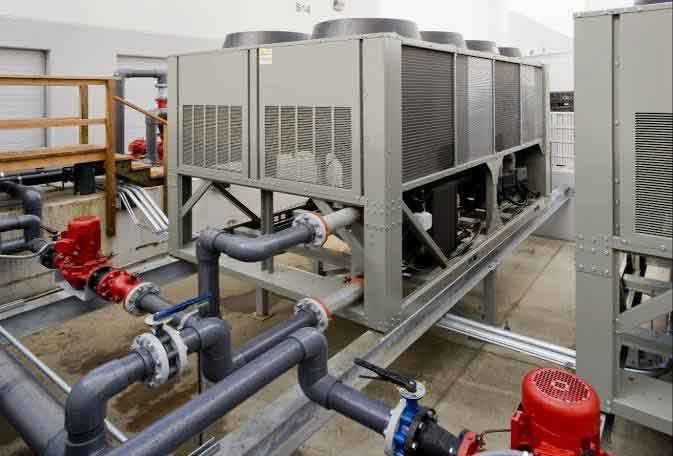
Choosing the right chiller size is an important part of planning a reliable cooling system. A unit that is too small may struggle to maintain the required temperature, while an unnecessarily large chiller can increase equipment and operating costs. The right selection starts with understanding the actual cooling load rather than choosing equipment based only on building size or a simple tonnage rule.
Start With the Cooling Load
The first step is to determine how much heat needs to be removed from the space or process. Cooling demand can come from people, lighting, equipment, machinery, solar heat, ventilation, and other internal or external sources.
The U.S. Department of Energy’s Building Science Education guidance recommends accurately determining cooling loads before sizing HVAC equipment and warns against relying on simple rules of thumb, which can result in oversized systems and unnecessary costs.
For an industrial or process application, the calculation may also need to account for heat generated by production equipment and the required process temperature.
Understand Chiller Capacity
Chiller capacity is commonly expressed in tons of refrigeration or kilowatts. One refrigeration ton represents 12,000 Btu per hour of heat removal.
However, the number printed on a chiller should not automatically be treated as the capacity it will deliver at every operating condition. Manufacturer ratings are based on specific conditions.
For example, Carrier publishes chiller ratings based on defined leaving-water temperature, water flow, and condenser conditions. Changing these conditions can affect the actual available capacity and efficiency.
Check Entering and Leaving Water Temperatures
The required chilled-water temperatures are another important part of chiller selection.
Tell the supplier the entering-water temperature, required leaving-water temperature, and expected water flow. These values help determine whether a particular chiller can deliver the required cooling performance.
This is especially important for process cooling, where the required temperature difference may differ from a standard comfort-cooling application. Carrier’s rental chiller data, for example, provides specific water-flow and temperature conditions for its rated capacity.
Consider Ambient Conditions
The environment where the chiller operates also matters. Air-cooled chillers reject heat directly to outdoor air, so ambient temperature can influence their performance.
If the equipment will operate in a hot climate, ask the supplier to provide the expected capacity at the actual design ambient temperature rather than relying only on standard catalogue ratings. Manufacturer data shows that chiller performance specifications are tied to defined operating conditions.
Avoid Oversizing the Chiller
Buying a much larger chiller than required may appear to provide extra security, but oversizing can increase upfront and operating costs. The DOE notes that excessive HVAC sizing can lead to higher costs, wasted energy, and frequent cycling.
A better approach is to calculate the required load and then select equipment that provides suitable capacity under the project’s actual operating conditions.
For projects with changing demand, multiple smaller chillers or staged capacity may also be worth evaluating instead of one very large unit.
Check Water Flow and System Compatibility
The chiller must work with the existing or planned chilled-water system. Check the required flow rate, connection sizes, pressure drop, pump capacity, and available pipework.
Manufacturer specifications demonstrate that different chiller models have defined flow rates and pressure-drop characteristics.
For a rental or temporary installation, this check is particularly important because the chiller may need to connect to an existing HVAC system using temporary pipework and pumps.
Consider Part-Load Performance
A chiller may not operate at full capacity all the time. Therefore, efficiency at partial load can be important when comparing equipment.
Manufacturers commonly publish part-load efficiency figures such as IPLV alongside full-load efficiency. Carrier, for example, provides both full-load and IPLV data for its chiller ranges.
If your project normally operates below maximum cooling demand, ask the supplier how the selected chiller performs at the expected operating load.
Choosing the Right Chiller Size
Before ordering a chiller, provide the supplier with the project’s cooling-load information, required chilled-water temperatures, flow rate, operating schedule, ambient conditions, application type, and any future changes that could affect cooling demand.
The supplier can then match the requirements with manufacturer performance data rather than selecting a unit from nominal tonnage alone.
Final Thoughts
Selecting the right chiller size is about matching actual cooling demand with real operating conditions. Cooling load, water temperatures, flow, ambient conditions, system compatibility, and part-load operation all influence the final selection.
Whether you are buying or arranging a rental chiller, ask for performance data at your required conditions and compare the complete system requirements before making a decision. This approach can help you avoid both insufficient cooling and unnecessary oversizing while choosing equipment that fits your project’s actual needs.