

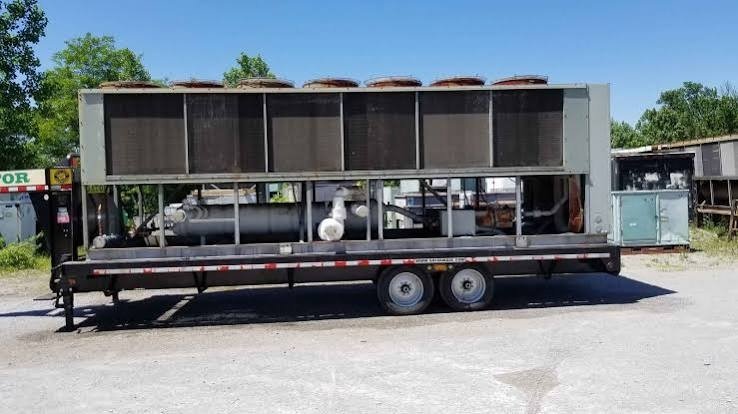
Commercial buildings in the UAE depend heavily on reliable cooling. Offices, hotels, shopping centres, hospitals, retail properties, warehouses and other large facilities can experience serious operational problems when their cooling systems cannot meet demand. A chiller breakdown, planned maintenance shutdown, unexpected increase in cooling load or temporary project can leave a building without sufficient air conditioning.
This is where chiller hire in UAE for commercial buildings becomes a practical option.
Instead of purchasing and permanently installing another chiller, a business can hire a temporary cooling unit for the period it is required. Depending on the project, a rental chiller in UAE may operate alongside the existing HVAC system, replace a failed unit or provide additional cooling capacity during a temporary increase in demand.
A commercial chiller rental can therefore provide a bridge between an immediate cooling requirement and a permanent HVAC solution. Current UAE rental providers offer air-cooled and water-cooled systems, with solutions ranging from smaller temporary requirements to large commercial and industrial applications.
What Is Chiller Hire in the UAE?
Chiller hire means renting a chiller or temporary chilled-water cooling system for an agreed period instead of purchasing the equipment outright.
A chiller is a refrigeration machine that removes heat from water or another circulating fluid. The chilled water can then be distributed through a building’s pipework to cooling coils in air-handling units or other terminal equipment. These coils transfer cooling to the air serving occupied spaces.
In a commercial building, the hired chiller can be connected to the existing chilled-water infrastructure where the site arrangement allows it. Depending on the application, a temporary setup may also include pumps, hoses, control equipment, temporary pipework and other accessories required to integrate the rental equipment with the building’s cooling system.
The exact arrangement depends on the building, cooling load, existing HVAC design, available connection points, equipment type and duration of the rental.
For this reason, chiller rental UAE is not simply a matter of delivering a machine and switching it on. The rental equipment needs to be selected and connected according to the building’s actual cooling requirements.
How Does a Chiller Work?
Understanding how a chiller works makes it easier to understand how a hired chiller can support a commercial building.
Most conventional chillers use a refrigeration cycle. The basic process involves the evaporator, compressor, condenser and expansion device.
First, warm return water from the building reaches the chiller’s evaporator. Heat from the water is transferred to the refrigerant inside the chiller. As the refrigerant absorbs heat, it changes state and becomes vapour.
The compressor then increases the pressure and temperature of the refrigerant vapour. The hot refrigerant moves to the condenser, where the heat is rejected either to outdoor air or to a separate water circuit, depending on whether the equipment is air-cooled or water-cooled.
The refrigerant then passes through an expansion device. Its pressure and temperature fall before it returns to the evaporator, allowing the refrigeration cycle to continue.
Meanwhile, the chilled water is circulated back into the commercial building. It passes through cooling coils in equipment such as air-handling units, where heat is removed from the air. The cooled air is then distributed throughout the building, while the warmer chilled water returns to the chiller to be cooled again.
In simple terms, a chiller does not simply “make cold air.” It removes heat from a water circuit, and that chilled water is then used to cool the building.
How Does Chiller Hire Work for a Commercial Building?
The process normally starts with an assessment of the building’s cooling requirement.
A facility manager, building owner or contractor provides information such as the application, location, required cooling capacity, existing HVAC arrangement and expected rental period. If the required capacity is not already known, a technical assessment may be necessary.
The rental provider then determines the appropriate equipment and supporting accessories. This can include the chiller itself, pumps, hoses, temporary pipework, electrical connections and control equipment depending on the project.
After the equipment is selected, it is delivered to the site. The installation team positions the chiller, establishes the required connections and checks the system before operation.
The temporary system is then commissioned and monitored during the rental period. At the end of the agreed hire period, the equipment can be disconnected and removed.
UAE rental companies currently describe similar processes involving requirement assessment, quotation, delivery, installation, commissioning, technical support and collection.
Why Do Commercial Buildings Need Chiller Hire?
There is no single reason why a business may require a temporary chiller. The requirement usually comes from a change in cooling demand or the temporary unavailability of existing equipment.
Chiller Breakdown
A failed chiller can create an immediate problem for a large commercial property. Waiting for a replacement component or completing major repairs can take time, particularly when the equipment requires specialist servicing.
An appropriately sized emergency chiller rental UAE solution can provide temporary cooling while the permanent equipment is being repaired.
This approach can be especially useful for buildings where maintaining indoor conditions is important for occupants, equipment or business operations.
Planned Chiller Maintenance
Commercial chillers require inspection, servicing and maintenance. Some maintenance activities may require equipment to be taken offline.
A temporary chiller can help maintain cooling capacity while the main equipment is unavailable. This allows facility teams to complete planned work without necessarily shutting down the entire building’s cooling service.
Additional Cooling Capacity
A building’s cooling requirement can change. Occupancy may increase, a new area may become operational or additional equipment may generate more heat.
Rather than immediately investing in a larger permanent cooling plant, a business may use temporary chiller UAE capacity to address a short-term requirement.
Seasonal Demand
The UAE experiences high cooling demand during its hot months. Commercial properties may need additional capacity during periods when existing systems are operating under heavy load.
Rental equipment can provide additional cooling capacity for a defined period without permanently increasing the size of the building’s installed chiller plant.
Building Renovation and Fit-Out
During refurbishment or HVAC upgrades, parts of a commercial building’s permanent cooling system may be unavailable.
A temporary cooling arrangement can help maintain usable conditions while permanent equipment or pipework is being modified.
What Types of Chillers Can Commercial Buildings Hire?
The two main categories relevant to commercial chiller hire are air-cooled chillers and water-cooled chillers. The appropriate option depends on the building, required capacity, available space, water infrastructure and project requirements.
Air-Cooled Chiller Rental UAE
An air-cooled chiller rejects heat directly to outdoor air through condenser coils and fans. It does not require a cooling tower or a separate condenser-water circuit.
This makes air-cooled equipment comparatively straightforward to deploy. Trane notes that air-cooled chillers can be packaged systems and are commonly used for facilities such as offices, hotels, healthcare facilities and other applications where water availability or installation simplicity is important.
For air cooled chiller rental UAE, the benefits can include simpler installation, fewer water-side components and suitability for temporary or emergency applications.
However, air-cooled chillers reject heat directly into the outdoor environment. In a hot climate, ambient conditions can influence performance, so equipment selection should account for the actual operating conditions rather than relying only on nominal capacity.
Water-Cooled Chiller Rental UAE
Water-cooled chillers reject heat through a condenser-water circuit, commonly connected to a cooling tower.
They can be particularly suitable for larger commercial facilities with appropriate water-side infrastructure. Trane describes water-cooled chillers as commonly used in large commercial buildings, hospitals, data centres and other facilities with significant cooling requirements.
The main advantage is that water-cooled systems can achieve higher efficiency under appropriate operating conditions. The trade-off is greater system complexity because the installation can involve cooling towers, pumps, condenser-water piping, controls and water treatment.
For a temporary project, this additional infrastructure must be considered before choosing a water-cooled rental system.
Air-Cooled vs Water-Cooled Chiller Hire
There is no universal winner between the two technologies.
An air-cooled rental chiller may be more convenient when rapid deployment, simpler installation and reduced water infrastructure are priorities. A water-cooled system may be more suitable where the commercial building already has compatible cooling-tower and condenser-water infrastructure and the project requires substantial continuous cooling capacity.
The U.S. Department of Energy notes that air-cooled systems eliminate the cooling tower and can reduce installation and maintenance requirements, while water-cooled systems are generally more efficient.
For UAE commercial projects, the decision should therefore consider more than the chiller’s nominal tonnage. Site conditions, operating hours, ambient temperatures, water availability, electrical capacity, access and the building’s existing HVAC configuration all matter.
How Is Chiller Capacity Selected?
One of the most important parts of commercial chiller rental UAE is selecting the correct cooling capacity.
Chiller capacity is commonly expressed in tons of refrigeration, or TR. The required capacity is related to the amount of heat that must be removed from the building.
A simple approach based only on floor area is not sufficient for accurate equipment selection. Cooling demand can be influenced by many factors, including building orientation, occupancy, lighting, equipment, ventilation, solar gains, operating schedules and the characteristics of the building envelope.
ASHRAE’s discussion of chilled-water design for a high-rise office building in Abu Dhabi demonstrates how cooling-system design involves detailed consideration of building cooling loads, chilled-water temperatures, temperature difference and dehumidification requirements.
That is why a professional chiller hire assessment should consider the actual building load and existing system rather than automatically selecting the largest available rental unit.
Oversizing can increase unnecessary equipment and operating costs, while undersizing can leave the building without sufficient cooling.
What Equipment May Be Required With a Rental Chiller?
A temporary chiller is only one part of some commercial cooling installations.
Depending on the building and connection method, the temporary system may require chilled-water pumps, flexible hoses, temporary pipework, valves, electrical distribution, control connections and other accessories.
A water-cooled arrangement may additionally require a suitable condenser-water circuit and cooling tower.
Rental providers in the UAE advertise packages that can include supporting equipment and accessories, while some specifically assess cooling load, water flow, power availability, access and connection routes before finalising the rental setup.
The exact equipment list should therefore be confirmed during the technical assessment.
Where Can Hired Chillers Be Used?
Commercial chiller hire can support many types of buildings.
Office buildings may require temporary cooling during HVAC maintenance, refurbishment or equipment failure.
Hotels can require additional or emergency cooling because guest comfort and continuous operation are important.
Shopping centres and retail facilities may use temporary cooling when existing equipment is unavailable or additional capacity is needed.
Hospitals and healthcare facilities can have critical cooling requirements, although the temporary system must be carefully engineered around the facility’s specific operational and safety requirements.
Warehouses, exhibition spaces, temporary facilities and other commercial properties can also require temporary cooling depending on their application.
UAE rental providers currently market temporary and commercial cooling solutions for offices, retail, hospitality, hospitals, warehouses, events, data centres and other applications.
Chiller Hire During UAE Summer
Cooling performance becomes particularly important in hot climates.
For a commercial building in the UAE, the outdoor design conditions and the required indoor environment need to be considered when selecting temporary cooling equipment. An air-cooled chiller, for example, rejects heat directly to the outdoor air, meaning high ambient temperatures can affect operating performance.
ASHRAE has specifically examined chilled-water system optimisation for high-rise buildings in Abu Dhabi’s hot, humid climate. Its analysis highlights the importance of chilled-water supply temperature, temperature difference, pump energy and dehumidification when designing chilled-water systems in such environments.
Therefore, commercial building managers should not select a rental chiller solely because it has a certain TR rating. The operating conditions and the complete cooling system need to be considered.
What Are the Benefits of Chiller Hire for Commercial Buildings?
The biggest advantage of hiring a chiller is flexibility.
A business can obtain cooling capacity without purchasing a permanent chiller. This can be particularly useful when the requirement is temporary, seasonal, emergency-related or uncertain.
Rental can also reduce the need for a large immediate capital investment. Instead of purchasing equipment that may only be required for a limited period, a company can hire capacity for the duration of the project.
Another advantage is scalability. If cooling requirements change, the rental arrangement can potentially be adjusted more easily than a permanent installation.
Temporary chiller hire can also help reduce operational disruption during maintenance or repairs. Rather than leaving a building without adequate cooling while the main chiller is offline, the temporary system can act as a bridge.
Current UAE rental providers commonly position these solutions for planned maintenance, emergency breakdowns, seasonal demand, temporary projects and additional cooling capacity.
Chiller Hire vs Buying a Chiller
Whether renting or buying is better depends on the expected duration and nature of the cooling requirement.
Buying can make sense when a building requires permanent cooling capacity for many years and the owner is prepared to manage installation, maintenance, repairs and eventual replacement.
Hiring can be more practical when the requirement has a defined end date or is difficult to predict. Examples include emergency replacement, seasonal demand, planned maintenance and temporary construction or refurbishment.
A rental agreement can also shift some equipment-maintenance responsibilities to the rental provider, depending on the terms of the contract.
The decision should ultimately consider the full lifecycle cost rather than comparing only the rental rate with the purchase price.
What Affects Chiller Hire Cost in the UAE?
There is no single chiller rental price that applies to every commercial building.
Rental cost can depend on the required cooling capacity, equipment type, rental duration, delivery distance, site access, installation complexity and additional equipment.
For example, a short-term emergency requirement may involve different logistics from a planned six-month commercial project. A large water-cooled installation can also require more supporting infrastructure than a packaged air-cooled chiller.
UAE rental companies identify factors such as tonnage, rental duration, transportation, installation, accessories, technician support and site complexity when determining rental quotations.
For this reason, businesses should request a site-specific quotation instead of relying on a generic advertised daily rate.
What Should You Check Before Hiring a Chiller?
Before signing a chiller hire UAE agreement, the commercial building’s team should establish the actual cooling requirement and confirm how the temporary equipment will connect to the existing HVAC system.
The required cooling capacity should be verified. The type of chiller should also be selected according to the site’s infrastructure and operating conditions.
Electrical requirements need to be checked before delivery. The site should have sufficient access for transporting and positioning the equipment, and the installation location should be suitable for the selected chiller.
For water-cooled systems, the availability and condition of the condenser-water and cooling-tower infrastructure need particular attention.
The rental agreement should also clarify what is included in the price, such as delivery, installation, commissioning, maintenance, technical support, accessories and collection.
These checks can help prevent a situation where the chiller has sufficient nominal capacity but cannot be integrated properly with the building.
How Long Can a Commercial Building Hire a Chiller?
Chiller rental periods vary according to the project.
A commercial building might require a unit for only a few days during an emergency or maintenance activity. Another project may need temporary cooling for several weeks or months while a permanent HVAC system is being repaired, upgraded or installed.
Some UAE providers advertise daily, weekly and monthly arrangements, while longer-term rental or lease solutions are available for extended requirements.
The appropriate rental period should match the actual project timeline, with enough allowance for installation, commissioning and the removal of the temporary system.
Is Chiller Hire Suitable for High-Rise Commercial Buildings?
Yes, temporary chiller systems can be used to support high-rise commercial buildings, but the installation requires careful engineering.
A high-rise building may have a complex chilled-water distribution system, significant vertical pipe runs and substantial cooling loads. The temporary system therefore needs to be compatible with the building’s hydraulic and control requirements.
ASHRAE’s Abu Dhabi high-rise analysis illustrates the complexity involved in chilled-water design for large commercial buildings, including cooling loads, supply temperatures, temperature differences and pump energy.
For a high-rise project, a technical site assessment is therefore much more appropriate than choosing a rental chiller solely from a capacity table.
Chiller Hire for Planned Maintenance
Planned maintenance is one of the clearest applications for temporary cooling.
If a commercial building has multiple chillers, one unit may be taken offline while the remaining equipment continues operating. However, if the available capacity is not sufficient, a rental chiller can provide additional temporary capacity.
The temporary unit can allow maintenance teams to work on the permanent system while the building continues receiving the cooling required for normal operations.
This approach can be especially useful where shutting down air conditioning completely would affect tenants, customers, employees or temperature-sensitive equipment.
Chiller Hire for Emergency Cooling
Emergency cooling is another major reason businesses consider rental equipment.
When a permanent chiller unexpectedly fails, the building operator needs to determine how much cooling capacity is actually required and how quickly a temporary system can be connected.
The best solution depends on the failure, available connection points, site access and the building’s remaining cooling capacity.
Rental providers in the UAE advertise emergency chiller solutions for unexpected breakdowns, critical equipment failures and district-cooling interruptions.
However, emergency deployment should still involve proper equipment selection and commissioning rather than simply connecting an available chiller without checking compatibility.
Why Commercial Buildings in the UAE Consider Temporary Cooling
The UAE’s commercial property sector includes large offices, hotels, retail facilities, hospitals, warehouses and mixed-use developments where reliable cooling is essential to daily operations.
A permanent HVAC system remains the primary solution for long-term cooling. However, there are situations where purchasing another permanent chiller is not the fastest or most economical answer.
Chiller hire in UAE for commercial buildings provides a temporary option when cooling requirements change or existing equipment is unavailable.
The value of the solution comes from matching the equipment to the building’s actual requirement. A correctly selected temporary chiller can provide cooling capacity during maintenance, breakdowns, seasonal peaks, refurbishment and other defined periods without requiring the business to permanently expand its HVAC plant.
Final Thoughts
Chiller hire in UAE for commercial buildings is essentially a flexible way of obtaining temporary chilled-water cooling without purchasing a permanent chiller.
The hired equipment can support a commercial property during a breakdown, planned maintenance, seasonal demand increase, refurbishment or temporary capacity shortage. Depending on the site, businesses may use air-cooled or water-cooled chillers, with the final choice influenced by cooling capacity, ambient conditions, water availability, electrical infrastructure, space and connection requirements.
The most important step is not simply choosing the biggest available chiller. The system needs to be correctly sized and properly integrated with the building’s existing HVAC infrastructure.
For UAE commercial properties, a professional assessment should therefore consider the building’s cooling load, operating conditions, existing chilled-water system, available power, installation access and expected rental period before equipment is selected.
When those factors are assessed properly, chiller rental UAE can provide a practical bridge between an immediate cooling requirement and a permanent HVAC solution.
Frequently Asked Questions
What is chiller hire in the UAE?
Chiller hire is the temporary rental of cooling equipment for a defined period. The hired chiller can provide chilled water for a commercial building’s HVAC system during maintenance, breakdowns, seasonal demand or other temporary requirements.
How does a rental chiller cool a commercial building?
The chiller removes heat from circulating water through a refrigeration cycle. The chilled water is then pumped through cooling coils, commonly in air-handling units, where it absorbs heat from the building’s air. The warmer water returns to the chiller and the process repeats.
Is air-cooled or water-cooled better for a commercial building?
Neither is automatically better. Air-cooled chillers can simplify temporary deployment because they do not require a cooling tower, while water-cooled systems can provide higher efficiency and suit large cooling loads when the necessary water-side infrastructure is available.
Can I hire a chiller during maintenance?
Yes. Temporary chiller rental can be used to maintain cooling capacity while a permanent chiller is taken offline for servicing or repairs. UAE rental providers specifically market temporary cooling for planned maintenance.
Can a rental chiller replace a failed commercial chiller?
It can provide temporary replacement capacity when the equipment is correctly sized and can be integrated with the building’s system. The actual solution depends on the failed equipment, required load, available connections and site conditions.
How is chiller rental capacity measured?
Chiller capacity is commonly expressed in tons of refrigeration (TR). The required capacity should be determined from the building’s cooling load rather than selected from floor area alone.
How much does chiller rental cost in the UAE?
The cost depends on factors such as capacity, chiller type, rental duration, transportation, installation, accessories and site requirements. A site-specific quotation is therefore more useful than a generic rental price.
Can commercial buildings hire chillers for several months?
Yes. UAE rental providers offer short-term and longer-term arrangements, depending on the equipment and project. Longer rentals can be used for extended maintenance, refurbishment, temporary facilities or additional seasonal capacity.
What information is needed to hire a chiller?
A provider will typically need information about the building location, cooling requirement, application, required rental period, existing HVAC system, available electrical supply, connection points and site access. If the required capacity is unknown, a technical assessment may be required.
Is temporary chiller hire useful during UAE summer?
It can be useful when existing cooling capacity is insufficient or unavailable. However, the equipment must be selected for the expected operating conditions because ambient temperature can affect chiller performance, particularly for air-cooled systems.