

Dubai’s hot and humid summer climate makes dependable cooling an important part of business operations. The Dubai Government describes the emirate’s climate as tropical desert, with hot and humid summers. DEWA also emphasizes the importance of efficient cooling and regular AC maintenance, particularly during summer.
For a commercial building, hotel, warehouse, factory, healthcare facility, data centre, retail property, or other temperature-sensitive operation, a cooling failure can therefore become an operational problem rather than simply a comfort issue. When a permanent chiller suddenly stops working, businesses may need temporary cooling while technicians diagnose the fault, replacement components are sourced, or the main system is restored.
This is where emergency chiller rental in Dubai can provide a temporary source of cooling capacity.
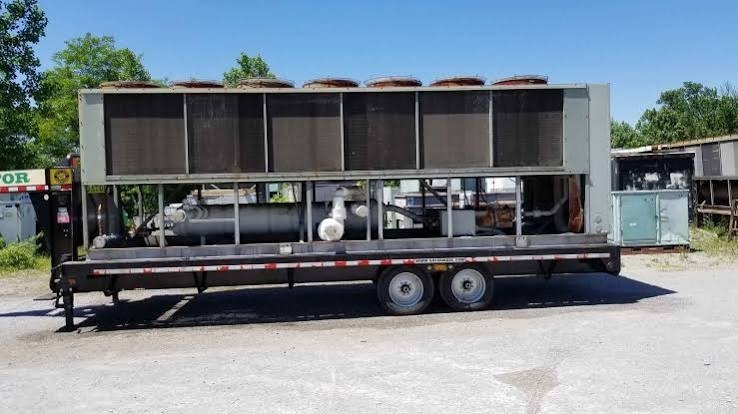
An emergency chiller rental is a temporary chiller system supplied for urgent cooling requirements, normally following an unexpected failure, capacity shortage, shutdown, or other situation where the existing cooling system cannot provide the required cooling. Depending on the site, the temporary equipment can be connected to an existing chilled-water system or arranged as part of a temporary cooling setup. UAE rental providers describe emergency and temporary chillers as solutions for breakdowns, planned maintenance, seasonal demand, temporary projects, and additional cooling capacity.
The main purpose is not to replace a permanent HVAC strategy permanently. Instead, the rental system acts as a bridge that allows a business to maintain required cooling while its normal equipment or cooling arrangement is unavailable.
What Is an Emergency Chiller Rental?
A chiller is a refrigeration machine that removes heat from water or another circulating fluid so the cooled fluid can be used for building or process cooling. In many commercial HVAC systems, chilled water circulates through equipment such as air-handling units or fan-coil units to remove heat from occupied spaces.
An rental chillers in UAE provides this cooling capacity on a temporary basis when the normal system cannot meet the site’s requirements.
Rental providers in the UAE describe temporary chillers as equipment that can be delivered and connected to an existing system or temporary loop, depending on the application. Some suppliers offer air-cooled, water-cooled, portable, and industrial chiller configurations.
The exact arrangement depends on the building’s cooling system, required capacity, available electrical supply, pipework, water flow, installation area, and the length of time the temporary cooling is required.
This means emergency chiller rental is not simply a matter of delivering a machine to a site. The temporary system needs to be matched with the building or process it is expected to cool.
Why Is Emergency Cooling Important in Dubai?
Dubai’s climate is one of the main reasons businesses cannot treat cooling interruptions casually. The official Dubai fact sheet describes the climate as hot and humid in summer, while UAE Government information describes the country’s overall climate as hot and humid during summer.
Cooling is also a major part of Dubai’s energy infrastructure. DEWA’s current guidance recommends maintaining efficient cooling systems, including appropriate thermostat settings and regular filter cleaning.
For large developments, district cooling is also widely used. Empower explains that district cooling uses a central plant to provide chilled water to connected buildings, while Tabreed describes a similar system in which chilled water travels through an insulated underground network and returns to the plant after passing through building systems.
For businesses dependent on central cooling, an interruption can therefore affect a large area of operations. A temporary chiller can provide an alternative source of cooling capacity when the normal arrangement is unavailable, provided the temporary system is technically compatible with the site.
When Does a Business Need Emergency Chiller Rental in Dubai?
The most obvious situation is a sudden chiller breakdown. A compressor problem, control fault, electrical issue, heat-transfer problem, or another major equipment failure can take a cooling plant offline. The appropriate response depends on the actual fault, but when repairs cannot restore cooling quickly enough, temporary cooling may be considered.
UAE rental providers specifically identify unexpected chiller breakdowns and failed cooling equipment as common reasons for emergency chiller rental.
Another situation is planned chiller maintenance. A business may know that its main cooling equipment will be unavailable for several hours or days. Instead of allowing the facility to operate without sufficient cooling, management can arrange temporary chiller capacity for the maintenance period.
Emergency or temporary cooling can also become relevant when a business experiences higher-than-expected cooling demand. Additional cooling capacity can sometimes be used when the existing system cannot comfortably handle a temporary increase in load.
Construction, commissioning, fit-out, shutdown, refurbishment, and expansion projects can create similar requirements. A permanent cooling system may not yet be available, or parts of an existing plant may be unavailable while work is completed. Rental chillers can provide temporary capacity during this transition.
Emergency Chiller Rental After a Chiller Breakdown
A chiller failure does not always mean the entire building must remain without cooling until the permanent equipment is repaired.
The first step should normally be to identify the cause of the failure and determine how much cooling remains available. If the remaining capacity is insufficient, a temporary chiller can potentially provide replacement or supplemental capacity.
The rental system may be connected to suitable chilled-water pipework or a temporary loop. The precise connection method depends on the site’s design.
This is one reason emergency chiller rental should be treated as an engineering requirement rather than simply an equipment-hire transaction. The available cooling capacity, chilled-water temperatures, flow requirements, electrical requirements, physical access, and connection arrangements all need to be considered before deployment.
Al Shola, for example, states that its Dubai rental packages are planned around cooling load, temperature, water flow, power, access, and connection routes.
Emergency Chiller Rental During Planned Maintenance
Not every temporary cooling requirement is caused by an unexpected failure.
Commercial and industrial cooling systems require inspection, maintenance, repair, cleaning, component replacement, and other work. During significant maintenance activities, some or all of the normal cooling capacity may be unavailable.
A temporary chiller can help maintain cooling while the permanent system is offline.
This can be especially useful where shutting down cooling would affect employees, customers, equipment, production processes, temperature-sensitive materials, or other critical operations.
In this situation, the rental is usually planned in advance. The business has more time to determine the cooling load, inspect the connection points, confirm electrical requirements, arrange delivery access, and coordinate installation.
That preparation can make the temporary cooling process much more straightforward than responding after an unexpected breakdown.
Emergency Chiller Rental for Commercial Buildings
Offices, shopping facilities, hotels, restaurants, retail properties, and mixed-use buildings can all depend heavily on reliable cooling.
A cooling failure in a commercial building can affect indoor comfort, employee productivity, customer experience, tenant satisfaction, and normal building operations.
Rental providers serving Dubai identify commercial buildings, hotels, offices, shops, restaurants, and other facilities among applications for temporary cooling.
For a commercial facility, the correct temporary solution depends on the size and type of building. A small area might be addressed with localized temporary AC equipment, while a larger chilled-water building may require a properly sized rental chiller connected to the existing system.
Emergency Chiller Rental for Industrial Facilities
Industrial cooling requirements can be more demanding because cooling may be required for a manufacturing process rather than simply maintaining comfortable indoor temperatures.
A production line may rely on a particular chilled-water temperature, flow rate, or process condition. If cooling is lost, production may have to slow down or stop until the required conditions are restored.
For these applications, choosing equipment only by nominal tonnage can be inadequate. The actual process requirements, entering and leaving water temperatures, flow rate, operating conditions, and required cooling capacity need to be considered.
Rental Power, for example, distinguishes industrial/process cooling from general temporary cooling and notes that industrial rental chillers are intended for high-tonnage process requirements.
Emergency Cooling for Hotels and Hospitality Businesses
Hotels have another reason to take cooling interruptions seriously: their cooling requirements continue throughout the day and night.
Guest rooms, restaurants, kitchens, meeting spaces, back-of-house areas, and other facilities can all have different cooling requirements. A major HVAC failure can therefore become a service and operational issue.
Temporary cooling has been used in Dubai hospitality situations. An Andrews Sykes case study describes an emergency cooling requirement following a district cooling failure at a luxury residential project on Palm Jumeirah during peak summer, where portable air-conditioning equipment was deployed within hours.
The example also demonstrates an important point: the best emergency cooling equipment is not always a chiller. The solution depends on what part of the cooling system has failed and what the building actually requires.
Emergency Chiller Rental for Warehouses and Temperature-Sensitive Operations
Warehouses and facilities handling temperature-sensitive materials can have very different cooling requirements from ordinary offices.
If a facility requires controlled temperatures for products, equipment, or processes, loss of cooling may create operational risks. The required response depends on the products involved, acceptable temperature range, duration of the interruption, building envelope, and available backup systems.
For this reason, businesses should understand their cooling requirements before an emergency occurs rather than waiting until the system has already failed.
A pre-prepared emergency cooling plan can record the existing chiller capacity, chilled-water connections, electrical information, access requirements, equipment location, and important contact details. This information can help a rental provider assess the requirement more efficiently.
Air-Cooled vs Water-Cooled Emergency Chillers
One of the most important technical decisions is whether an air-cooled or water-cooled rental chiller is appropriate.
An air-cooled chiller rejects heat directly to the surrounding air through condenser fans. Rental providers commonly position air-cooled chillers as practical options for temporary and emergency applications because they can avoid the need for a cooling tower and associated condenser-water system.
A water-cooled chiller, by comparison, uses condenser water and normally requires a suitable cooling-tower arrangement or another method of rejecting heat.
Water-cooled systems can be appropriate for large commercial and industrial applications, but the additional infrastructure needs to be considered. Tabreed’s technical material distinguishes air-cooled chillers from water-cooled chillers and notes that water-cooled systems in large buildings use cooling towers requiring additional space.
For an emergency application, the decision should therefore consider more than efficiency. Installation time, available space, water supply, electrical capacity, cooling load, ambient conditions, connection requirements, and project duration all matter.
How Is the Right Emergency Chiller Size Determined?
Choosing the correct chiller size is one of the most important parts of emergency cooling planning.
Cooling capacity is often expressed in refrigeration tons (RT or TR) or kilowatts of cooling capacity. However, the required capacity cannot reliably be determined from building floor area alone.
A proper assessment can consider the building’s heat load, equipment loads, occupancy, process requirements, desired supply and return water temperatures, water flow, ambient conditions, and the amount of existing cooling capacity that remains operational.
Rental Power’s sizing guidance similarly identifies space, equipment or process heat load, and application type as factors affecting required capacity.
For example, a building with a failed 500-ton chiller does not automatically require a 500-ton rental chiller. If another chiller remains operational, the temporary system may only need to replace the unavailable capacity. Conversely, if the existing plant was already operating near its limit, a smaller rental unit may not provide sufficient cooling.
The safest approach is to have the requirement assessed by a qualified HVAC professional.
What Information Is Needed for Emergency Chiller Rental?
When a business contacts an emergency chiller rental provider, useful technical information can speed up the assessment.
The provider may need to know the required cooling capacity, application, site location, existing chiller details, chilled-water supply and return temperatures, water flow requirements, electrical supply, available connection points, installation location, access restrictions, and the expected rental period.
If the exact cooling capacity is unknown, information from the failed chiller’s nameplate and technical documentation can be useful.
Photographs of the plant room, connection points, access route, electrical panels, and proposed equipment location can also help engineers understand the site before arrival.
The goal is to reduce uncertainty before equipment is dispatched.
How Does Emergency Chiller Rental Work?
The process generally begins with an assessment of the cooling problem.
The business explains what has failed, what needs to remain operational, and how much cooling is required. The rental provider then assesses equipment availability and technical compatibility.
Once the appropriate equipment is identified, delivery and installation arrangements are coordinated. Depending on the system, the rental setup can include the chiller itself plus pumps, hoses, pipework, manifolds, electrical equipment, or other accessories required for the temporary installation.
After connection, the system should be tested and commissioned before normal operation.
UAE rental providers describe similar workflows involving requirement assessment, equipment selection, delivery, connection, commissioning, and ongoing support.
How Long Does Emergency Chiller Rental Last?
There is no single standard rental period.
An emergency chiller may be required for a short breakdown repair, a planned maintenance period, several weeks of equipment replacement, or a longer temporary project.
The rental period should be based on how long the permanent cooling solution is expected to remain unavailable.
For example, a business waiting for a replacement compressor might require temporary cooling for a different period from a facility undergoing a complete chiller replacement.
Rental providers in Dubai and the UAE offer short-term and longer-term arrangements depending on the application.
What Does Emergency Chiller Rental Cost in Dubai?
There is no reliable single price for emergency chiller rental in Dubai because the cost depends on the technical requirements of the project.
Factors can include the required cooling capacity, rental duration, equipment type, delivery requirements, installation complexity, accessories, electrical requirements, pipework, pumps, site access, and whether additional support is required.
Rental Power specifically identifies tonnage, rental duration, delivery distance, accessories, power or fuel requirements, and installation complexity among factors affecting rental cost.
This is why comparing rental prices based only on the daily equipment rate can be misleading. One quotation may include delivery and installation while another may treat those as separate charges.
A business should compare the complete temporary cooling package rather than looking at the equipment rate alone.
Emergency Chiller Rental vs Buying a Chiller
Buying a permanent chiller can make sense when a business has a long-term, predictable cooling requirement.
Emergency rental serves a different purpose.
If a business has experienced an unexpected failure and expects its permanent equipment to be repaired or replaced, purchasing another permanent chiller may not be the fastest or most practical response.
Rental can provide temporary capacity without committing the business to another permanent asset.
The same applies to planned maintenance, temporary projects, seasonal capacity increases, construction, and other situations where additional cooling is required only for a limited period.
The important distinction is that rental is generally a temporary continuity solution, while purchasing is a long-term equipment decision.
Emergency Chiller Rental and Business Continuity
For many businesses, the real value of emergency cooling is not simply the cooling equipment itself. It is the ability to maintain operations while the permanent problem is being resolved.
A temporary chiller can potentially reduce the duration of a cooling interruption, but its effectiveness depends on how quickly the requirement is assessed, whether suitable equipment is available, whether the site is ready for connection, and whether the selected equipment matches the required load.
This is why emergency planning matters.
Businesses that know their chiller capacity, connection points, electrical requirements, site access conditions, and critical cooling loads before an emergency can generally communicate their requirements more clearly.
How Dubai Businesses Can Prepare for a Chiller Emergency
A useful emergency cooling plan should start before the chiller fails.
Facility managers can keep records of the installed chiller models, cooling capacity, electrical characteristics, chilled-water temperatures, pipe sizes, connection locations, pumps, control arrangements, and critical areas that must remain operational.
The facility should also know where temporary equipment could physically be positioned and how it could be transported to the site.
Access can be particularly important for large equipment. A rental provider may need to determine whether trucks can reach the installation point, whether lifting equipment is required, and whether there is enough space for the temporary chiller and associated equipment.
Having these details ready can make the response more organized when a failure occurs.
Emergency Chiller Rental for District Cooling Interruptions
District cooling is an important part of Dubai’s cooling infrastructure. Empower states that district cooling uses centralized plants to supply chilled water to connected buildings, while Tabreed describes chilled water being distributed through underground insulated pipe networks and returned to the plant after use.
A disruption to a district cooling service can therefore create a different emergency scenario from a failure of an individual building chiller.
The appropriate temporary solution depends on the building’s connection arrangement and the nature of the interruption. In some cases, temporary cooling may need to be provided at building level, while other situations may require coordination with the district cooling operator.
The technical assessment should therefore happen before any temporary equipment is selected.
Why Dubai Businesses Should Not Wait Until Summer to Plan
Dubai’s hot and humid summer climate places significant demands on cooling infrastructure.
Waiting until a major chiller failure occurs to start searching for temporary equipment can make the situation more difficult, particularly if the required capacity is large or the site requires complex connections.
A better approach is to have an emergency cooling plan ready before the peak cooling period.
This does not necessarily mean keeping a rental chiller permanently on-site. It can simply mean documenting the technical requirements, identifying suitable temporary connection points, understanding site access, and knowing who should be contacted if the permanent cooling system fails.
Frequently Asked Questions
What is emergency chiller rental in Dubai?
Emergency chiller rental in Dubai is the temporary supply of chiller equipment when a business’s existing cooling system fails, becomes unavailable, or cannot provide sufficient cooling. It can be used while permanent equipment is repaired, maintained, replaced, or supplemented.
When should a business consider emergency chiller rental?
Businesses can consider it after an unexpected chiller breakdown, during planned maintenance, when cooling demand temporarily exceeds available capacity, during construction or refurbishment, or when permanent cooling equipment is being replaced.
Can a rental chiller replace a failed commercial chiller?
It can potentially provide temporary replacement or supplemental capacity, but the rental unit must be correctly sized and technically compatible with the building’s chilled-water and electrical systems.
Are air-cooled chillers suitable for emergency cooling in Dubai?
Air-cooled chillers are commonly used for temporary and emergency applications because they can avoid the need for a cooling tower and condenser-water system. The final selection still depends on load, ambient conditions, available space, power, and site requirements.
Can emergency chillers be used for industrial cooling?
Yes. Rental providers offer industrial and process chillers for applications requiring temporary process cooling. The required capacity and operating temperatures must be assessed according to the process.
How much does emergency chiller rental cost in Dubai?
There is no universal rental price. Cost depends on capacity, equipment type, rental duration, delivery, installation, accessories, power requirements, and site conditions.
How long can a rental chiller be used?
The rental period can range from a short emergency repair period to several months or longer, depending on the customer’s requirements and the rental agreement.
Is emergency chiller rental only for summer?
No. Although Dubai’s hot and humid summer increases cooling demand, emergency chiller rental can also be required during equipment breakdowns, planned maintenance, construction, refurbishment, process changes, and temporary capacity shortages at other times of the year.
What information should I provide when requesting a rental chiller?
Useful information includes cooling capacity, application, site location, existing chiller information, chilled-water temperatures and flow, electrical supply, connection points, access conditions, and the expected rental duration.