

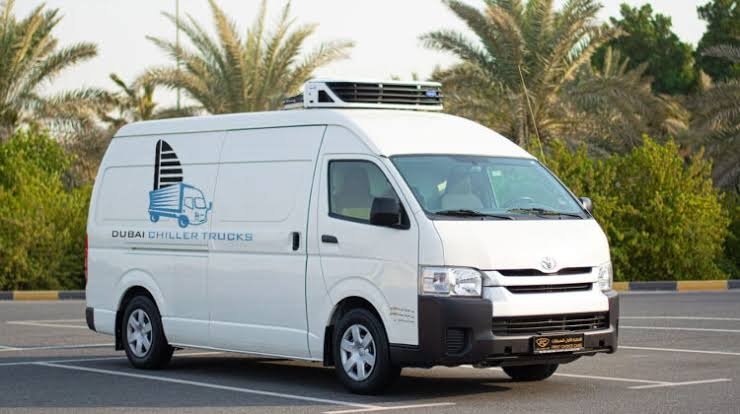
Professional chiller hire services in Dubai and across the UAE provide temporary or project-based cooling capacity when a business, commercial facility, industrial site, event venue, or other operation needs chilled water without purchasing a permanent chiller system.
A hired chiller rental in UAE can be used when an existing cooling system fails, during planned HVAC maintenance, while a permanent chiller is being replaced, when a project needs additional temporary capacity, or when cooling demand increases for a limited period. Rental providers may supply the chiller itself as well as supporting equipment, transportation, installation, commissioning, technical support, and eventual collection.
The basic principle is straightforward. A chiller removes heat from water through a refrigeration cycle. The cooled water is then circulated through the building or process cooling system, where it absorbs heat before returning to the chiller to be cooled again. DEWA’s energy-efficiency guidance describes chillers in this way and distinguishes air-cooled systems from water-cooled systems according to how the condenser rejects heat.
However, professional chiller hire involves much more than simply delivering a cooling machine to a site. The equipment has to be matched to the cooling load, ambient conditions, available power, water flow, connection points, physical access, rental period, and operating requirements. UAE rental providers commonly describe site assessment, equipment selection, delivery, connection, commissioning, and ongoing support as parts of the rental process.
What Is Chiller Hire in Dubai and the UAE?
Chiller hire is the temporary rental of a chiller system for an agreed period instead of purchasing and permanently installing the equipment.
The rental period can vary according to the project. A business may need cooling for a short maintenance shutdown, while a construction or industrial project may require temporary cooling for several months. Rental providers operating in the UAE advertise daily, weekly, monthly, seasonal, and longer-term arrangements depending on the application and equipment required.
A professional chiller rental package may include more than the chiller unit. Depending on the project, supporting equipment can include pumps, flexible hoses, pipework, manifolds, electrical connections, heat exchangers, control equipment, and other accessories needed to integrate the temporary cooling system with the customer’s installation.
This is particularly important for commercial and industrial projects because the available chiller capacity alone does not determine whether a temporary system will work properly. The connection arrangement, water flow, power supply, installation location, and existing HVAC infrastructure also need to be considered.
How Does a Professional Chiller Hire Service Work?
The professional chiller hire process normally begins with understanding the customer’s cooling requirement rather than immediately choosing a machine.
A typical project can be divided into several stages: requirement assessment, cooling-load evaluation, chiller selection, site preparation, delivery, installation, testing, operation, technical support, and collection.
1. The Customer Shares the Cooling Requirement
The first step is to establish why temporary cooling is required.
For example, the requirement may involve a failed chiller, planned maintenance, an HVAC replacement project, seasonal cooling demand, an industrial process, a temporary building, construction activity, or an event.
The provider will normally need information such as the site location, application, required cooling period, existing HVAC arrangement, approximate cooling capacity, available electrical supply, connection points, and access conditions.
If the required capacity is unknown, a professional provider can assess the application before recommending equipment. Rental Power, for example, states that its process starts by collecting the required capacity, application, and site location and can perform a site assessment when tonnage has not already been established.
2. Cooling Load and Site Requirements Are Assessed
Selecting a chiller based only on building size can lead to an unsuitable temporary system.
The actual requirement can depend on the building envelope, occupancy, equipment generating heat, process requirements, operating temperatures, existing chilled-water system, ambient conditions, and other project-specific factors.
For industrial applications, process heat can be particularly important because machinery and production equipment may create cooling loads that are very different from those of an ordinary office or commercial space.
UAE suppliers similarly identify factors such as cooling load, site size, ambient temperature, indoor or outdoor installation, process heat, and occupancy as considerations when selecting rental chiller capacity.
The site assessment can also identify practical issues. Engineers may need to determine where the chiller can be positioned, how it will reach the connection point, whether lifting equipment is required, how hoses or temporary pipework will be routed, and whether the electrical infrastructure can support the selected equipment.
3. The Correct Chiller Type Is Selected
Once the application has been assessed, the provider can select an appropriate chiller configuration.
The two major categories used in HVAC applications are air-cooled chillers and water-cooled chillers.
DEWA explains that an air-cooled chiller uses air to cool the condenser, whereas a water-cooled chiller uses water for condenser cooling.
Air-Cooled Chiller Rental
An air-cooled chiller rejects heat directly to the surrounding air through its condenser system.
This configuration can be practical for temporary projects because it does not require the same type of cooling-tower arrangement associated with a conventional water-cooled system. Al Shola, for example, lists air-cooled chillers for temporary, process, commercial, and emergency cooling applications in Dubai.
Air-cooled systems can therefore be useful when relatively fast deployment and simpler temporary infrastructure are important.
However, outdoor ambient conditions have to be considered carefully. High outdoor temperatures influence condenser operating conditions, so equipment selection and site planning are particularly important for UAE applications.
Water-Cooled Chiller Rental
Water-cooled chillers reject heat through a condenser-water circuit.
Depending on the installation, a water-cooled system may require associated equipment such as cooling towers, pumps, water treatment arrangements, and suitable condenser-water connections.
For a facility that already has compatible infrastructure, a water-cooled temporary solution may be appropriate. For other temporary sites, the additional infrastructure can affect installation requirements and project cost.
The correct choice therefore depends on the application and site rather than assuming that one chiller type is suitable for every project.
Why Is Chiller Hire Important in Dubai and the UAE?
Cooling is a major part of building and industrial operations in the UAE. Dubai’s extensive district cooling infrastructure is also an indication of the importance of centralized cooling to the region’s built environment.
DEWA explains that district cooling systems distribute chilled water to groups of buildings and notes that large water-cooled chillers are generally used in district cooling plants.
Dubai’s energy authorities have also placed significant emphasis on efficient cooling. DEWA reported that Dubai’s Demand Side Management Strategy includes programmes relating to efficient cooling and aims to reduce electricity and water demand.
For individual businesses, however, permanent cooling infrastructure is not always the practical answer to a temporary requirement.
A company may have a permanent cooling plant but still need additional capacity for a limited period. Another business may need replacement cooling while a failed chiller is repaired. A construction project may require cooling before permanent HVAC infrastructure is ready.
This is where professional chiller hire services in Dubai & UAE can provide a temporary bridge.
When Do Businesses Need Chiller Rental in the UAE?
There are several common situations in which temporary chiller hire can be useful.
Planned HVAC Maintenance
Major chiller maintenance can require equipment to be taken offline.
If the building cannot operate comfortably without cooling during the maintenance period, a temporary rental chiller can provide replacement capacity while the permanent equipment is unavailable.
This allows maintenance teams to work on the permanent system without necessarily leaving the facility without cooling.
Chiller Breakdown
An unexpected chiller failure can create an urgent requirement for temporary cooling.
Instead of waiting for the permanent system to be repaired before restoring cooling, a rental chiller can be installed as a temporary replacement where the site and equipment are compatible.
UAE rental providers specifically identify unexpected breakdowns and permanent-equipment repairs as common reasons for emergency and temporary chiller rental.
HVAC Replacement Projects
Replacing a permanent chiller can involve procurement, delivery, removal of the old equipment, installation, testing, and commissioning.
The transition period can create a temporary cooling gap.
A rental chiller can act as a bridge during this period, allowing the facility to continue operating while the permanent HVAC project is completed.
Seasonal Cooling Requirements
Some facilities require more cooling capacity during periods of higher demand.
Rather than permanently increasing the installed cooling capacity for a requirement that may only occur for part of the year, businesses can investigate temporary additional capacity.
The suitability of this approach depends on the facility’s load profile and the economics of the project.
Construction and Fit-Out Projects
Temporary cooling can also be required during construction, fit-out, commissioning, or temporary occupation.
Rental providers in the UAE market temporary cooling for construction and project applications, including situations where permanent HVAC infrastructure is not yet available.
Industrial Process Cooling
Industrial facilities can have cooling requirements associated with manufacturing processes, machinery, production lines, or specialized equipment.
These requirements can be different from comfort cooling in an office or retail building.
The rental system therefore needs to be selected around the actual process requirement, including required temperatures, flow conditions, operating schedule, and heat load.
Andrews Sykes, for example, documents a UAE process-cooling project involving a low-temperature chiller configuration exceeding 2 MW of cooling capacity.
What Factors Determine Chiller Rental Capacity?
One of the most important parts of professional chiller hire is selecting adequate capacity.
Chiller capacity is often discussed in tons of refrigeration (TR), but the required capacity should be determined from the actual cooling requirement rather than simply choosing a machine based on the size of a building.
Important factors include the following.
Cooling Load
The cooling load represents the amount of heat that needs to be removed.
A commercial building may receive heat from occupants, lighting, equipment, solar gains, ventilation, and the building envelope. An industrial process may introduce additional heat from machinery or production processes.
Ambient Conditions
Outdoor temperature affects chiller operation, particularly for air-cooled equipment.
This makes local climate conditions an important part of equipment selection for temporary cooling in Dubai and other UAE locations.
Chilled-Water Temperatures
The required supply and return water temperatures influence the cooling system’s operating conditions.
A comfort-cooling application and an industrial process may require different chilled-water conditions, so the rental equipment must be compatible with the intended application.
Water Flow
The system must be capable of providing the required chilled-water flow through the connected system.
A chiller with apparently sufficient capacity may still be unsuitable if the hydraulic arrangement does not match the project’s requirements.
Existing HVAC Infrastructure
If the rental chiller is being connected to an existing HVAC system, the provider needs to understand the existing headers, pumps, pipework, controls, and connection arrangement.
A temporary system may also require additional pumps, hoses, manifolds, or heat exchangers.
Electrical Supply
The available electrical supply is another critical consideration.
The provider needs to establish the equipment’s electrical requirements and confirm that the site can safely support the selected chiller and associated equipment.
What Is Included in Professional Chiller Hire Services?
The exact rental package differs between providers and projects, but professional chiller hire can involve several stages of technical and logistical support.
Equipment Selection
The provider matches the equipment to the required cooling capacity, operating conditions, application, and rental duration.
Transportation
The chiller must be transported from the rental fleet to the project location.
The logistics plan can depend on equipment size, site access, road conditions, delivery timing, and whether lifting equipment is required.
Positioning
The equipment needs to be positioned in a suitable location with appropriate access, ventilation, clearance, and connection routes.
Temporary Connections
Depending on the system, flexible hoses, temporary pipework, pumps, manifolds, electrical cabling, or other accessories may be needed.
Installation and Commissioning
After the equipment is connected, the system should be checked and commissioned before being placed into normal operation.
Rental Power describes its process as including delivery, connection, commissioning, testing, and support throughout the rental period.
Technical Support
Professional rental arrangements can also include ongoing maintenance, troubleshooting, performance checks, and technician support.
This is particularly relevant for critical commercial and industrial applications where a cooling failure could affect business operations.
How Long Can You Hire a Chiller in Dubai?
The rental period depends on the project’s requirements.
Short-term chiller hire can be appropriate for a maintenance shutdown, event, emergency replacement, or temporary cooling requirement lasting days or weeks.
Longer rental periods may be used for construction projects, seasonal requirements, industrial applications, HVAC replacement programmes, or situations where permanent equipment cannot yet be installed.
Rental Power describes arrangements ranging from short emergency hire to long-term industrial contracts, while HVACLINIC similarly advertises short-term and longer-term rental options.
The rental duration can also influence the commercial structure of the agreement. Longer commitments may have different daily or monthly pricing compared with short-term bookings.
What Affects Chiller Rental Cost in the UAE?
There is no single chiller rental price that applies to every Dubai or UAE project.
The final cost can depend on several technical and logistical variables.
The first is cooling capacity. A larger cooling requirement generally requires larger or multiple units and potentially more supporting equipment.
The second is rental duration. Daily, weekly, monthly, seasonal, and long-term arrangements can have different commercial structures.
The third is delivery and site logistics. Distance, access, lifting requirements, positioning, and installation complexity can affect the overall project cost.
The fourth is accessories. Pumps, hoses, manifolds, temporary pipework, electrical equipment, heat exchangers, or other components may be required depending on the installation.
The fifth is technical support. Some projects may need basic support, while critical industrial applications may require regular or continuous technician presence.
Rental Power identifies capacity, rental duration, delivery distance, hoses and accessories, power source, and installation complexity among factors that affect chiller rental cost in the UAE.
For this reason, a professional quote should be based on the actual project rather than relying on a generic advertised daily rate.
Chiller Hire vs Buying a Chiller
Buying and renting serve different purposes.
A purchased chiller becomes a permanent asset and may make sense where the facility has a stable, long-term cooling requirement and suitable infrastructure.
Chiller hire provides greater flexibility where the cooling requirement is temporary, uncertain, seasonal, emergency-based, or associated with a specific project.
Rental can reduce the need for a large initial equipment purchase and can allow businesses to obtain additional cooling without permanently increasing their installed capacity.
The trade-off is that rental payments continue for as long as the equipment is required, so the economics should be assessed according to the expected duration and operational requirement.
HVACLINIC’s UAE rental guidance similarly contrasts rental and ownership in terms of upfront investment, maintenance responsibility, flexibility, deployment speed, and intended application.
Why Professional Installation Matters
A rental chiller is only useful when the complete temporary cooling system is correctly integrated.
Improper capacity selection, unsuitable pipework, inadequate water flow, incorrect electrical connections, poor positioning, or incomplete commissioning can reduce performance and create operational problems.
Professional installation therefore involves more than placing the machine on-site.
Engineers need to understand the cooling requirement and verify the connection arrangement before starting the system.
For larger temporary cooling projects, the installation may involve pumps, flexible hoses, temporary headers, electrical connections, control interfaces, and other supporting components.
This is why businesses looking for chiller hire services in Dubai should evaluate not only the equipment fleet but also the provider’s engineering, installation, logistics, and support capability.
Professional Chiller Hire for Commercial Facilities
Commercial facilities can include offices, retail properties, hotels, hospitality venues, shopping facilities, warehouses, and other buildings where indoor cooling is important to daily operations.
A temporary chiller can provide additional capacity or replacement cooling during maintenance and HVAC upgrades.
The system must be matched to the building’s cooling requirements and existing infrastructure.
In Dubai, district cooling is also an important part of the commercial cooling landscape. DEWA describes district cooling as chilled water supplied to groups of buildings through distribution networks, while Dubai’s energy authorities have continued to emphasize efficiency in central and district cooling.
Where a facility has a centralized cooling arrangement, temporary rental equipment may need to be carefully integrated with the existing system.
Professional Chiller Hire for Industrial Applications
Industrial cooling can be more technically demanding than ordinary comfort cooling.
Manufacturing equipment, production processes, warehouses, data-related environments, food processing, and other industrial operations can have specific temperature and process requirements.
The temporary chiller therefore needs to be evaluated according to the process rather than simply the building area.
Factors such as process heat load, supply temperature, return temperature, water flow, operating schedule, redundancy, available power, and connection arrangement may all influence the system design.
This is one reason industrial chiller rental providers advertise larger-capacity equipment and engineered temporary cooling solutions for process applications.
Emergency Chiller Hire in Dubai and the UAE
Emergency chiller rental is intended for situations where cooling is unexpectedly unavailable or insufficient.
A typical emergency response begins with collecting essential information about the facility and the failed cooling system.
The rental provider then identifies an available unit, confirms the approximate capacity and connection requirements, prepares the required equipment, transports it to the site, connects it, and commissions the temporary cooling system.
The exact response time depends on equipment availability, location, site access, project complexity, and the provider’s operational arrangements.
Several UAE rental providers advertise emergency and rapid-response chiller services, but advertised response times are provider-specific and should not be treated as a universal industry standard.
For critical facilities, businesses should establish the emergency procedure before a failure occurs, including available connection points, required capacity, access routes, electrical requirements, and contact information.
What Should You Ask a Chiller Rental Company Before Hiring?
Before agreeing to a rental, businesses should establish exactly what is included in the service.
Ask what chiller type and capacity are being proposed and why that equipment is appropriate for the application.
Confirm whether the quote includes transportation, positioning, installation, commissioning, hoses, pumps, electrical connections, and collection.
Ask about the expected rental period and what happens if the project is extended.
Confirm what technical support is available during the rental period and how breakdowns are handled.
For an emergency project, ask about equipment availability and the provider’s actual response process rather than relying only on a general statement that emergency service is available.
It is also important to clarify the responsibilities of the customer and rental company, particularly regarding power, water, access, site preparation, permits where applicable, and connection to existing systems.
How to Prepare Your Site for a Rental Chiller
Good site preparation can make temporary chiller installation faster and easier.
The installation area should have sufficient space for the equipment and access for delivery and maintenance.
The site should also have the required electrical infrastructure or an agreed temporary power arrangement.
Connection points should be identified before the equipment arrives, including chilled-water supply and return connections where applicable.
The team should also confirm hose or pipe routes, drainage requirements where relevant, lifting arrangements, ventilation and clearance requirements, and safe access for technicians.
For larger installations, a pre-installation site survey can identify potential problems before delivery.
What Makes a Chiller Hire Service Professional?
A professional chiller hire service is not simply defined by having chillers available for rent.
A complete service should consider the engineering requirements of the application from initial assessment through collection.
Important capabilities can include a suitable fleet, accurate load assessment, appropriate equipment selection, qualified installation personnel, reliable logistics, commissioning procedures, technical support, maintenance, and clear commercial terms.
The strongest technical approach is to select equipment according to the actual project requirements rather than simply supplying the largest available machine.
This approach can help avoid both inadequate cooling and unnecessary capacity.
Professional Chiller Hire Services Across Dubai and the UAE
Dubai is a major market for temporary cooling because of its commercial, hospitality, construction, industrial, and infrastructure activity.
However, chiller rental requirements are not limited to Dubai.
UAE rental providers advertise services covering Abu Dhabi, Sharjah, Ajman, Ras Al Khaimah, Fujairah, Umm Al Quwain, and other locations depending on fleet availability and logistics.
A UAE-wide chiller hire provider should therefore be able to plan transportation, installation, technical support, and collection according to the location and project conditions.
For businesses operating multiple facilities, nationwide coverage can also simplify temporary cooling arrangements by providing a single technical partner for different sites.
Frequently Asked Questions
What are professional chiller hire services in Dubai?
Professional chiller hire services provide temporary cooling equipment for commercial, industrial, construction, event, maintenance, emergency, and other applications. Depending on the project, the service can include equipment selection, delivery, installation, commissioning, technical support, maintenance, and collection.
How does a rental chiller work?
A chiller uses a refrigeration cycle to remove heat from water. The chilled water is then circulated through an HVAC or process system to absorb heat before returning to the chiller for another cooling cycle. DEWA describes this chilled-water principle in its energy-efficiency guidance.
What is the difference between air-cooled and water-cooled chillers?
An air-cooled chiller rejects condenser heat using air, while a water-cooled chiller uses water in the condenser system. The choice depends on the site’s infrastructure, cooling requirement, operating conditions, and project constraints.
Can I hire a chiller for a short period?
Yes. UAE rental providers offer short-term arrangements for applications such as emergencies, maintenance, events, and temporary projects, as well as longer-term rental options for industrial and project requirements.
Can a rental chiller replace a failed permanent chiller?
A temporary rental chiller can sometimes provide replacement cooling while a permanent chiller is being repaired. Whether it can fully replace the failed system depends on the required cooling capacity, connection arrangement, electrical supply, and site conditions.
How is the correct chiller size determined?
The required capacity depends on the cooling load and operating conditions. Building size alone is not sufficient. Factors can include occupancy, equipment heat, process requirements, ambient temperature, chilled-water temperatures, and existing HVAC infrastructure.
How much does chiller rental cost in the UAE?
There is no universal rental price because the cost depends on capacity, rental duration, transportation, installation complexity, accessories, site conditions, and technical support requirements. UAE rental providers identify these factors when preparing project-specific quotations.
Is chiller rental suitable for industrial cooling?
Yes. Rental chillers can be used for industrial and process-cooling applications when the equipment is correctly selected for the required temperature, flow, heat load, operating conditions, and connection arrangement. UAE providers advertise temporary process-cooling solutions for industrial facilities.
Can chillers be used during HVAC replacement?
Yes. Temporary cooling can bridge the period between removal or failure of existing equipment and commissioning of the permanent replacement system. The rental system needs to be compatible with the temporary operating arrangement.
Does a rental chiller include installation?
This depends on the rental provider and quotation. Professional turnkey rental packages may include delivery, positioning, connection, commissioning, and technical support, but businesses should confirm exactly what is included before signing the rental agreement.
Final Thoughts
Professional chiller hire services in Dubai and the UAE provide businesses with a flexible way to obtain temporary cooling without purchasing permanent equipment for every short-term requirement.
The process generally starts with understanding the cooling requirement and assessing the site. The provider then selects a suitable chiller, arranges transportation, completes the temporary connections, commissions the equipment, and provides technical support throughout the agreed rental period.
The most important part of the process is not simply choosing a chiller with a particular capacity. The system must be appropriate for the actual cooling load, ambient conditions, water flow, electrical supply, existing HVAC infrastructure, application, and rental duration.
For this reason, businesses considering chiller hire in Dubai & UAE should look beyond the equipment itself and assess the complete service: engineering assessment, equipment availability, installation, commissioning, technical support, emergency response, rental flexibility, and transparent project costs.
Whether the requirement comes from a planned HVAC shutdown, unexpected chiller failure, construction project, seasonal demand, commercial facility, event, or industrial process, a properly planned temporary cooling system can provide a practical bridge until the permanent cooling requirement is restored or completed