

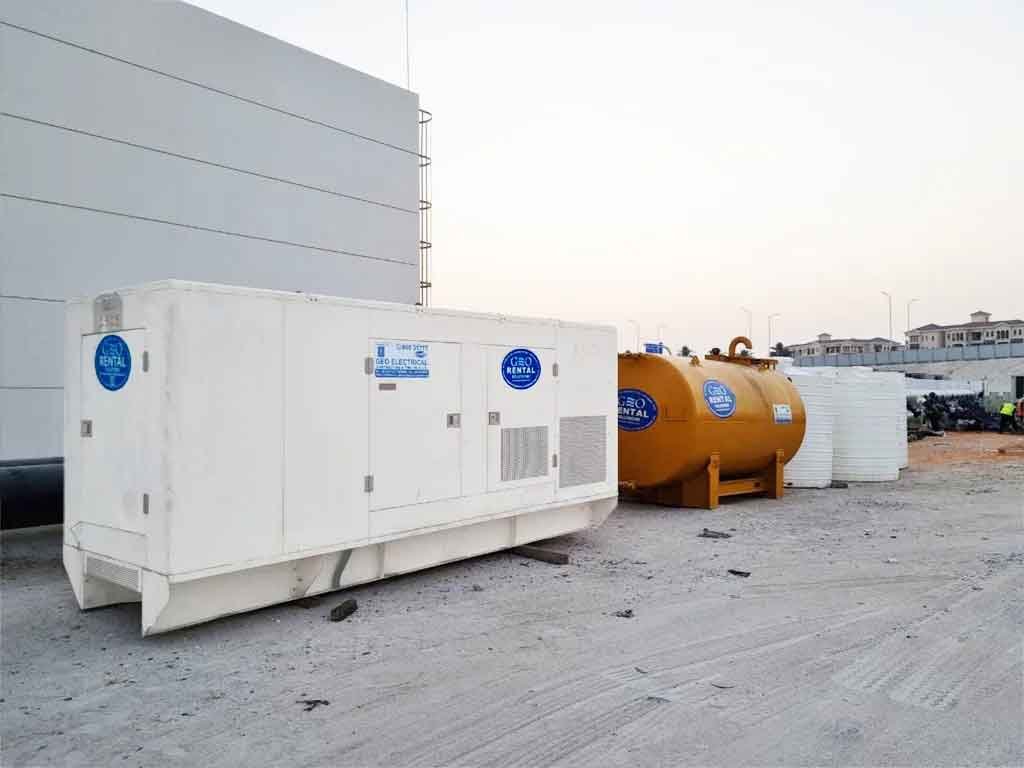
A commercial chiller rental is rarely just a matter of choosing a chiller by tonnage and arranging delivery. For an office building, shopping centre, hotel, retail facility, mixed-use development or commercial property, temporary cooling has to work with the building’s existing HVAC system, available space, electrical infrastructure and operating schedule.
A well-prepared rental plan helps determine what equipment is actually required, how it will be connected, how long it needs to operate and what support will be available if cooling requirements change.
This becomes particularly important in the UAE, where commercial buildings can have substantial cooling requirements. ASHRAE research on chilled-water systems in hot, humid climates notes that cooling can represent a significant portion of building energy use, making chilled-water design and operating conditions important considerations.
Whether the requirement is caused by planned maintenance, HVAC replacement, a temporary increase in demand or an unexpected chiller failure, the following points should form part of a commercial chiller rental plan.
1. Define Why the Chiller Is Being Rented
The first part of the plan should explain the reason for temporary cooling.
A commercial property may need a rental chiller because its existing equipment is being repaired or replaced. A building undergoing renovation may require temporary cooling while parts of its HVAC system are unavailable. A newly developed property may also require temporary cooling during commissioning.
Rental chillers can also be used for additional capacity when existing equipment cannot meet a temporary increase in demand. Current rental providers identify planned maintenance, emergency cooling, equipment replacement and supplemental cooling among common temporary-chiller applications.
The reason matters because it affects the required capacity, rental duration, equipment configuration and level of redundancy.
2. Calculate the Required Cooling Load
Cooling capacity should be established before selecting the rental equipment.
The building’s requirements can depend on factors such as floor area, occupancy, equipment loads, insulation, operating hours, outdoor conditions and the existing HVAC system.
Trane’s current rental guidance recommends calculating the total cooling load and considering building size, heat-producing equipment, occupancy and insulation when determining chiller capacity.
The rental plan should therefore include the available load calculation or, where appropriate, a site assessment by the rental provider.
Avoid selecting a chiller simply because it has a similar capacity to the building’s existing unit. The temporary system needs to be evaluated against the actual cooling demand and the conditions under which it will operate.
3. Record Chilled-Water Requirements
Cooling capacity is only one part of the specification.
The plan should also identify:
- Chilled-water supply temperature
- Return-water temperature
- Required flow rate
- Design temperature difference
- Operating pressure
- Connection sizes
- Required operating hours
- Minimum and maximum operating conditions
These details help the rental provider determine whether the proposed chiller can work correctly with the existing chilled-water network.
ASHRAE’s chilled-water guidance highlights the importance of flow, temperature differential, pumping and pressure considerations when designing chilled-water systems.
For a commercial building, compatibility between the temporary chiller and the existing distribution system should therefore be confirmed before delivery.
4. Decide Between Air-Cooled and Water-Cooled Equipment
The rental plan should specify whether an air-cooled or water-cooled chiller is appropriate.
Air-cooled equipment can be useful where straightforward deployment and suitable outdoor space are available. Water-cooled systems may be appropriate for larger applications where the required condenser-water infrastructure and cooling-tower arrangement can be provided.
Current UAE rental providers offer both air-cooled and water-cooled chillers for temporary cooling applications.
The decision should consider the building’s available space, electrical supply, water availability, heat rejection, access and required capacity rather than selecting a system based solely on its nominal tonnage.
5. Check the Available Installation Area
A commercial chiller rental plan should identify exactly where the temporary equipment will be installed.
The proposed location should have sufficient space for the chiller and any associated equipment. There should also be adequate access for delivery, positioning, maintenance and eventual removal.
Check:
- Equipment footprint
- Access routes
- Loading and unloading arrangements
- Clearance around equipment
- Ventilation and airflow
- Noise considerations
- Drainage
- Pipe routing
- Electrical connection points
This is particularly important for air-cooled chillers because their heat rejection depends on adequate airflow around the equipment.
6. Plan the Chilled-Water Connections
A temporary chiller cannot simply be placed beside a building and switched on. It needs to be connected correctly to the cooling system.
The plan should identify the connection points and required temporary piping, hoses, valves, pumps and other accessories.
The connection method will depend on the existing HVAC arrangement. ASHRAE’s commercial-building guidance describes centralized chilled-water systems as including a primary cooling plant and secondary systems such as air-handling and terminal equipment.
The rental provider should therefore review how the temporary chiller will interface with the building’s existing system before installation.
7. Include Electrical Requirements
Electrical requirements should be confirmed before the equipment arrives.
The plan should record:
- Available voltage
- Phase
- Frequency
- Available electrical capacity
- Connection location
- Cable requirements
- Protection requirements
- Isolation arrangements
- Start-up requirements
A chiller that meets the cooling requirement but cannot be safely connected to the site’s available electrical infrastructure is not a practical rental solution.
For larger systems, the electrical assessment should be completed during the planning stage rather than after delivery.
8. Consider Pumps and Additional Equipment
The chiller itself may not be the only equipment required.
Depending on the existing installation, a temporary system could require pumps, hoses, flexible connections, valves, heat exchangers, control equipment, cooling towers or other accessories.
Some rental packages are supplied as complete temporary systems, while others are configured according to the site.
For example, Trane describes rental packages that can include the chiller, setup, connection hoses and startup assistance, with additional accessories available depending on the application.
The rental plan should clearly identify which components are included in the quotation and which are additional.
9. Establish the Rental Period
The rental duration should be based on the actual project schedule.
For planned HVAC replacement, the rental period may need to cover equipment removal, installation of the replacement system, testing and commissioning. If the rental is supporting a renovation project, the period may need to extend through several stages of construction.
It is also sensible to include some schedule flexibility when the completion date is uncertain.
A plan that ends the rental immediately after the expected commissioning date could leave the building without backup cooling if the permanent system is delayed.
10. Build a Contingency Into the Plan
Commercial cooling requirements can change.
A project may experience delays, higher-than-expected loads or unexpected equipment problems. The rental plan should therefore identify what happens if the required capacity changes.
Possible contingency measures include:
- Additional chiller capacity
- Standby equipment
- Spare pumps
- Additional connection points
- Emergency technical support
- Extended rental availability
Trane’s technical material also highlights the value of providing contingency connections so rental equipment can be connected quickly when required.
Planning these provisions before an emergency occurs can reduce the time required to mobilise additional cooling.
11. Include Delivery and Site Logistics
The plan should cover how the chiller will reach the site.
Large commercial properties may have restrictions relating to delivery hours, loading bays, parking, building access and lifting operations.
Confirm:
- Delivery date
- Delivery route
- Vehicle access
- Unloading method
- Crane requirements
- Equipment positioning
- Site working hours
- Removal arrangements
The supplier should ideally carry out a site survey when the equipment or installation is complex.
12. Plan Installation and Commissioning
Installation should have its own section in the rental plan.
It should identify who will be responsible for:
- Equipment positioning
- Piping connections
- Electrical connections
- Pump installation
- Controls
- System flushing, where required
- Pressure checks
- Start-up
- Performance checks
- Handover
A rental provider may offer installation and commissioning as part of the service. Aggreko, for example, describes temporary chiller solutions that include quick installation and technical support.
The building operator should understand exactly what will be tested before the temporary system is handed over.
13. Specify Monitoring and Technical Support
For a commercial building, temporary cooling can be operationally important. The rental plan should therefore explain how the system will be monitored and what support is available.
Ask whether the provider offers:
- 24/7 technical support
- Remote monitoring
- Preventive maintenance
- Emergency response
- On-site technicians
- Fault diagnosis
- Replacement equipment if required
Current UAE rental providers advertise technical support and remote monitoring for temporary cooling applications, although the exact services vary by supplier and rental package.
These services should be written into the quotation or rental agreement rather than assumed.
14. Consider Noise and Location
Noise can become an important consideration when the chiller is being installed near occupied offices, hotels, retail areas or residential components of mixed-use developments.
The rental plan should identify whether noise restrictions apply and whether a low-noise unit or alternative installation location is necessary.
Aggreko’s UAE chiller range, for example, includes low-noise cooling equipment for applications where noise can be a consideration.
The site assessment should therefore consider both cooling performance and the impact of the temporary equipment on occupants.
15. Include Safety and Site Requirements
The installation plan should cover relevant safety requirements for the site.
This can include equipment positioning, electrical safety, access around the machinery, pipe routing, trip hazards, emergency isolation and safe maintenance access.
The exact requirements depend on the building, equipment and site procedures, so the rental provider should coordinate with the building’s facility-management and health-and-safety teams before installation.
16. Compare the Full Rental Cost
The rental price should not be evaluated in isolation.
A commercial chiller quotation may include different combinations of:
- Chiller rental
- Delivery
- Installation
- Piping
- Pumps
- Electrical work
- Commissioning
- Monitoring
- Maintenance
- Removal
- Technical support
One supplier’s lower rental rate may not represent a lower total project cost if important services are excluded.
Ask suppliers to provide an itemised quotation so the commercial team can compare equivalent packages.
17. Define the Removal and Handover Process
The rental plan should not stop at commissioning.
Once the permanent HVAC system is ready, the temporary equipment will need to be disconnected and removed.
Plan:
- Final rental date
- Shutdown procedure
- Disconnection
- Equipment removal
- Site restoration
- Final inspection
- Meter or operating-record closure
- Damage assessment
Having a defined removal process helps avoid confusion at the end of the project.
A Practical Commercial Chiller Rental Checklist
Before signing a rental agreement, confirm that the plan covers:
| Requirement | Confirmed |
|---|---|
| Reason for temporary cooling | ✓ |
| Cooling-load calculation | ✓ |
| Chiller capacity | ✓ |
| Supply and return temperatures | ✓ |
| Required water flow | ✓ |
| Air-cooled or water-cooled selection | ✓ |
| Equipment location | ✓ |
| Electrical requirements | ✓ |
| Chilled-water connections | ✓ |
| Pumps and accessories | ✓ |
| Delivery and lifting | ✓ |
| Installation | ✓ |
| Commissioning | ✓ |
| Rental duration | ✓ |
| Contingency capacity | ✓ |
| Monitoring and technical support | ✓ |
| Maintenance responsibility | ✓ |
| Total rental cost | ✓ |
| Equipment removal | ✓ |
Final Thoughts
A commercial chiller rental plan in the UAE should be much more detailed than a simple request for a particular chiller size.
The strongest plans begin with the actual cooling load and then work through chilled-water temperatures, flow, equipment type, installation location, electrical capacity, connections, rental duration and support requirements.
This approach also makes it easier to compare rental providers because each supplier is responding to the same technical and commercial requirements.
For commercial buildings dealing with planned HVAC replacement, emergency failures, renovations or temporary increases in cooling demand, a properly planned rental system can provide the temporary capacity needed to maintain building operations while the permanent cooling arrangement is unavailable or being upgraded.
Before placing an order, make sure the rental quotation clearly states the equipment supplied, installation scope, accessories, rental period, technical support, additional charges and removal arrangements. That clarity can help prevent unexpected costs and installation problems later in the project.