

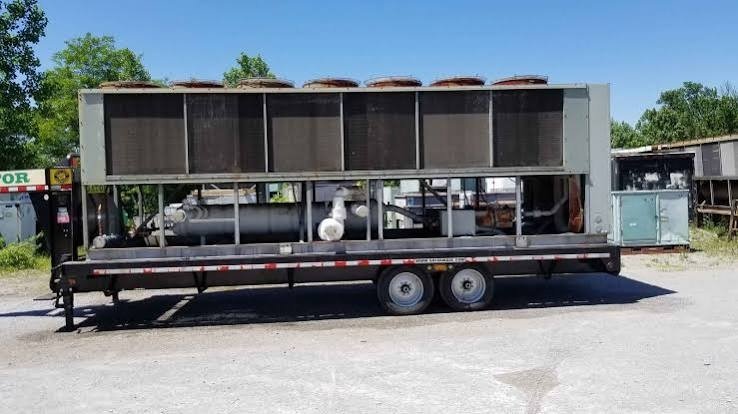
Commercial cooling is not something most UAE businesses can afford to treat as an occasional concern. Offices, hotels, shopping centres, restaurants, warehouses, factories, healthcare facilities, data centres and other commercial properties depend on reliable cooling to maintain comfortable and controlled indoor conditions and, in some industries, to protect equipment, products and production processes.
This is where commercial rental chiller services in UAE can become useful. Instead of purchasing and installing another permanent chiller whenever cooling capacity is temporarily unavailable or insufficient, a business can bring in a rental chiller for the period it is actually needed.
Businesses may require temporary cooling because of an unexpected chiller breakdown, planned HVAC maintenance, seasonal demand, a temporary increase in cooling load, a construction or fit-out project, or the need to bridge the period before a permanent cooling system becomes operational.
The important point is that Hire chiller rental is not only an emergency solution. It can also be a practical way to manage temporary capacity requirements without immediately committing to a permanent equipment purchase.
What Is Commercial Chiller Rental?
A commercial chiller is a cooling system that removes heat from water, which can then be circulated through a building’s cooling system or used for a particular process. DEWA’s energy-efficiency handbook explains that chillers cool water, which is then used to cool air through air-side equipment. It also distinguishes between air-cooled and water-cooled chillers according to how the condenser is cooled.
Commercial chiller rental means obtaining this type of cooling equipment for a defined period rather than purchasing a permanent unit.
Depending on the project, the rental system can be connected to an existing chilled-water network or arranged as part of a temporary cooling setup. The exact configuration depends on the required cooling capacity, site conditions, available power, water requirements, connection points and operating requirements.
Current UAE rental providers advertise equipment for a wide range of applications, including commercial facilities, industrial operations, emergency cooling, construction, events, data centres and process cooling.
Why Is Chiller Rental Relevant for UAE Businesses?
Cooling requirements in the UAE can be substantial, particularly during periods of high ambient temperature. For businesses operating buildings or processes that depend on chilled water, losing cooling capacity can quickly become an operational problem.
Dubai’s energy authorities have also placed significant emphasis on cooling efficiency and district cooling. DEWA states that district cooling can reduce energy used for space cooling compared with traditional air-conditioning approaches, while Dubai’s energy strategy includes programmes focused on efficient cooling and reducing electricity and water demand.
For an individual business, however, the immediate issue is often much simpler: what happens if the existing cooling system cannot provide the required capacity?
A temporary rental chiller can provide additional or replacement capacity while the business addresses the underlying issue.
When Do UAE Businesses Need Commercial Chiller Rental Services?
There is no single situation in which every business should rent a chiller. The requirement usually appears when cooling demand and available permanent capacity do not match for a particular period.
Here are the most common situations.
1. When the Main Chiller Breaks Down
An unexpected chiller failure is one of the clearest reasons to consider emergency chiller rental.
A commercial building may have a single major chiller or several chillers operating together. If an important unit fails, the remaining equipment may not have enough capacity to maintain normal conditions.
The problem becomes more serious when the failure happens during a period of high cooling demand.
A business may need time to diagnose the failure, source replacement components, repair the compressor or another major component, test the system and return it to normal operation. Depending on the problem, this may not be something that can be resolved immediately.
A temporary chiller can act as a bridge during the repair period.
Current UAE rental providers specifically identify unexpected breakdowns and emergency cooling as common applications for temporary chillers.
For businesses where cooling directly affects operations, having a contingency plan before a failure occurs can be more useful than searching for equipment after the building has already lost cooling.
2. During Planned Chiller Maintenance
Businesses do not only lose cooling capacity because equipment fails unexpectedly. Planned maintenance can also require a chiller or an entire cooling system to be taken offline.
Routine inspection, servicing, component replacement and larger maintenance activities may temporarily reduce available cooling capacity.
For a small office, a short reduction in cooling may be manageable. For a hotel, shopping centre, industrial facility, healthcare facility or other large commercial property, it can be much more difficult.
A rental chiller can provide temporary capacity while the permanent equipment is being serviced.
This approach allows the facility manager to schedule maintenance without automatically accepting a complete loss of cooling during the work.
3. When Cooling Demand Increases During Peak Periods
Another reason businesses use temporary chillers is that their existing system may work adequately under normal conditions but become insufficient when demand increases.
For example, a commercial facility may experience greater occupancy, additional equipment loads, expanded operating areas or unusually high cooling requirements during hotter periods.
Instead of immediately purchasing a new permanent chiller for a demand increase that may only last for a limited period, a business can evaluate whether temporary capacity would be more appropriate.
UAE rental providers specifically identify seasonal peak demand and additional temporary capacity among the situations where rental chillers can be used.
The important step is to determine the actual additional cooling load rather than simply choosing the largest available rental unit.
4. When a Business Is Expanding Its Facility
Business expansion can create a temporary mismatch between cooling demand and permanent HVAC capacity.
Suppose a company expands into an additional section of a commercial building but its permanent cooling infrastructure has not yet been upgraded. A temporary chiller can potentially provide additional capacity during the transition.
This may be useful when the permanent HVAC upgrade requires design, procurement, installation and commissioning time.
Rather than leaving the newly occupied area without adequate cooling, the business can evaluate a temporary cooling arrangement for the interim period.
5. During New Construction and Fit-Out Projects
Construction and fit-out projects can have cooling requirements before the permanent HVAC system is fully commissioned.
Temporary cooling can support certain construction phases, site offices, completed areas awaiting final HVAC commissioning and other project-specific requirements.
Some UAE rental providers specifically market chillers and associated temporary cooling equipment for construction and fit-out applications.
The exact requirement depends heavily on the project. A construction site does not necessarily need the same cooling arrangement as a completed commercial building, so the equipment should be selected around the project’s actual cooling load and installation conditions.
6. When a Permanent HVAC System Has Not Yet Been Installed
A new facility may be operational before its final permanent cooling system is ready.
This can happen when construction schedules, equipment procurement, commissioning or other project activities do not align perfectly with the required opening date.
In such a situation, temporary chiller rental can bridge the gap.
Instead of delaying operations entirely because permanent cooling equipment is not yet available, a project team can investigate a temporary cooling system for the interim period.
Rental providers describe this type of application as a way of bridging the period before permanent HVAC installation or commissioning.
7. When a Commercial Facility Needs Additional Cooling Capacity
Sometimes the existing chiller is operating, but it is not enough.
This can happen when a facility changes its use, adds new equipment, increases occupancy or modifies its operating schedule.
A rental chiller can provide additional capacity without immediately replacing the entire permanent cooling plant.
This can be particularly useful when the business wants to test an expansion before making a large capital investment.
For example, if a commercial operation is temporarily using additional floor space, it may not make financial sense to purchase a permanent chiller solely for that temporary requirement.
8. For Hotels, Events and Hospitality Operations
Hotels and hospitality venues have fluctuating cooling requirements. Events, conferences, exhibitions and temporary venues can create additional cooling demand that does not necessarily justify permanent equipment.
Temporary cooling equipment can be arranged around the event schedule and removed after the requirement ends.
UAE rental providers list events, exhibitions and hospitality among temporary cooling applications, with equipment selected according to the venue and cooling requirement.
For these projects, planning is particularly important because cooling requirements need to be available when the venue is occupied rather than after the event has already started.
9. For Industrial and Process Cooling Requirements
Not every chiller is used purely for comfort cooling.
Industrial facilities may need controlled cooling for production equipment, manufacturing processes or other temperature-sensitive operations.
In these situations, an interruption in cooling may affect production rather than simply indoor comfort.
Commercial and industrial rental providers in the UAE market temporary chillers for process cooling and industrial applications.
For process applications, however, the selection process should be more detailed. The required temperature range, flow, heat load, operating schedule and process characteristics need to be understood before equipment is selected.
10. When a Data Centre Needs Temporary Cooling Capacity
Data centres and other critical facilities can have very low tolerance for cooling interruptions.
Cooling equipment may need to be taken offline during maintenance, system upgrades or other planned work. Temporary cooling can provide additional capacity or backup while the permanent system is unavailable.
Rental providers in the UAE identify data centres and critical environments as applications for temporary chiller capacity.
The exact arrangement should be engineered around the facility’s redundancy requirements and the consequences of a cooling interruption.
Commercial Chiller Rental vs Buying: Which Is Better?
The answer depends mainly on why the business needs additional cooling.
If the requirement is temporary, rental can provide flexibility without committing the company to permanent equipment.
If the requirement is permanent and predictable, purchasing a properly sized system may be more suitable.
A rental solution can make particular sense when a business needs cooling because of a breakdown, maintenance period, temporary construction phase, seasonal demand increase or short-term expansion.
The decision should therefore not be based only on the monthly rental price. Businesses should consider the total cost and operational consequences of each option.
What Type of Chiller Does a UAE Business Need?
Commercial chillers are not interchangeable. The appropriate equipment depends on the application and site.
DEWA identifies two basic chiller categories according to condenser cooling: air-cooled chillers and water-cooled chillers. Air-cooled chillers reject heat through air, while water-cooled chillers use water on the condenser side.
Air-Cooled Chillers
Air-cooled chillers can be useful when a business needs a relatively straightforward temporary installation and does not have a suitable cooling-water system available.
UAE rental providers commonly market air-cooled chillers for temporary commercial, industrial, event and emergency applications. Al Shola, for example, currently lists air-cooled rental chillers from 50 TR to 400 TR for temporary, process, commercial and emergency cooling applications.
Water-Cooled Chillers
Water-cooled systems can be appropriate for larger or more complex applications where the necessary water-side infrastructure and supporting equipment are available.
They can involve additional requirements such as cooling towers, pumps and water treatment, so the complete site arrangement needs to be considered rather than looking at the chiller alone.
How Much Chiller Capacity Does a Business Need?
One of the most important parts of a rental project is sizing.
Chiller capacity is commonly expressed in tons of refrigeration, or TR. A higher TR rating represents greater cooling capacity, but selecting a larger machine simply because it appears safer is not necessarily the correct approach.
An oversized system can increase rental and operating costs, while an undersized system may fail to provide the required cooling.
Current UAE rental guidance identifies factors such as building size, layout, heat generated by equipment and occupants, and whether the application involves comfort or process cooling when determining capacity.
A proper assessment may also need to consider the existing chilled-water system, required supply and return temperatures, water flow, available electrical supply, ambient conditions and the intended operating schedule.
What Should Businesses Tell a Chiller Rental Provider?
Before requesting a quote for commercial chiller rental services in UAE, a business should prepare as much technical information as possible.
Useful information can include the location of the site, the reason for rental, required rental period, estimated cooling capacity, existing chiller specifications, chilled-water supply and return temperatures, available electrical power, installation area and access conditions.
The business should also explain whether the rental chiller is replacing a failed unit, supplementing an existing system or supporting a completely temporary installation.
The more accurate the information, the easier it is for the rental provider to recommend an appropriate configuration.
What Factors Affect Commercial Chiller Rental Cost in UAE?
There is no single rental price that applies to every commercial chiller project.
Rental Power identifies several factors that can affect pricing, including cooling capacity, rental duration, delivery distance, accessories, hose requirements, power or fuel requirements and installation complexity.
Other project-specific considerations can include site access, connection work, standby requirements, technician support and the type of chiller selected.
For this reason, businesses should compare complete quotations rather than comparing only the headline rental rate.
A lower equipment price may not represent the lower overall project cost if delivery, installation, accessories or technical support are excluded.
How Should UAE Businesses Prepare for Chiller Rental?
Preparation can make temporary cooling installation much smoother.
The first step is to identify where the rental chiller will be positioned and whether the equipment can physically reach the location.
The project team should then confirm electrical requirements, chilled-water connections, pipe or hose routes, drainage where applicable, access for delivery equipment and any site restrictions.
For larger projects, coordination between the facility manager, HVAC contractor, electrical team and rental provider can reduce installation problems.
It is also useful to determine exactly when the temporary cooling must be operational. If the rental is supporting planned maintenance, the equipment should ideally be commissioned before the permanent system is taken offline.
Is Commercial Chiller Rental Only for Emergencies?
No.
Emergency breakdowns are one important application, but they are only part of the picture.
Commercial chiller rental can also support planned maintenance, seasonal demand, temporary expansion, construction, fit-out, events, industrial processes, data centres and temporary facilities.
This distinction is important because businesses can use rental cooling as part of planned operational management rather than treating it only as an emergency response.
How Long Can a Business Rent a Chiller?
The appropriate rental period depends on the project.
A business may need a chiller for a few days during emergency repairs, several weeks during planned maintenance, months during a construction project or considerably longer for an extended temporary cooling requirement.
UAE rental providers offer both short-term and longer-term arrangements, with daily, weekly, monthly and project-based rental structures available depending on the provider and equipment.
The rental period should match the actual requirement as closely as possible.
Why UAE Climate Conditions Matter When Renting a Chiller
A chiller intended for temporary use in the UAE needs to be selected with local operating conditions in mind.
High ambient temperatures can affect HVAC equipment performance, which means businesses should not select equipment solely according to a nominal capacity figure.
The operating conditions under which the chiller will work should be communicated to the rental provider. This is particularly important for outdoor installations and projects taking place during periods of high ambient temperature.
The UAE market includes rental equipment specifically promoted for high-ambient GCC conditions, demonstrating that operating environment is an important consideration when planning temporary cooling.
When Should a Business Start Planning Its Chiller Rental?
For emergencies, businesses may need to act immediately. But planned projects should be prepared well in advance.
If a facility knows that its main chiller will be unavailable during maintenance, the temporary cooling requirement should be assessed before the shutdown.
Likewise, construction projects, planned expansions and major events should not wait until the final stage to arrange cooling.
Early planning gives the rental provider more time to assess the load, select equipment, arrange transport, coordinate connections and test the system.
A Simple Decision Checklist for UAE Businesses
A business should consider commercial chiller rental when one or more of the following situations apply:
The existing chiller has failed and cooling needs to be restored temporarily.
The permanent cooling system needs planned maintenance or major repair.
The facility expects a temporary increase in cooling demand.
A new building or expansion needs cooling before permanent HVAC equipment is commissioned.
A construction or fit-out project requires temporary cooling.
An event or hospitality venue needs additional cooling for a defined period.
An industrial process needs temporary or backup cooling.
A data centre or critical facility requires additional cooling during maintenance or upgrades.
The business needs temporary capacity but does not want to make an immediate permanent capital investment.
These situations do not automatically mean rental is the best answer, but they are strong reasons to investigate it.
Final Thoughts
So, when do UAE businesses need commercial chiller rental services?
The short answer is whenever a business has a temporary gap between its required cooling capacity and the cooling capacity available from its permanent system.
That gap can be caused by a sudden breakdown, planned maintenance, seasonal demand, business expansion, construction, temporary operations, industrial processes or critical-facility requirements.
The biggest advantage of rental is flexibility. A business can obtain additional or replacement cooling for the period it is actually required rather than automatically committing to a permanent chiller installation.
However, successful chiller rental is not simply about choosing a machine and placing it on-site. Cooling capacity, chiller type, ambient conditions, electrical supply, chilled-water requirements, installation access and rental duration all need to be considered.
For UAE businesses, the most reliable approach is to assess the actual cooling requirement first and then select a temporary system around that requirement. This helps avoid both under-capacity and unnecessary oversizing.
When planned correctly, commercial chiller rental in UAE can provide a practical bridge between an immediate cooling requirement and a business’s long-term HVAC solution.
Frequently Asked Questions
When is commercial chiller rental useful for a UAE business?
Commercial chiller rental can be useful during unexpected chiller breakdowns, planned maintenance, temporary increases in cooling demand, construction and fit-out projects, facility expansion, events, industrial process cooling and other situations where permanent cooling capacity is temporarily unavailable or insufficient.
Can I rent a chiller during a permanent chiller repair?
Yes. Temporary chillers are commonly used as a bridge while permanent cooling equipment is being repaired or maintained. UAE rental providers specifically identify breakdowns and planned maintenance as common rental applications.
Are commercial chillers available for short-term rental in the UAE?
Yes. Rental providers offer short-term arrangements for applications such as emergencies, events and maintenance projects, as well as longer project-based rentals. The available duration depends on the supplier and equipment.
How is the correct chiller size selected?
The required size depends on the actual cooling load and operating conditions. Factors can include building size, occupancy, equipment heat load, application type, chilled-water temperatures, water flow, operating schedule and site conditions. A technical assessment is preferable to selecting equipment based only on floor area.
Should I choose an air-cooled or water-cooled rental chiller?
It depends on the site and application. Air-cooled chillers can be suitable where simpler temporary deployment is required, while water-cooled systems may suit larger applications where the necessary water-side infrastructure is available. DEWA classifies the two types according to how their condensers reject heat.
Can rental chillers be used for industrial applications?
Yes. UAE rental providers offer temporary and industrial chiller solutions for process cooling and other industrial applications. The equipment should be selected according to the process temperature, cooling load, flow requirements and operating conditions.
Is chiller rental suitable for a data centre?
Temporary chillers can support data centres and other critical facilities during maintenance, upgrades or temporary capacity shortages. Because cooling is critical in these environments, the temporary arrangement should be designed around the facility’s redundancy and operational requirements.
What affects commercial chiller rental cost in the UAE?
Pricing can depend on chiller capacity, rental duration, equipment type, delivery distance, accessories, installation complexity, power requirements and technical support. This is why commercial chiller rental quotations are normally based on the individual project rather than one universal rate.
Can a rental chiller support a commercial building during peak demand?
Yes. Temporary chillers can provide additional capacity when the existing cooling plant cannot comfortably handle a temporary increase in demand. This can be considered during seasonal peaks, expansion periods or other short-term capacity requirements.
What information is needed to request a commercial chiller rental quote?
A business should ideally provide its site location, required rental duration, reason for rental, estimated cooling capacity, existing HVAC information, electrical supply details, chilled-water requirements, installation location and site-access information. More complete information helps the supplier determine a suitable configuration.