

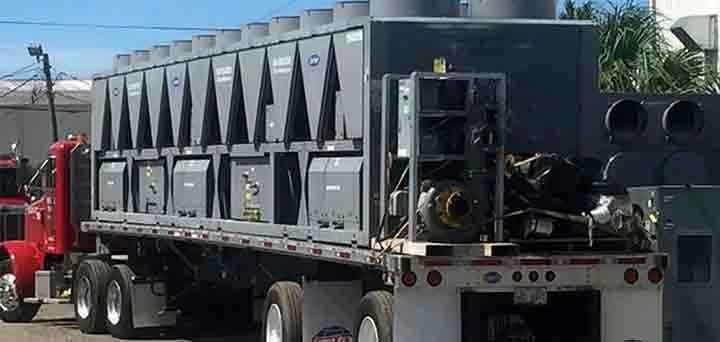
Dubai’s hot climate makes reliable cooling essential for commercial buildings, construction sites, hotels, industrial facilities, warehouses, events, and other projects. When a permanent cooling system stops working, requires maintenance, or cannot provide enough capacity during periods of high demand, renting a chiller can be a practical temporary solution.
However, choosing a chiller rental in UAE is not simply about finding the biggest machine or selecting the cheapest rental quotation. The right chiller needs to match the actual cooling requirement, operating conditions, available power, chilled-water temperatures, installation space, pipe connections, rental period, and application.
A suitable rental chiller can help maintain comfortable indoor temperatures and support business operations while permanent HVAC equipment is repaired, replaced, upgraded, or supplemented. On the other hand, choosing equipment without properly assessing the site can result in insufficient cooling, unnecessary operating costs, installation difficulties, or delays.
This guide explains how businesses can find the right rental chiller Dubai solution and what should be considered before signing a rental agreement.
What Is a Chiller Rental?
A chiller is a refrigeration system that removes heat from water or another circulating fluid. The chilled water is then circulated through air-handling units, fan coil units, process equipment, or other cooling systems to provide the required cooling.
A rental chiller is temporary cooling equipment supplied for a specific period rather than permanently purchased and installed. Businesses may use rental chillers when an existing HVAC system is undergoing repairs or replacement, when additional cooling capacity is temporarily required, or when a project needs cooling before its permanent system is operational.
Rental chillers can be used for commercial buildings, hotels, offices, construction projects, industrial applications, events, temporary facilities, and emergency cooling situations. Major manufacturers and rental providers offer different types and capacities of equipment depending on the application and site requirements.
This means that the important question is not simply where to rent a chiller. The more important question is which chiller is appropriate for the building, project, or process that needs cooling.
Why Is Choosing the Right Chiller Important?
Selecting the correct chiller capacity is one of the most important parts of temporary cooling planning. An undersized chiller may not provide sufficient cooling when the demand increases. This can result in uncomfortable indoor conditions or inadequate process cooling.
An oversized chiller can create a different problem. You may pay for capacity that is not actually required, while the equipment may also require additional space, electrical capacity, transportation, and supporting infrastructure.
The correct approach is therefore to determine the actual cooling requirement first and then select equipment that can operate effectively under the project’s conditions.
Cooling capacity should not be determined only by looking at the floor area of a building. Two buildings with the same floor area can have very different cooling loads because of differences in occupancy, equipment, lighting, insulation, solar exposure, operating hours, and internal heat generation.
For this reason, a proper assessment is important before selecting a chiller rental Dubai solution.
Start by Determining Your Cooling Load
The first step in finding the right rental chiller is understanding how much cooling the project actually needs. Chiller capacity is commonly expressed in refrigeration tons, or TR.
The required capacity depends on the amount of heat that needs to be removed from the building or process. Factors such as building size, occupancy, equipment, lighting, outdoor temperature, insulation, operating schedules, and existing HVAC equipment can all influence the required capacity.
For example, an office building with moderate occupancy can have a very different cooling requirement from a manufacturing facility containing machinery that continuously generates heat. A hotel, restaurant, warehouse, retail facility, and industrial plant may all require different chiller configurations even if their floor areas are similar.
This is why businesses should provide as much technical information as possible to a rental company before receiving a quotation. A supplier can then recommend a capacity based on the actual requirements instead of making a general estimate.
Understand Whether You Need Comfort or Process Cooling
Another important step is identifying the purpose of the cooling system. A rental chiller UAE project can involve either comfort cooling or process cooling, and the requirements for these applications can be very different.
Comfort cooling is generally used to maintain suitable indoor temperatures for people. Offices, hotels, shopping facilities, temporary buildings, schools, event venues, and commercial properties can all require this type of cooling.
Process cooling is more specific. Manufacturing equipment, production lines, food-processing facilities, chemical processes, testing equipment, and other industrial applications may require chilled water at a particular temperature and flow rate.
For process applications, simply selecting a chiller based on tonnage may not be sufficient. The rental provider needs to understand the process requirements, including the required supply temperature, return temperature, flow rate, operating schedule, and temperature stability.
This is particularly important when looking for industrial chiller rental UAE equipment because the cooling system may be directly connected to production equipment.
Air-Cooled or Water-Cooled Chiller: Which Should You Choose?
One of the biggest decisions when selecting temporary cooling is choosing between an air-cooled and water-cooled chiller.
An air-cooled chiller rejects heat directly into the surrounding air using fans and condenser coils. This configuration can be convenient for temporary applications because it generally does not require the same cooling-tower infrastructure associated with water-cooled systems.
Air-cooled chillers can therefore be useful for construction sites, emergency cooling, temporary buildings, commercial properties, planned maintenance, and other situations where fast deployment and relatively simple installation are important.
A water-cooled chiller uses water for heat rejection and normally works with a cooling tower or another appropriate heat-rejection system. Water-cooled systems can be suitable for larger buildings and demanding applications where the necessary infrastructure is available.
Neither system should automatically be considered better than the other. The correct choice depends on the project’s cooling load, site conditions, available infrastructure, installation requirements, operating duration, and efficiency requirements.
When requesting an air cooled chiller rental UAE solution, businesses should ask the supplier whether the proposed equipment is suitable for the expected outdoor temperature and operating conditions. For a water cooled chiller rental UAE project, the availability of suitable water circuits and heat-rejection infrastructure should be confirmed before the equipment is selected.
Consider Dubai’s Extreme Outdoor Conditions
Dubai’s climate is an important consideration when selecting temporary cooling equipment. A chiller installed outdoors needs to operate effectively under the actual environmental conditions at the project site.
Outdoor temperature, direct solar exposure, airflow, equipment clearance, dust, and installation location can all influence equipment performance.
The manufacturer’s operating specifications should therefore be checked for the exact model being proposed. Some rental chillers are specifically designed to operate at high ambient temperatures, but businesses should not assume that every chiller will provide the same performance under extreme conditions.
The rental provider should confirm the expected capacity of the equipment under the project’s actual operating conditions rather than relying only on the nominal capacity shown in a product name.
Check the Required Chilled-Water Temperature
Cooling capacity is only one part of chiller selection. The required chilled-water temperature is equally important.
Before renting a chiller, the business should understand the required chilled-water supply temperature and return temperature. The required flow rate should also be determined.
For a conventional HVAC system, the required temperatures may be based on the existing chilled-water system. For industrial process cooling, the requirements can be much more specific.
If the rental chiller cannot operate at the required temperature or flow conditions, having sufficient nominal tonnage will not necessarily solve the problem.
Providing the rental company with the existing system’s technical information can make the selection process much more accurate.
Check Water Flow and Pipe Connections
A temporary chiller needs to connect correctly to the building’s existing chilled-water system or a temporary cooling loop.
Before installation, the pipe sizes, connection points, flow requirements, pressure requirements, hoses, fittings, and temporary pipework should be assessed.
This is an area where site planning can prevent major problems. A chiller may have enough cooling capacity but still be difficult to install if the available pipe connections do not match the equipment.
For a temporary cooling project, the rental provider should confirm exactly how the equipment will connect to the existing system and whether additional pumps, hoses, fittings, or temporary pipework are required.
Check Your Electrical Supply
Electrical requirements should also be confirmed before choosing a rental chiller.
Different chillers can have different voltage, phase, frequency, current, starting, and connection requirements. The available electrical capacity at the site must be sufficient for the selected equipment.
This is especially important for construction projects and temporary facilities where electrical infrastructure may be limited.
If the site does not have sufficient electrical capacity, the project may require additional temporary power equipment or an alternative chiller configuration.
For this reason, the electrical specifications should be included in the technical assessment before the rental contract is finalized.
Make Sure There Is Enough Installation Space
A rental chiller needs more than just enough space for the equipment itself. There must also be sufficient clearance for airflow, maintenance, electrical connections, pipework, and safe access.
The installation location should therefore be inspected before delivery.
The rental provider may also need to consider the equipment’s dimensions, weight, lifting requirements, delivery route, and service access.
This becomes particularly important for large commercial or industrial chillers. If the unit has to be placed on a restricted site, rooftop, construction area, or another difficult location, lifting and positioning requirements should be discussed in advance.
Consider Delivery and Site Access
A chiller can be available from the rental company and still cause delays if the delivery arrangements have not been properly planned.
Dubai construction sites, commercial properties, hotels, and industrial facilities may have specific access requirements. Trucks, cranes, forklifts, or other equipment may be required to position the chiller correctly.
The site team should therefore confirm the delivery route, unloading area, lifting requirements, access restrictions, and permitted delivery times.
These logistical requirements can also affect the overall rental cost, so they should be included in the quotation wherever possible.
Decide How Long You Need the Chiller
The rental duration can significantly influence the overall cost and contract structure.
A short-term rental may be suitable for an emergency breakdown, an event, planned maintenance, or a temporary testing requirement. A monthly rental may make more sense during a building refurbishment or extended HVAC repair.
Longer-term rental can be useful for construction projects, temporary facilities, extended plant upgrades, or situations where permanent cooling equipment will not be available for several months.
Before signing an agreement, clarify the minimum rental period, extension terms, collection arrangements, and charges that may apply if the rental period changes.
Understand What Is Included in the Rental Price
Comparing only the advertised rental rate can make two quotations appear similar when they actually provide very different services.
One company may quote only for the chiller itself, while another may include transportation, installation, commissioning, pumps, hoses, temporary pipework, maintenance, and technical support.
For this reason, businesses should request a complete quotation that clearly explains what is included.
A proper comparison should consider the equipment, delivery, installation, commissioning, accessories, maintenance, technical support, removal, and any additional site work.
The cheapest equipment price does not always represent the lowest total project cost.
Ask About Maintenance and Technical Support
Temporary cooling equipment needs proper operation and maintenance throughout the rental period.
Before selecting a supplier, ask who will be responsible for routine maintenance and what happens if the chiller develops a fault.
This is particularly important for businesses where cooling is essential to daily operations. A supplier offering technical support and a clear breakdown response process may provide better overall value than a supplier offering only a low equipment rental rate.
The contract should clearly explain maintenance responsibilities, emergency support, technician availability, and the procedure for dealing with major equipment failures.
Consider Backup Cooling for Critical Applications
Some facilities cannot tolerate a complete loss of cooling.
Hotels, healthcare facilities, industrial processes, data-related operations, and other critical environments may require additional contingency planning.
Depending on the application, the project may use multiple chillers or standby capacity rather than relying entirely on one unit.
The appropriate level of redundancy depends on the importance of the cooling system, the consequences of failure, available space, electrical capacity, cooling load, and budget.
A qualified HVAC professional should assess these factors rather than applying the same backup arrangement to every project.
Compare Efficiency Along With Rental Cost
When a chiller will operate for several weeks or months, energy consumption can become an important part of the overall project cost.
Businesses should therefore look beyond the rental price and ask about the expected operating performance of the equipment.
The actual electricity consumption depends on factors such as cooling load, outdoor temperature, chilled-water temperatures, operating hours, and part-load conditions.
Dubai has also placed significant emphasis on energy efficiency and reducing electricity and water demand. DEWA’s energy-management initiatives and Dubai’s Demand Side Management Strategy highlight the importance of improving energy efficiency across major consumption sectors.
For longer rental periods, comparing the expected operating performance of different units can therefore be worthwhile.
Check the Manufacturer and Exact Model
The manufacturer’s name can provide useful information, but brand recognition alone should not determine the decision.
The actual chiller model should be evaluated against the requirements of the project.
Established manufacturers publish technical information covering cooling capacity, operating conditions, electrical requirements, dimensions, and other specifications.
Instead of asking only whether a brand is reliable, ask whether the exact model being offered can provide the required cooling capacity under the expected Dubai operating conditions.
This approach gives businesses a more meaningful comparison between rental proposals.
Make Sure the Chiller Is Suitable for Temporary Cooling
A permanent chiller installation and a temporary cooling project can have very different priorities.
Temporary cooling often requires fast deployment, accessible connections, suitable mobility, straightforward installation, and easy removal once the project is completed.
For example, an emergency chiller rental Dubai requirement may prioritize rapid deployment, while a long-term industrial project may place greater emphasis on efficiency, reliability, maintenance, and operating cost.
The rental company should understand the reason for the rental before recommending equipment.
When Do Businesses Need Emergency Chiller Rental in Dubai?
Emergency cooling may be required when an existing chiller unexpectedly fails during a period of high cooling demand.
In such circumstances, the temporary system can act as a bridge while the permanent chiller is repaired or replaced.
The rental provider may need to quickly evaluate the existing chiller’s capacity, chilled-water temperatures, pipe connections, electrical supply, installation space, and access.
The faster these details are available, the easier it can be to identify suitable equipment and plan deployment.
Businesses that depend heavily on cooling may benefit from identifying potential temporary cooling suppliers before an emergency occurs rather than waiting until a major breakdown happens.
FAQs
How do I choose the right chiller rental in Dubai?
Choose based on cooling capacity, application, chiller type, site conditions, power supply, and rental duration.
How much does chiller rental cost in Dubai?
Prices depend on capacity, rental period, equipment type, installation, delivery, and additional services.
Which is better, air-cooled or water-cooled chillers?
Air-cooled chillers are often easier to install temporarily, while water-cooled chillers can suit larger applications with suitable water infrastructure.
Are rental chillers suitable for Dubai’s hot climate?
Yes, provided the selected chiller is designed to operate effectively under the expected ambient temperatures.
Can I rent a chiller for an HVAC replacement project?
Yes. Temporary chillers can maintain cooling while a permanent HVAC or chiller system is repaired or replaced.
How long can I rent a chiller in Dubai?
Rental periods can range from short-term emergency requirements to several months or longer, depending on the project.
Do chiller rentals include installation?
It depends on the supplier and rental package. Always confirm whether delivery, installation, commissioning, and removal are included.
Can I use a rental chiller for industrial cooling?
Yes, but industrial applications require equipment selected according to the required temperature, flow rate, and process cooling load.
What information is needed to rent a chiller?
You should provide the required cooling capacity, application, water temperatures, flow rate, electrical supply, site details, and rental duration.
How quickly can an emergency chiller be supplied?
Availability and installation time depend on equipment availability, site access, required capacity, and the complexity of the installation.