

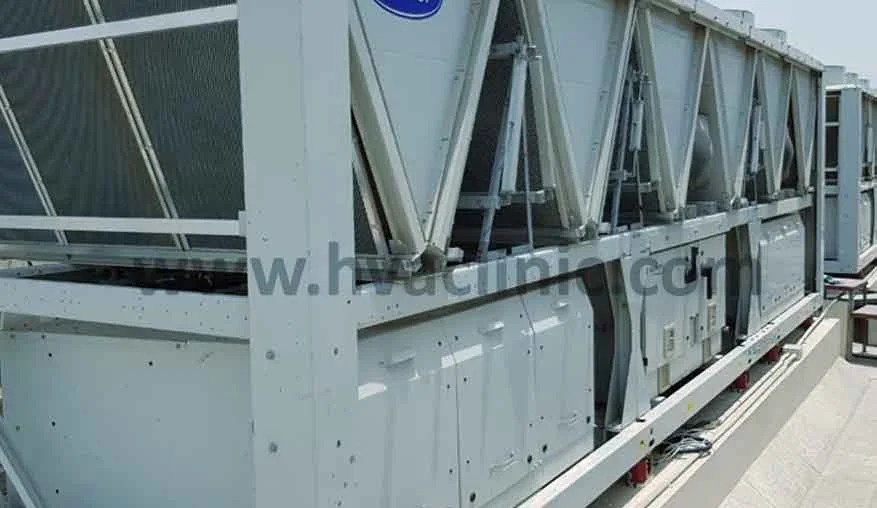
Commercial buildings in the UAE depend heavily on reliable cooling throughout the year. Offices, shopping centres, hotels, retail facilities, warehouses, construction projects, healthcare facilities and other commercial environments can experience serious operational problems when their permanent cooling capacity is unavailable or insufficient. A chiller rental in UAE breakdown, planned HVAC shutdown, building renovation, project expansion or temporary increase in cooling demand can all create a need for additional cooling capacity.
This is where temporary cooling solutions for UAE commercial projects become useful.
Temporary cooling is a flexible approach that allows a business or project to bring in rental cooling equipment for a defined period rather than installing a permanent HVAC system for a temporary requirement. Depending on the size and characteristics of the project, the solution may include rental chillers, air-handling units, packaged air-conditioning systems, portable air conditioners or other temporary HVAC equipment.
Current UAE rental providers describe temporary cooling as a solution for emergency breakdowns, planned maintenance, seasonal demand, construction and refurbishment, events, temporary facilities and additional capacity. Major HVAC manufacturers also identify rental cooling as a way to maintain operations during maintenance, equipment replacement, facility expansion and peak-load periods.
For commercial projects, the important point is that temporary cooling is not simply about bringing an air conditioner to a site. A properly designed temporary cooling system has to match the project’s cooling load, temperature requirements, available power, space, airflow, water requirements where applicable, connection arrangements and rental period.
What Are Temporary Cooling Solutions for UAE Commercial Projects?
Temporary cooling solutions are short-term or project-based HVAC systems used when a building or commercial facility needs cooling capacity without relying entirely on its permanent cooling infrastructure.
The equipment can operate as a temporary replacement for failed cooling equipment, supplement an existing HVAC system, support a building during renovation, or provide cooling before the permanent system becomes operational.
The exact equipment depends on the application. For example, a commercial building with an existing chilled-water network may require temporary chillers and air-handling equipment. A smaller space may be better suited to packaged or portable air-conditioning equipment. Large projects can use several cooling units operating together to achieve the required capacity.
UAE providers currently offer combinations of air-cooled chillers, air-handling units, packaged AC units and portable AC equipment for temporary and emergency applications. Some suppliers also provide complete temporary systems that include installation, commissioning, monitoring and technical support.
This makes temporary cooling particularly valuable when the requirement is important but the need for additional capacity is not permanent.
Why Do UAE Commercial Projects Need Temporary Cooling?
The UAE’s built environment has a substantial dependence on air conditioning and cooling. DEWA explains that chillers are commonly used to produce chilled water that subsequently cools building air through air-side equipment, while district cooling supplies chilled water to multiple buildings through a distribution network.
Because cooling is integral to commercial building operation, losing cooling capacity can create more than a comfort issue. It can interfere with normal building use, maintenance schedules, construction activities, equipment operation and business continuity.
Temporary cooling may therefore be considered in several situations.
Chiller or HVAC breakdown
A failed chiller can remove a substantial portion of a building’s cooling capacity. Waiting for repairs or replacement can take longer than a commercial operation can comfortably tolerate.
A rental cooling system can act as a bridge while the permanent equipment is repaired or replaced. Daikin specifically identifies equipment failure as one of the situations in which rental cooling can provide temporary capacity and help maintain operations.
Planned maintenance and shutdowns
Commercial HVAC equipment requires maintenance, refurbishment and sometimes major replacement work. During this period, the primary cooling system may have to be partially or completely taken offline.
Temporary cooling allows the facility to maintain cooling while engineers work on the permanent system.
This approach can also reduce pressure on maintenance teams because they do not have to rush important repair or replacement work simply because the building needs cooling.
Commercial building renovation
Renovation and refurbishment projects can temporarily change the way a building is cooled. Existing equipment may be removed, isolated or unavailable while new HVAC systems are being installed.
Temporary cooling can provide an interim solution until the permanent system is commissioned.
Daikin identifies retrofit, renovation and replacement projects as applications for temporary rental systems.
New construction and fit-out projects
A commercial project may need temperature control before its permanent HVAC installation is complete.
Temporary cooling can be used during certain construction, fit-out, testing and commissioning stages, depending on the project’s engineering requirements.
For example, rental cooling providers report applications across construction sites and commercial facilities, while some temporary systems are designed to connect to existing chilled-water infrastructure.
Peak summer demand
A commercial facility may have sufficient cooling capacity under normal conditions but require additional capacity during periods of high demand.
Temporary equipment can provide supplementary cooling without requiring the business to purchase and permanently install additional chillers for a seasonal requirement.
Daikin describes temporary rental cooling as a way to increase cooling output when demand exceeds existing system capacity because of high temperatures or changing requirements.
Temporary project requirements
Some commercial requirements are temporary by nature. Events, temporary facilities, project offices, exhibitions and short-term commercial spaces may require cooling without making a permanent HVAC investment practical.
Rental equipment can be delivered for the required period and removed when the project finishes.
How Do Temporary Cooling Systems Work?
Although the equipment varies, the basic process is relatively straightforward.
First, the cooling requirement is assessed. The project team needs to determine how much cooling is required and how the temporary equipment will connect to or serve the building.
The supplier then selects appropriate equipment based on factors such as cooling load, required temperature, space, airflow, ambient conditions, available power, water requirements and connection arrangements. UAE rental providers specifically identify these factors when determining temporary HVAC configurations.
Once the equipment has been selected, it is transported to the project site. The temporary system is then installed and connected to the building’s existing HVAC infrastructure or configured as a standalone system, depending on the application.
After installation, the system is tested and commissioned. During the rental period, the equipment can be monitored and maintained to support reliable operation.
At the end of the project or temporary requirement, the equipment can be disconnected and removed.
A large temporary cooling project can be considerably more complex than a single rental unit. For example, an actual UAE temporary cooling project documented by RSS involved a 3,600 TR temporary cooling plant operating for two years and integrating with an existing piping network for a district cooling application. The project also used BTU metering and SCADA communications for performance monitoring.
This demonstrates that temporary cooling can range from relatively small portable equipment to large engineered cooling plants.
What Equipment Is Used for Temporary Commercial Cooling?
There is no single type of temporary cooling equipment suitable for every commercial project. The correct configuration depends on the building and the cooling requirement.
Temporary Chillers
Temporary chillers are commonly used when a project needs substantial cooling capacity or needs to connect to an existing chilled-water system.
A chiller removes heat from water through a refrigeration process. The chilled water can then be circulated to air-side equipment such as AHUs or other building cooling systems.
DEWA’s energy-efficiency handbook explains that chillers cool water, which subsequently cools building air through air-side equipment. It also distinguishes between air-cooled and water-cooled chillers based on how the condenser is cooled.
Rental fleets vary considerably. For example, Atlas Copco currently lists rental air-cooled chillers from 50 kW to 720 kW per unit, while Al Shola lists air-cooled rental chillers from 50 TR to 400 TR. These figures are examples of individual providers’ available equipment and should not be treated as a universal UAE rental range.
Air-Cooled Chillers
Air-cooled chillers reject heat directly to the surrounding air rather than requiring a cooling tower.
This can simplify temporary deployment where a suitable cooling-water infrastructure is unavailable.
Air-cooled chillers are frequently offered for temporary applications because they can be deployed at commercial sites, construction projects and other locations where rapid installation is important.
However, equipment selection should consider the site’s ambient conditions and the manufacturer’s operating limits rather than assuming that any air-cooled chiller is appropriate for UAE conditions.
Water-Cooled Chillers
Water-cooled chillers use water on the condenser side and normally require associated cooling-tower and water-system infrastructure.
They can be appropriate for larger or more permanent-style temporary installations where the necessary water and heat-rejection arrangements are available.
The selection between air-cooled and water-cooled equipment should therefore be based on the project’s engineering conditions, not simply on nominal cooling capacity.
Air-Handling Units
An air-handling unit, or AHU, can distribute conditioned air through the building or temporary ductwork.
AHUs are often combined with temporary chillers where the project requires chilled-water cooling to be converted into conditioned air for occupied spaces.
Some UAE rental suppliers list AHUs alongside chillers as part of complete temporary cooling packages.
Packaged and Portable AC Units
Smaller commercial areas, temporary rooms and specific zones may not require a large central cooling system.
Packaged AC and portable AC equipment can provide a more localized solution where cooling requirements are limited to particular spaces.
Current UAE rental fleets include packaged AC and portable AC equipment alongside chillers and AHUs.
How Is Temporary Cooling Capacity Determined?
Selecting equipment based only on the floor area of a commercial building can produce an unsuitable system.
Cooling requirements depend on the actual heat load and operating conditions.
Important considerations include the size and layout of the space, occupancy, equipment and lighting loads, heat entering through the building envelope, required indoor conditions, outdoor conditions and the characteristics of the existing HVAC system.
For industrial or process-related applications, the temperature and flow requirements of the process can also be important.
This is why reputable rental providers generally assess the site before confirming the equipment configuration. Stout, for example, describes a process involving site assessment, evaluation of cooling requirements and load conditions, equipment selection, installation and commissioning.
For a commercial project, the assessment should also consider whether the temporary system is replacing the complete cooling plant or only providing additional capacity.
A building that has lost its entire chiller capacity has a very different requirement from a facility that simply needs another unit to handle a seasonal load increase.
What Is the Installation Process?
A professional temporary cooling installation normally begins with site assessment.
The engineering team reviews where the equipment can be placed, how it can be connected, what electrical supply is available and how chilled water, air or other services will be distributed.
The next stage is equipment delivery and positioning.
For a temporary chiller installation, this may involve connecting the chiller to existing chilled-water pipework or establishing a temporary loop. A large project may also require pumps, hoses, valves, heat exchangers, control systems or other accessories.
The equipment is then commissioned and tested before normal operation begins.
Atlas Copco describes its rental cooling process as including site assessment, installation, 24/7 remote monitoring and complete commissioning.
The exact installation method depends heavily on the project. A small portable AC installation can be relatively simple, while a large commercial temporary chiller plant may require detailed engineering and integration with existing infrastructure.
Can Temporary Cooling Connect to an Existing HVAC System?
Yes, in suitable applications.
Temporary chillers can be connected to existing chilled-water systems so that they provide additional or replacement cooling capacity.
This is particularly useful when a permanent chiller is unavailable but the building’s distribution system remains usable.
Rental Power describes temporary rental chillers as units that can connect to existing HVAC or process systems or operate through a temporary loop.
The connection should always be engineered according to the existing system’s flow, pressure, temperature, pipework, controls and capacity requirements.
A temporary unit should not simply be connected without confirming system compatibility.
Temporary Cooling for Construction and Commercial Fit-Out Projects
Construction and fit-out projects have unique cooling requirements.
During early construction stages, permanent HVAC infrastructure may not yet be available. Later, parts of the building may become enclosed and occupied by workers while the permanent system is still being completed or commissioned.
Temporary cooling can help manage these interim conditions.
It can also be useful when renovation work requires sections of an existing HVAC system to be shut down.
For larger projects, the temporary system can be planned around the project’s construction schedule so that cooling capacity is available when required and removed once permanent systems are ready.
The appropriate arrangement depends on the building stage, area being cooled, expected occupancy, available electrical supply and the type of permanent HVAC system being installed.
Temporary Cooling for Offices, Retail Facilities and Hotels
Commercial facilities have different cooling profiles depending on how they are used.
An office may require comfort cooling during an HVAC replacement. A retail facility may need additional capacity during renovation or a temporary shutdown. A hotel may require continuous cooling because guest rooms and common areas cannot simply be left without climate control.
Temporary cooling can provide a bridge between the existing system and the permanent solution.
For large commercial buildings, a temporary chiller and AHU configuration may be more appropriate than multiple portable AC units. For smaller isolated areas, portable or packaged equipment may provide a more practical approach.
The important consideration is matching the temporary solution to the building rather than selecting equipment solely because it is available.
Temporary Cooling During HVAC Replacement
Replacing a major HVAC component can take time.
The project may involve equipment procurement, delivery, mechanical works, electrical work, controls, testing and commissioning. During this period, a commercial facility may still require cooling.
A temporary cooling system can maintain service while the permanent equipment is unavailable.
Daikin specifically describes temporary rental cooling as suitable for retrofit, renovation and replacement projects, helping facilities maintain HVAC capabilities while permanent work is being completed.
This can be especially useful where the cost of stopping operations is greater than the cost of temporary cooling.
Temporary Cooling for Peak Demand
Not every cooling problem is caused by equipment failure.
A building may experience increased demand because of expansion, changes in occupancy, additional equipment or unusually high cooling requirements.
Instead of permanently increasing the size of the cooling plant, a business may use temporary equipment when the additional capacity is expected to be short-term.
Daikin’s rental documentation identifies peak-load and seasonal requirements as a key application for temporary cooling, particularly when existing cooling capacity is insufficient because of high temperatures or changing requirements.
This approach can allow a commercial facility to respond to temporary demand without immediately committing capital to permanent equipment.
What Are the Benefits of Temporary Cooling Solutions?
Faster response to cooling requirements
Temporary cooling equipment is designed for deployment rather than permanent construction.
Depending on the project and equipment availability, a rental provider can deliver and commission equipment much faster than a permanent cooling plant can be designed and constructed.
Reduced need for permanent capital investment
If a business needs additional cooling for only a limited period, purchasing a complete permanent system may not be economically appropriate.
Rental allows the company to access cooling equipment for the period it actually needs it.
Daikin describes rental cooling as a way to meet temporary requirements while reducing capital expenditure.
Flexibility
Rental periods can be structured around the project.
Short-term cooling can support an emergency or event, while longer arrangements can support construction, refurbishment, seasonal demand or extended equipment replacement.
Business continuity
Maintaining cooling during a breakdown or planned shutdown can help reduce disruption to commercial operations.
This is one of the main reasons temporary cooling is used in critical facilities and commercial environments.
Scalable capacity
Multiple cooling units can sometimes operate together to achieve larger capacities.
Atlas Copco notes that multiple units can operate in parallel for multi-megawatt cooling applications.
This can be useful when project requirements change over time.
Temporary Cooling vs Permanent HVAC
Temporary cooling is not intended to replace permanent HVAC systems in every situation.
A permanent system is normally designed as part of the building’s long-term mechanical and electrical infrastructure. It is selected for the expected lifetime requirements of the facility.
Temporary cooling serves a different purpose.
It provides a bridge when the permanent system is unavailable, when additional capacity is needed temporarily, or when a project requires cooling before permanent infrastructure is ready.
The choice therefore depends on the duration and nature of the requirement.
If the building needs additional capacity for years and the demand is permanent, a permanent HVAC upgrade may be more appropriate. If the requirement exists for a few weeks, several months, a maintenance period or a construction phase, rental cooling may be more practical.
Air-Cooled vs Water-Cooled Temporary Chillers
The choice between air-cooled and water-cooled equipment depends on the project.
An air-cooled chiller rejects heat to the surrounding air and generally avoids the need for a cooling tower and associated condenser-water system.
A water-cooled chiller rejects heat through a water-based condenser system and may require cooling towers, pumps and water-management infrastructure.
DEWA confirms this basic distinction in its energy-efficiency handbook.
For a temporary commercial project, installation speed, available space, water availability, electrical infrastructure, ambient conditions, cooling load and rental duration should all be considered.
There is no universal rule that one type is always better.
What Factors Affect Temporary Cooling Cost in the UAE?
There is no single price for temporary cooling because the required system can vary substantially from one project to another.
The main cost factors can include:
Cooling capacity: Larger cooling requirements generally require larger or multiple units.
Rental duration: A short emergency rental and a long-term project rental have different commercial structures.
Equipment type: A portable AC unit, packaged system, AHU and large chiller plant involve different equipment and installation requirements.
Delivery and logistics: Transport, site access and equipment positioning can affect the project cost.
Installation complexity: Connections to existing HVAC systems, temporary pipework, pumps, controls and electrical work can add complexity.
Accessories: Hoses, pumps, tanks, heat exchangers, ductwork and other supporting equipment may be required.
Power requirements: The available electrical supply and any additional power requirement can affect the overall system design.
UAE rental providers identify capacity, rental duration, delivery distance, accessories, power source and installation complexity among the factors that influence rental pricing.
For this reason, a project-specific assessment is more useful than relying on a generic advertised rental price.
How Can Businesses Choose the Right Temporary Cooling Solution?
The selection process should begin with the actual problem rather than the equipment.
First, determine why temporary cooling is required. Is the project dealing with a breakdown, maintenance shutdown, renovation, construction, peak demand or a temporary facility?
Next, determine the required cooling capacity and temperature conditions.
The project team should then evaluate the existing HVAC infrastructure. If the building already has chilled-water distribution, a temporary chiller may be integrated into that system. If there is no suitable chilled-water infrastructure, packaged or portable equipment may be more practical.
Site conditions should also be assessed. Equipment location, access for delivery, electrical power, ventilation, pipe routes and safety requirements all affect the final configuration.
Finally, the rental period and level of technical support should be considered.
A suitable supplier should be able to explain the equipment selection, installation process, commissioning procedure and support available during the rental.
What Should Be Checked Before Temporary Cooling Is Installed?
Before installation, the project team should confirm:
- Required cooling capacity
- Required operating temperature
- Available electrical power
- Existing chilled-water connections
- Water requirements where applicable
- Equipment placement
- Access for delivery and removal
- Pipe or hose routing
- Air distribution requirements
- Drainage requirements
- Control and monitoring requirements
- Rental duration
- Maintenance and technical support
The precise requirements depend on the equipment and project.
A site survey is therefore preferable to choosing equipment based only on a general description of the building.
Does Temporary Cooling Work in the UAE’s Hot Climate?
Temporary cooling equipment can be designed for UAE conditions, but equipment suitability must be verified against the manufacturer’s specified operating conditions.
This is particularly important for air-cooled equipment because condenser performance is directly affected by outdoor conditions.
Some UAE rental providers specifically offer high-ambient equipment. For example, Al Shola states that its air-cooled chillers are designed for high-ambient GCC conditions and lists applications including commercial buildings, construction sites, industrial facilities and events.
The broader UAE cooling environment also places significant emphasis on efficiency. DEWA recommends energy-conscious cooling practices and notes the importance of efficient HVAC operation in reducing electricity consumption.
Therefore, businesses should look beyond the nominal cooling capacity and confirm that the selected equipment is appropriate for the project’s expected ambient conditions.
How Does Monitoring Improve Temporary Cooling Performance?
Monitoring can help project teams understand whether the temporary system is operating as expected.
Modern rental solutions can include remote monitoring and system controls. Atlas Copco, for example, describes remote monitoring that allows performance to be observed and adjustments to be made during the rental period.
Large temporary cooling projects can also use more advanced monitoring arrangements.
In one documented UAE temporary cooling plant, RSS used BTU metering and SCADA communications to monitor plant performance.
For a commercial project, monitoring can be particularly useful when cooling performance needs to be maintained continuously or when the temporary system is integrated with a larger building infrastructure.
How Long Can Temporary Cooling Be Used?
Temporary cooling does not necessarily mean cooling for only a few days.
Rental periods can range from short emergency requirements to extended project arrangements.
For example, suppliers offer short-term cooling for emergencies, events and maintenance periods, while longer rentals can support construction projects, seasonal demand and extended industrial or commercial requirements.
The appropriate rental duration should match the actual project schedule.
If permanent HVAC replacement is expected to take several months, the temporary cooling arrangement should account for the full expected period and provide enough flexibility if the project schedule changes.
Why Is Temporary Cooling Important for UAE Commercial Projects?
Cooling is a fundamental requirement for many UAE commercial buildings, particularly during periods of high cooling demand.
A temporary cooling system provides a way to maintain or increase cooling capacity without immediately committing to a permanent HVAC installation.
For a commercial project, its value is therefore not simply measured by the cooling equipment itself. The real benefit comes from maintaining continuity while a building undergoes maintenance, renovation, construction, replacement or expansion.
Current UAE market offerings show that temporary cooling can range from portable and packaged air-conditioning equipment to large temporary chiller plants, with solutions available for commercial buildings, construction projects, industrial facilities, events and other applications.
Final Thoughts
Temporary cooling solutions for UAE commercial projects provide a practical way to maintain cooling when permanent HVAC systems are unavailable, insufficient or still under development.
The right solution can involve temporary chillers, AHUs, packaged AC units, portable AC equipment or a combination of systems. The equipment is selected according to the project’s cooling load, temperature requirements, site conditions, available infrastructure and rental period.
The process normally involves site assessment, equipment selection, delivery, installation, commissioning, operation and technical support. For larger projects, temporary cooling can become a fully engineered cooling plant integrated with existing building infrastructure.
For UAE businesses, the most important step is not simply choosing the largest available cooling unit. It is assessing the actual requirement and designing a temporary system that provides the necessary capacity while fitting the project’s electrical, mechanical, space and operational conditions.
When planned correctly, temporary cooling can bridge the gap between HVAC failure and repair, between renovation and completion, or between existing capacity and temporary peak demand—helping commercial projects maintain reliable cooling without making a permanent investment for a temporary need.
Frequently Asked Questions
What are temporary cooling solutions?
Temporary cooling solutions are rental HVAC systems used for a limited period to provide cooling when a permanent system is unavailable, insufficient or not yet operational. They can include chillers, AHUs, packaged AC units and portable air-conditioning equipment.
When do commercial projects need temporary cooling?
Commercial projects may need temporary cooling during HVAC breakdowns, planned maintenance, renovations, construction and fit-out work, equipment replacement, seasonal demand increases, building expansions and temporary events.
How does a temporary chiller work?
A temporary chiller removes heat from chilled water through a refrigeration cycle. The chilled water is then circulated to the building’s air-side equipment or another cooling application. Depending on the configuration, the chiller can connect to an existing system or operate through a temporary loop.
Can a temporary chiller connect to an existing HVAC system?
Yes, where the existing system is compatible. Temporary chillers can be integrated with existing chilled-water pipework or connected through a temporary loop. Engineering checks are required to confirm flow, pressure, temperature and connection compatibility.
What is the difference between temporary and permanent cooling?
Permanent cooling is designed as part of a building’s long-term HVAC infrastructure. Temporary cooling is deployed for a defined requirement such as maintenance, emergency replacement, construction, renovation, peak demand or a temporary facility.
Are temporary cooling systems suitable for UAE summer conditions?
They can be, provided the equipment is selected for the site’s expected ambient conditions and the manufacturer’s operating requirements. High-ambient equipment is available from UAE rental providers for applications in the region’s demanding climate.
How is temporary cooling capacity calculated?
Capacity depends on the actual cooling load rather than floor area alone. Occupancy, equipment, lighting, building envelope, outdoor conditions, required indoor conditions and the existing HVAC configuration can all affect the required capacity.
How much does temporary cooling cost in the UAE?
The cost depends on cooling capacity, equipment type, rental duration, delivery, installation complexity, accessories, power requirements and site conditions. A project-specific quotation is therefore more reliable than a generic rental price.
Can temporary cooling be used during building renovation?
Yes. Temporary cooling can maintain HVAC service while permanent systems are being renovated, replaced or upgraded. It is commonly used as an interim solution during retrofit and refurbishment projects.
Can temporary cooling support large commercial projects?
Yes. Temporary cooling can be scaled through multiple units or larger temporary chiller plants. Documented UAE projects have used large temporary cooling plants connected to existing distribution infrastructure.